Reviewed · BOLOGNA
All the wonders of the Bologna hills
Bologna’s hill churches feel like time travel. This private 4-hour walk across San Michele in Bosco, San Vittore, and the hill’s waterworks turns the Bologna countryside into a living museum. I love how much artwork you get for the time, from Renaissance frescoes to medieval brick and choir stalls.
The guide is a big reason this works so well. With Riccardo Bacchi leading in English and tying details together without making it boring, the places feel clear and personal. I also like that some admissions are included or even free, so you do not feel nickel-and-dimed mid-day.
One thing to consider: the tour asks for a moderate physical fitness level. If you hate stairs or long uphill pacing, plan for slower moments and bring comfortable shoes.
In This Review
- Key highlights worth planning around
- San Michele in Bosco: Frescoes, an Octagonal Cloister, and a Hospital Chapel
- Cenobio di San Vittore: Medieval Peace, Red Brick, and a Renaissance Choir
- Bagni di Mario: A Pope-Funded Cistern Still Feeding the Hill
- How the Bologna hills story connects across all three stops
- Price and what $189.36 buys you in real value
- Timing, meeting point, and pacing that won’t drain your day
- Who this private Bologna hills tour fits best
- Should you book All the wonders of the Bologna hills?
- FAQ
- What language is the tour offered in?
- How long is the Bologna hills tour?
- Where does the tour start and end?
- Is pickup offered?
- Is this a private tour?
- What ticketing is included for the main stops?
- Do I need a mobile ticket?
- Is there a physical fitness requirement?
- Can service animals join?
Key highlights worth planning around
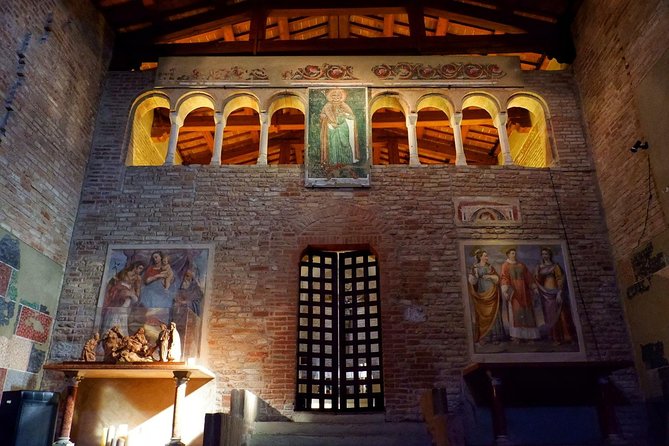
- San Michele in Bosco’s cloister and fresco cycles from major names, including Carracci-related work
- Cenobio di San Vittore’s red-brick quiet and 13th-century frescoes in warm Gothic tones
- Bagni di Mario’s Renaissance cistern built under Pope Pius IV to supply drinking water
- Riccardo Bacchi’s fast, funny, clear storytelling in perfect English
- A smart 4-hour pacing that ends back at the start around 2:30 pm
San Michele in Bosco: Frescoes, an Octagonal Cloister, and a Hospital Chapel
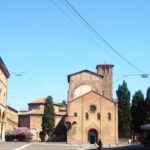
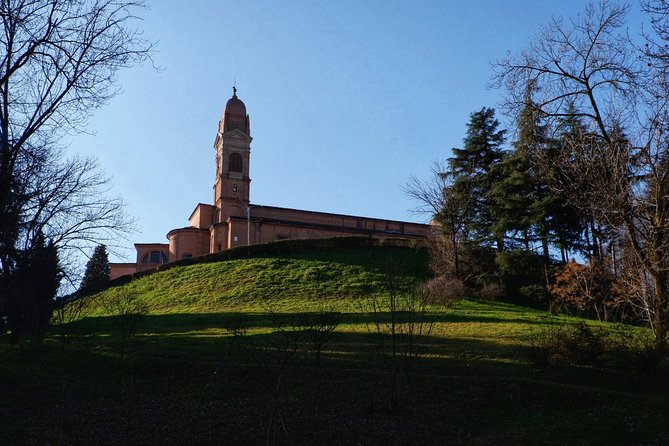
Your day starts at the Hotel Porta San Mamolo area (Vicolo del Falcone 6/8), and you settle right into the hill’s layered story. The Complesso Monumentale di San Michele in Bosco is still active today: the complex also houses an orthopedic hospital, so it is not a dead, empty set of buildings.
The church side is where the art pressure hits first. You get cycles of Renaissance frescoes connected to painters like Bagnacavallo, Prospero Fontana, and Amico Aspertini, so you are not just seeing one wall of decoration. Even better, Stop 1 includes free admission, which makes it feel like you are getting an extra chapter without extra cost.
Then comes the octagonal cloister, which you will likely notice because it looks different from the usual cloister shapes you might expect. It is described as being in a partial state of neglect, and that matters: you see the contrast between sacred spaces and the real wear of time. Frescoes here link to the three Carracci brothers, adding another layer for anyone who likes their Renaissance art tied to specific names.
Practical note: this stop is listed as about 1 hour, which is enough time to look closely without turning it into a speed-run. If you want photos, I recommend saving them for moments when you can actually pause and see the fresco surfaces clearly.
Still deciding how to spend your time in Bologna? Here are more tours and Emilia food days worth a look.

Cenobio di San Vittore: Medieval Peace, Red Brick, and a Renaissance Choir
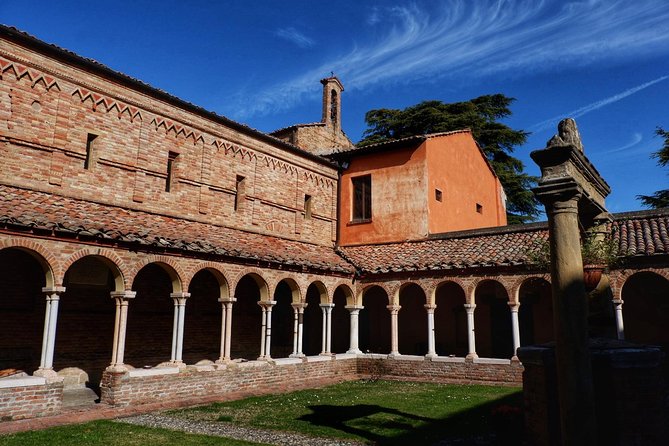
Next you head to the Cenobio di San Vittore, framed as a corner of peace and meditation meant for friars in medieval times. What I like about this stop is how the atmosphere feels built into the materials. The setting shows the warmth of Bolognese clay red brick, so the place has a grounded look, not just a decorative one.
The standout is the frescoes. You see 13th-century frescoes that are described as the oldest in Bologna after the Rotonda di Villa Aldini, and the colors are tied to the local Gothic tradition with warm tones. If you usually find religious art intimidating, this is a good entry point because the paintings are visually cohesive and tied to the space around them.
Add the Renaissance touch and it stops being just “old church pictures.” There is also a Renaissance wooden choir, plus other art treasures that keep you from feeling like you are repeating the same sight over and over. Stop 2 runs about 40 minutes, and that is a smart length for a quiet site where you want time to look, not time to rush.
One consideration: this is a meditation-minded space, so keep your voice low and your pace respectful. It is listed as having included admission, so you can focus on the art and not on ticket math halfway through.
Bagni di Mario: A Pope-Funded Cistern Still Feeding the Hill
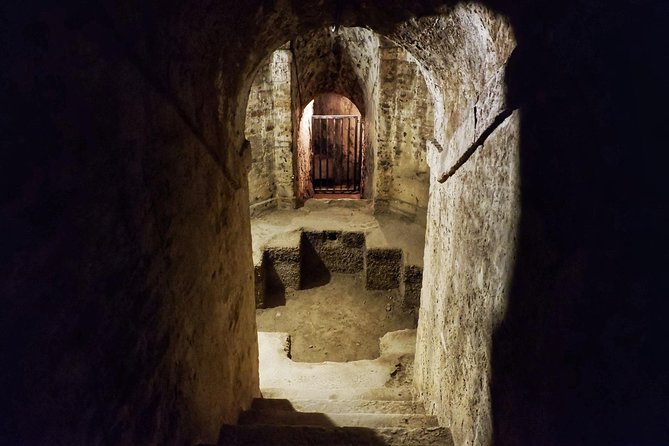
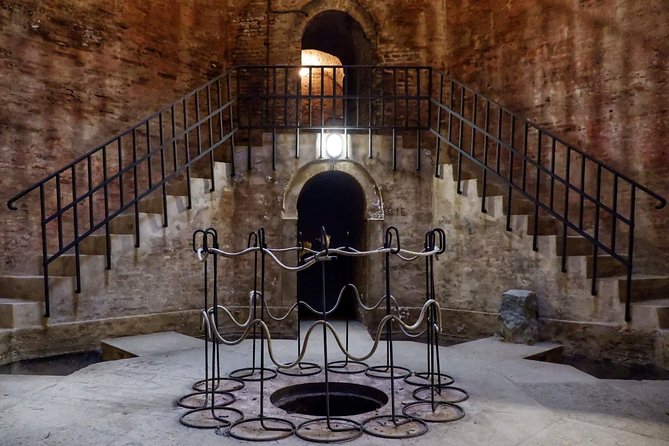
After the monastery calm, you switch to something more practical and surprising: water engineering hidden in the hill. The Bagni di Mario (Conserva di Valverde) is a Renaissance cistern excavated in the sandstone heart of the hillside, built under Pope Pius IV. The goal was simple and important: supply Bologna with fresh drinking water.
This stop is one of those experiences where learning changes how you look. When you understand that you are inside a structure meant to keep water safe and usable, you start paying attention to design choices you would otherwise ignore. It is also described as one of the best-preserved hydraulic structures of the 16th century, which is why it earns its reputation.
Stop 3 lasts about 40 minutes, and admission is included. The timing lines up with the tour ending at 2:30 pm, returning you to the starting point back at the foot of the hill. That wraparound timing matters in Bologna hills, where getting back down can take longer than you expect if you are doing it on your own.
Practical tip: bring water and plan for a steady pace. Even if the walk is not long, the hill context and the mix of indoor/outdoor viewing can add up.
How the Bologna hills story connects across all three stops
What makes this tour click is how the three places talk to each other. You start with monumental religious art, move to a space built for quiet medieval devotion, and end with a water system carved into the landscape. That arc gives you a fuller sense of how Bologna functioned, not just how it looked.
I also like that the experience is structured as a private tour. Only your group participates, which means the rhythm stays yours. If you ask for clarification about what you are seeing, you usually get a more tailored explanation than on a big bus-style outing.
Riccardo Bacchi’s strength (the part the reviews consistently highlight) is the way he explains history without turning it into a lecture. The stories stay tied to what you can actually see: fresco subjects, materials, and why specific spaces were built the way they were. That is where the “unique vibe” feeling comes from, because the buildings stop being isolated sights.
If you like art history, this tour satisfies. If you prefer culture and everyday meaning, it works there too. Water infrastructure and monastic design both reveal how people organized life on the hills.
Price and what $189.36 buys you in real value
The price is listed as $189.36 per person for about 4 hours. For a private format, the value is not just the guide time. It is the mix of sites and admissions that keep the day from stalling.
Here’s the value math that makes a difference:
- Stop 1 has free admission, so your first hour is fully productive without additional ticket pressure.
- Stops 2 and 3 have admission included, meaning the money you pay translates into access for the key interiors.
- You also get English guidance, which is a big practical advantage if your Italian reading is limited.
Pickup is offered, and the tour ends back at the meeting point, which reduces the hassle factor. For many people, that alone is worth something, because hills days go smoother when you are not managing transit between scattered locations.
One more small but meaningful plus: the experience uses a mobile ticket, which keeps your day simple. No paper chasing, no last-minute searching.


Timing, meeting point, and pacing that won’t drain your day
This tour starts at 9:00 am at Hotel Porta San Mamolo (Vicolo del Falcone 6/8). It runs about 4 hours, with the itinerary stops timed at roughly 1 hour, 40 minutes, and 40 minutes, plus the walk between sites. You should expect to finish back at the meeting point at around 2:30 pm.
Because it is near public transportation, you have options if you do not want to rely entirely on pickup. Still, if you arrive early or you are traveling with limited energy, pickup can keep the morning calmer.
The “moderate physical fitness” note is your clue to dress and plan accordingly. I would bring comfortable walking shoes and plan for some uneven ground and hill pacing. You will get more out of the fresco details and the cistern viewing if you are not spending the day distracted by foot pain.
Who this private Bologna hills tour fits best
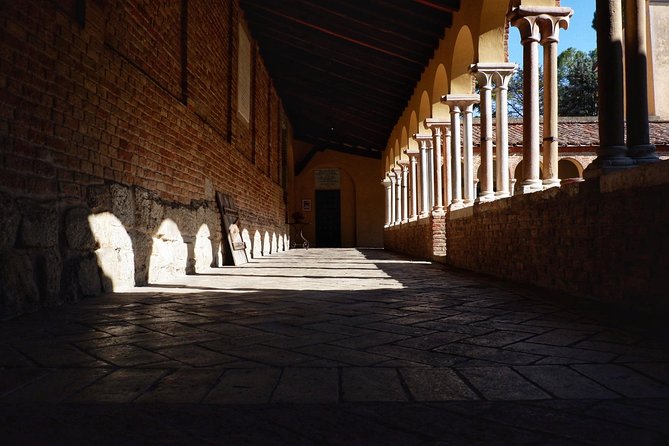
This is a strong match if you want something more thoughtful than a quick highlights loop. You get three very different settings in one outing: grand complex church spaces, a quieter medieval friary corner, and the waterworks under the hill.
It also fits well if you care about explanation. The tour is offered in English, and the guide’s style is described as clear and engaging. If you like art and architecture but want help connecting the dots, this kind of pacing is ideal.
On the other hand, if you want a long, outdoors-heavy hike or you hate indoor viewing, you might feel like the day has a lot of museum-like stops. The duration is short enough that it does not drag, but it is still centered on built spaces.
Should you book All the wonders of the Bologna hills?
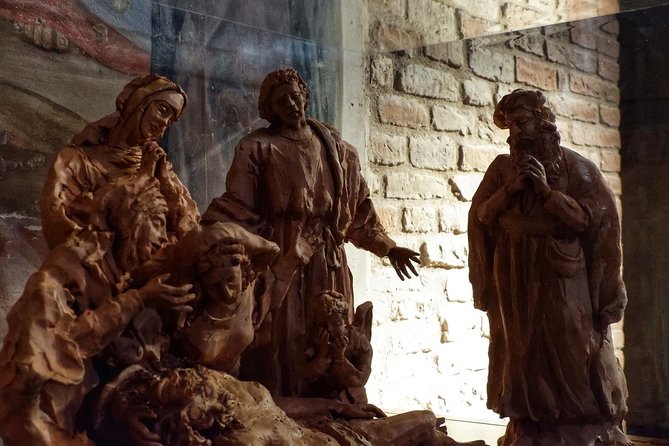
Book it if you want a compact day that covers three hill treasures with included or free admission and a guide who makes the details stick. The best part is the balance: you leave with both art understanding and a feel for how Bologna worked on the hillside, from devotion to water supply.
Skip it only if you are looking for an all-out hiking adventure or you know you will struggle with a moderate fitness day. If your goal is a smart, guided, art-and-culture outing with a private feel, this one is a solid choice.
FAQ
What language is the tour offered in?
The tour is offered in English.
How long is the Bologna hills tour?
It lasts about 4 hours.
Where does the tour start and end?
It starts at Hotel Porta San Mamolo, Vicolo del Falcone 6/8, Bologna, and ends back at the meeting point.
Is pickup offered?
Yes, pickup is offered.
Is this a private tour?
Yes. Only your group will participate.
What ticketing is included for the main stops?
Stop 1 has free admission, while stops 2 and 3 include admission.
Do I need a mobile ticket?
Yes, the tour uses a mobile ticket.
Is there a physical fitness requirement?
The tour calls for moderate physical fitness.
Can service animals join?
Service animals are allowed.