
Reviewed · BOLOGNA WALKING TOURS & CITY HIGHLIGHTS
Bologna : a walk into history
Bologna tells its story on your feet. This private walk threads you through UNESCO Bologna using major sights like Piazza Maggiore and San Petronio plus the smaller streets that explain how the city really worked. You follow a clear route with a professional guide who ties buildings to the people who used them.
I love the way this tour links the big postcards to practical meaning: why the square is laid out the way it is, why a church matters to locals, and how the university took root in the streets. I also like that you get variety without random detours, from the daily food buzz of the Quadrilatero to the water-side views at Finestrella.
One thing to keep in mind: the walk is about three hours and includes multiple interiors, and Archiginnasio entrance tickets are not included (so plan for that extra stop-cost).
In This Review
- Key highlights at a glance
- Why Bologna history makes more sense on foot
- Piazza Maggiore and via Rizzoli: your quick city orientation
- San Petronio Basilica: Petronius and why locals still care
- Archiginnasio di Bologna: the first university seat, not just another museum
- Quadrilatero and Palazzo della Mercanzia: food district meets medieval trade
- Santo Stefano’s Sancta Jerusalem: symbols you can actually spot
- Le Due Torri (Torre degli Asinell) and the city’s skyline logic
- Via De’ Giudei: a Jewish ghetto street with real historical weight
- Finestrella: little Venice and a gentler side of Bologna
- What you’re really paying for: $209.44 for a private group
- Who this tour suits best
- Should you book this Bologna walk into history?
- FAQ
- How long is the tour?
- Is this tour private?
- What’s the price?
- Which stops are free and which aren’t?
- What ticket format is used?
- Where does the tour start and end?
- What time does the tour begin?
- How long in advance do I need to book?
- Can I cancel for a full refund?
Key highlights at a glance
- A private 3-hour route for up to 10 people, so it feels like a tailored history walk
- Piazza Maggiore plus via Rizzoli context for how Bologna’s plan changed over time
- San Petronio Basilica storytelling around Petronius and why it’s special to Bolognesi
- Archiginnasio di Bologna as the first official university seat (ticket not included)
- Quadrilatero food district and Palazzo della Mercanzia, connecting daily life with medieval trade
- Jewish ghetto streets and Finestrella, for a “Bologna had many lives” perspective
Why Bologna history makes more sense on foot
Bologna is the kind of city where the map looks simple, but the stones tell a more complicated story. When you walk, you can feel how the city was designed for movement: squares to gather people, narrow lanes for neighborhoods, and “in-between” spots where daily commerce happened.
This tour is built for that. It keeps you moving at a comfortable walking pace for roughly three hours while still stopping long enough to make sense of what you’re looking at. And because it’s private (just your group), you can ask questions and get answers at your speed instead of trying to keep up with a large crowd.
I also like the logic of the sequence. You don’t just jump from landmark to landmark. You pass through spaces tied to religion, education, food markets, medieval trade, and the city’s Jewish history. That’s the stuff that turns architecture into a readable timeline.
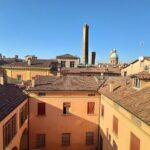
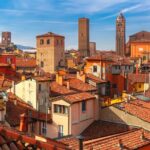
More of the old town on foot, towers and squares and back streets.


Piazza Maggiore and via Rizzoli: your quick city orientation
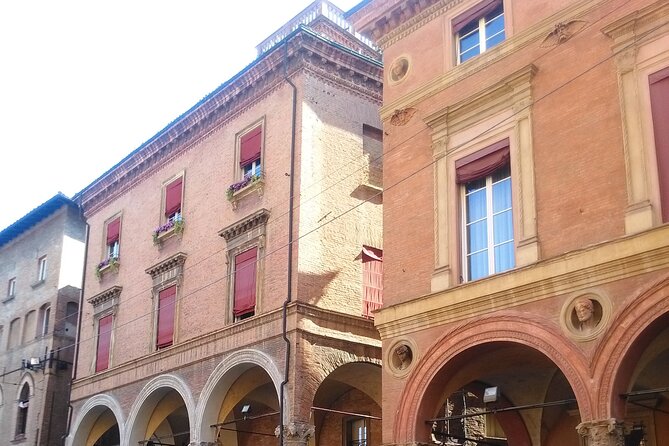
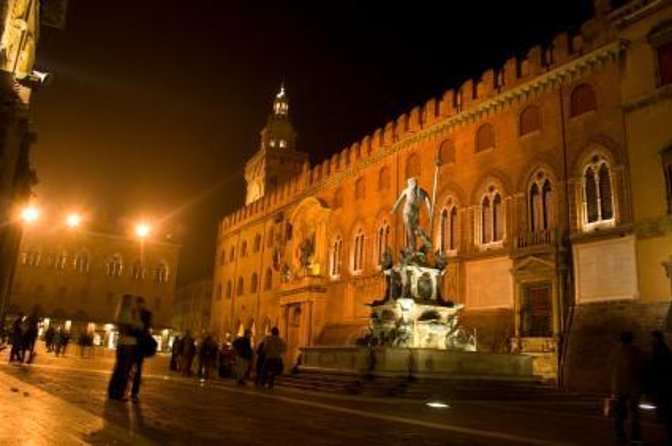
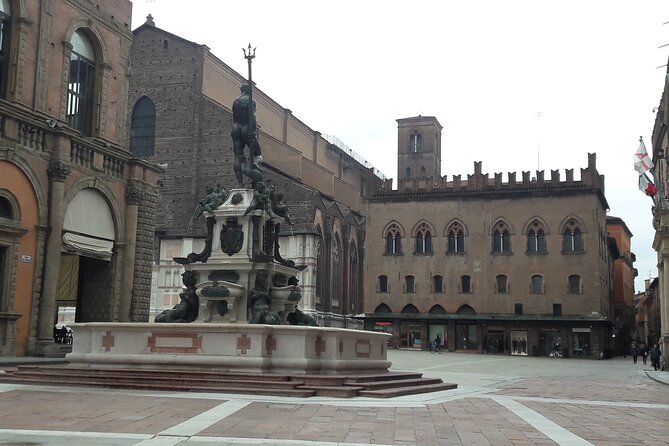
Your tour starts where Bologna’s gravity pulls you in: Piazza Maggiore. This is more than a handsome square. It’s where you get oriented, because your guide points out the important palaces and helps you understand the original planning ideas for the city and how they shifted as time went on.
Even if you think you’ve “seen this kind of square before,” Bologna’s detail matters. Piazza Maggiore is where you learn the rule of the game: Bologna grew, adapted, and kept layering. So when you later see towers, churches, and market streets, you’re not looking at isolated buildings. You’re reading parts of one long story.
Tip: arrive with a little patience for the crowds around the square. In a walking tour, this is one of the places where you’ll feel the city’s daily rhythm.
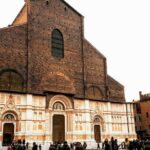
San Petronio Basilica: Petronius and why locals still care
Next comes Basilica di San Petronio, where the story centers on Petronius, Bologna’s patron saint. Your guide explains who he was in the city’s imagination and why the basilica is so important for the Bolognesi people, not just for visitors.
This stop is also about art inside the church. You’ll be guided to important works of art you can see, and the context helps you understand what you’re looking at rather than scanning for highlights. That’s a big win if you don’t want a “walk-in, look-up, walk-out” church moment.
One consideration: churches can slow you down naturally because you’ll want to pause and look. That’s fine here, because the tour time is designed to absorb it without dragging.
Archiginnasio di Bologna: the first university seat, not just another museum
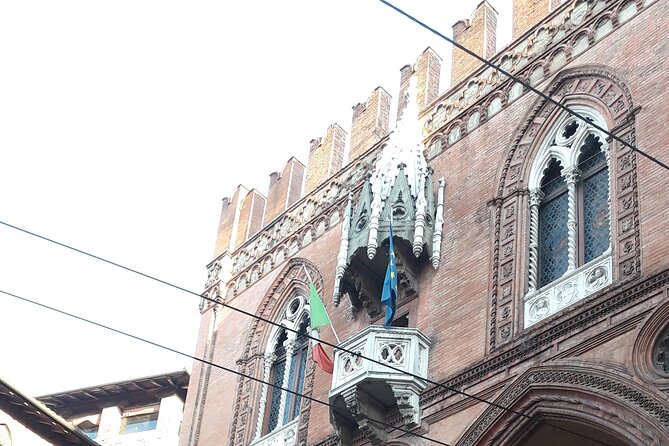
Then you head to Archiginnasio di Bologna, described as the first official seat of the university in Bologna. This is where Bologna’s identity flips from city-square life to education and institutions.
The tour gives you a sense of why a university seat belongs in a walk like this. Bologna wasn’t only about government and trade. It also became a place where learning shaped the city’s culture and status.
Practical note: entrance ticket to the Archiginnasio is not included. If you want smoother logistics, check the timing and plan for that extra paid entry so the stop doesn’t feel like an interruption.
If you’re traveling with someone who loves history through institutions (or if you’re the kind of traveler who likes “how did this city become itself?” questions), this is one of the most satisfying stops.
Quadrilatero and Palazzo della Mercanzia: food district meets medieval trade
After the university stop, you move into the city’s everyday life at the Quadrilatero, Bologna’s famous food district. This is where the local food market takes place every day, and your guide helps you see it as more than a snack stop.
What makes the Quadrilatero work on a history tour is the contrast. You’re coming from university walls and church art, and then you’re in a lane-world of commerce. That’s how Bologna kept itself fed, funded, and connected to the wider region.
A few minutes away is Palazzo della Mercanzia, tied to Bologna’s Middle Ages. Your guide tells you how this building played an important role for foreign traders entering town. In other words: you’re not just watching market life. You’re learning where trade and money changed hands in a way that shaped the city’s future.
If you like food walking tours but want more meaning than food alone, this pairing works well. You get the taste of place and the reason behind it.
More of the old university city and its past.

Santo Stefano’s Sancta Jerusalem: symbols you can actually spot
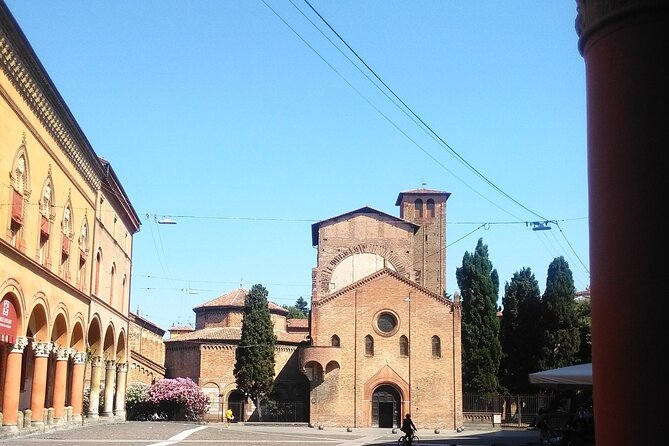
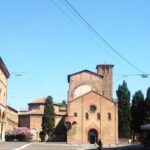
Your next major stop is the Basilica – Santuario di Santo Stefano, a complex known as the seven churches or Sancta Jerusalem. Your guide explains the connection to the Saint Sepulcher and helps you understand the ancient symbols inside.
This stop is less about one single “wow” object and more about the idea of meaning. You’ll learn how symbolism tied these spaces to bigger religious stories, and then you can look for the signs the guide points out. That turns a church interior into a guided puzzle you can solve with your eyes.
Time here matters. At 15 minutes, it’s long enough to slow down and absorb without turning into a rushed sprint through rooms.
Practical tip: treat this stop like a sit-down moment even if you’re standing. Take in what the guide points to before moving on. If you’re the type who likes to photograph, do it after you’ve listened to the explanation so the images match what you learned.
Le Due Torri (Torre degli Asinell) and the city’s skyline logic
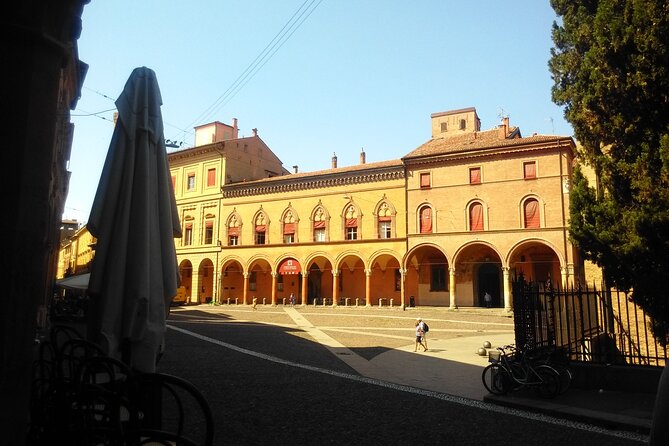
Bologna’s towers are impossible to ignore, and you get a focused moment at Le Due Torri, stopping by Torre degli Asinell. Your guide explains the towers’ ancient function and why they became one of Bologna’s symbols.
This part helps you understand why towers matter in a medieval city. They weren’t just decoration. They were part of how people marked power, identity, and civic competition in the skyline.
If you’re a skyline fan, this stop delivers. It’s brief, but the explanation gives you a reason to look carefully rather than only to take a quick photo.
Via De’ Giudei: a Jewish ghetto street with real historical weight
Then you head into Via De’ Giudei, where your guide takes you through the narrow streets of the Jewish ghetto. Your guide explains that Jews were forced to live there until Italian Unification.
This is a serious stop, and the value here is that you’re not just walking through pretty lanes. You’re learning how laws and social rules shaped where people could live, and you’re seeing that history in the street pattern itself.
A good tour moment is when geography becomes history. Narrow streets and constrained neighborhoods make the topic feel immediate, not abstract.
Finestrella: little Venice and a gentler side of Bologna
Finally, you reach Finestrella, described as one of Bologna’s hidden corners, known as the little Venice. The guide explains how this area helps you understand how Bologna looked in the past, and it’s especially memorable if you’ve only been focused on churches and towers.
What I like about finishing with Finestrella is tone. After serious history, you get a visual change: a calmer sense of water and architecture, with the feeling that Bologna had multiple moods depending on where you stood.
This stop is also a nice closing chapter. You leave with one more way to imagine the city beyond the main monuments.
What you’re really paying for: $209.44 for a private group
The price listed is $209.44 per group (up to 10) for about 3 hours with a professional guide. For a private format, that can be good value, especially if you’re traveling as a family or a small group and want a guide who can answer questions without holding up others.
You also get a tour structure that keeps time disciplined: the major stops are free to enter except for the Archiginnasio, which is not included. So you’re not stuck paying surprise admissions at multiple sites. Instead, you can plan one extra ticket and keep going.
In practical terms: if you’re two or three people, compare this to the cost of multiple standard guided entries or hop-on-hop-off alternatives. If the group size is larger, the per-person cost tends to drop quickly, and the private attention becomes the real bargain.
One more value point: mobile ticket format means less fuss on arrival. You show up, meet the guide at the start point, and start walking.
Who this tour suits best
This Bologna walk is a strong fit if you want:
- a history-focused walk that connects religion, education, and trade
- a route that includes both major landmarks and smaller backstory stops
- a private group setting with professional guidance and room for questions
- a morning or afternoon option to match your schedule
It’s also a good choice for first-time Bologna visitors who want a fast but meaningful introduction without trying to self-navigate every turn.
Should you book this Bologna walk into history?
Yes, if you want a guided “why this matters” tour rather than a checklist of sights. The route is built around the idea that Bologna’s monuments only make full sense when you understand the people and systems behind them, from Petronius and the university seat at Archiginnasio to the food lanes of the Quadrilatero and the historical weight of Via De’ Giudei.
I’d book it sooner rather than later if you’re traveling during peak seasons, because private walking tours tend to fill. And because Archiginnasio tickets aren’t included, you’ll enjoy the experience more if you’re ready to handle that one extra entry cost without turning it into a last-minute scramble.
If you prefer very long museum time or you hate walking between stops, this may feel too “on your feet.” But for most people who like cities with stories in the street layout, it’s a smart, efficient way to see Bologna.
FAQ
How long is the tour?
It’s approximately 3 hours.
Is this tour private?
Yes. It’s listed as a private tour/activity, with only your group participating.
What’s the price?
The price is $209.44 per group, up to 10 people.
Which stops are free and which aren’t?
The listed stops include several places with free admission. The Archiginnasio di Bologna admission ticket is not included.
What ticket format is used?
It uses a mobile ticket.
Where does the tour start and end?
Both the start and end are at Via dell’Indipendenza, Bologna BO, Italy.
What time does the tour begin?
A start time of 10:00 am is listed.
How long in advance do I need to book?
It’s stated that, on average, the experience is booked 101 days in advance.
Can I cancel for a full refund?
Yes, free cancellation is available. You can cancel up to 24 hours in advance for a full refund.
More Bologna History Walks
More Bologna Walking Tours

More Tour Reviews in Bologna



After something different? More ways to fill a day in Bologna and across Emilia-Romagna







Bologna Walking Tours & City Highlights, compared.
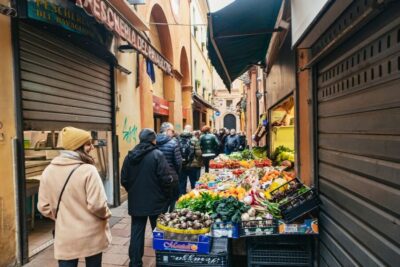 ★ 4.5City Center Walking TourFrom $263,478 reviews
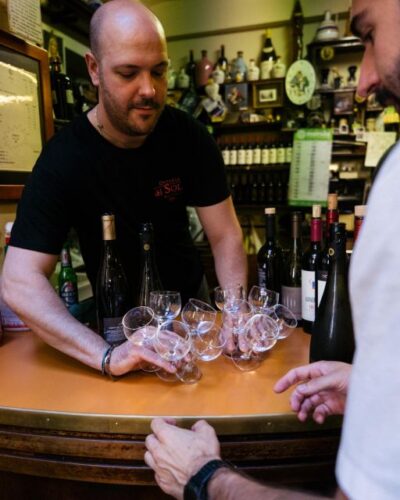 ★ 4.8Walking Food Tour with a Local GuideFrom $90882 reviews
 ★ 5.0Private Half Day Parma Food Walking TourFrom $134561 reviews
 ★ 3.7Open Bus City Tour and Local Food TastingFrom $46550 reviews
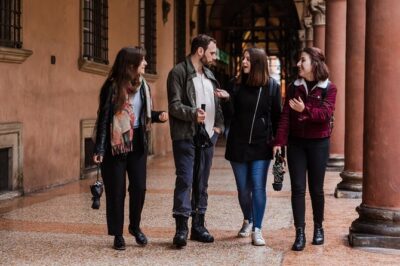 ★ 5.0Bologna Private Highlights & Hidden Gems Tour with a LocalFrom $77359 reviews
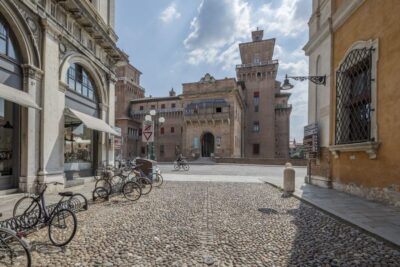 ★ 4.6City Highlights Walking Tour with Local GuideFrom $17219 reviews
 ★ 4.9City Center Guided Wine Walking TourFrom $70210 reviews
 ★ 4.2City Walking TourFrom $27203 reviews
Browse the lists this tour appears in