
Reviewed · FOOD & DRINK
Best of Bologna in one day : Food, architecture, art and history
One day in Bologna, seriously stacked. This private, English-speaking tour threads Piazza Maggiore masterpieces, university-era rooms, and major church art into a single 7-hour walk, then finishes with included Bolognese tastings and a pasta lesson. It’s a smart way to see the city’s best ideas without guessing your way between monuments.
I love the way Riccardo Bacchi ties architecture, religion, and everyday life together, so each stop feels connected instead of random. I also like that the day includes several ticketed interiors, including the university’s historical spaces and art stops that act like a mini course on Italian painting. One consideration: the schedule is full and the commentary can be dense—if you don’t like fast pace and detail-heavy explanations, plan to listen actively and wear comfortable shoes.
In This Review
- Key highlights you’ll actually feel
- Starting where Bologna makes its own rules: Piazza Maggiore
- Palazzo Comunale: fresco rooms and Bramante’s horses
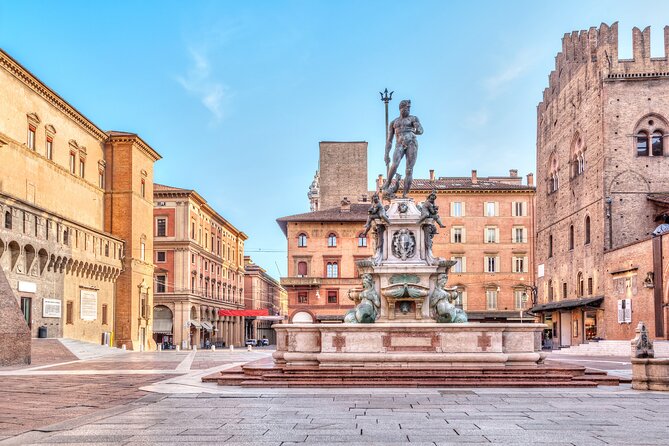
- Fountain of Neptune and the square’s art you’re meant to notice
- Piazza Santo Stefano: a medieval and Romanesque complex in layers
- Santa Maria della Vita: baroque drama with terracotta power
- Archiginnasio di Bologna: the University of Bologna as living history
- Pinacoteca Nazionale di Bologna: a condensed art history hit
- Quadrilatero: medieval lanes and the Bologna you can taste
- San Giacomo Maggiore and Bentivoglio Chapel: art in a church gallery setting
- Canale delle Moline: a short stop with long visual payoff
- San Domenico and Santo Stefano: major treasures and a Jerusalem echo
- Bruno e Franco in Bologna: tastings that make the whole day click
- Cooking class at Bruno e Franco: pasta alla Bolognese hands-on
- Price and value: why $174.69 can make sense here
- What to expect: a packed day with a teacher’s pace
- Who this tour suits best (and who should skip it)
- Should you book Best of Bologna in One Day?
- FAQ
- How long is the tour?
- Is the tour in English?
- Is this a private tour?
- Where does the tour start and end?
- Are tickets included for the major sites?
- What food is included?
- Is there a cooking class?
- Is the tour mostly walking?
- What should I bring for comfort?
- What is the cancellation policy?
Key highlights you’ll actually feel
- Riccardo Bacchi’s story-driven route links churches, art, and Bologna’s identity.
- Ticketed access to major interiors (not just façades) across multiple stops.
- Terracotta and Renaissance showpieces by artists tied to Bologna, including Nicolo’ dell’Arca works.
- A real taste of Bologna at a salumeria, plus a practical pasta alla Bolognese class.
- Packed walking day with a lot to absorb, including views over the towers.
Starting where Bologna makes its own rules: Piazza Maggiore
Your day kicks off at Bar Vittorio Emanuele on Piazza Maggiore. This square isn’t just a pretty starting point. It’s Bologna’s “center of gravity,” where power, civic pride, and religion all show up in stone and sculpture.
From the first minutes, Riccardo’s approach matters. You’re not just pointing at landmarks—you’re learning why they’re here and what they were meant to signal. If you’ve ever felt other walking tours stay on the surface, this one is built to keep you looking closer.
More Emilia food and drink to seek out.
Palazzo Comunale: fresco rooms and Bramante’s horses
In Piazza Maggiore, the tour focuses on Palazzo Comunale and the kind of interiors most visitors miss. You’ll get a look at splendid frescoed rooms—exactly the type of detail that makes Bologna feel more “real” than postcard Italy.
A highlight is the grand staircase known for Bramante’s horses. It’s one of those visual moments you’ll remember even if you forget every date. The charm here is balance: civic grandeur on one side, intimate artistic details on the other, all tied back to Bologna’s civic and cultural life.
One small practical point: you’ll move through several rooms relatively efficiently. Bring your attention span for these spaces—this is where the tour’s storytelling really pays off.
Fountain of Neptune and the square’s art you’re meant to notice
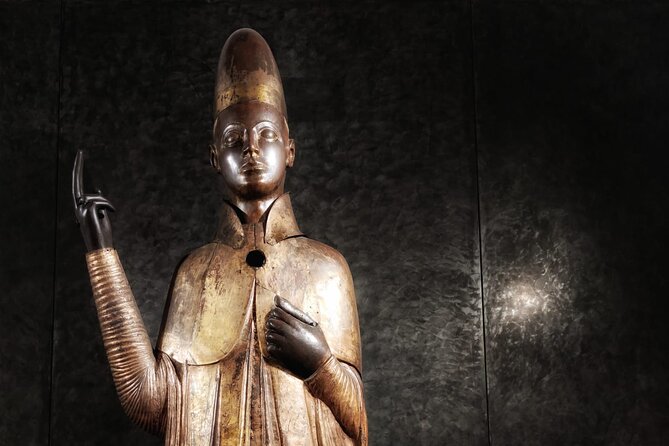
Piazza Maggiore also anchors the story with iconic works like the Fountain of Neptune. Even if you’ve seen a photo of Neptune before, you’ll likely get more out of it once you understand its place in the square’s message about knowledge, power, and civic identity.
And yes, there are terracotta works connected to Nicolo’ dell’Arca that show up in the narrative of this area. Bologna has a way of placing religious and artistic ideas right next to public life, and this stop sets that pattern for the day.
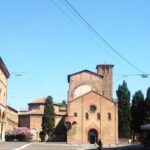
Piazza Santo Stefano: a medieval and Romanesque complex in layers
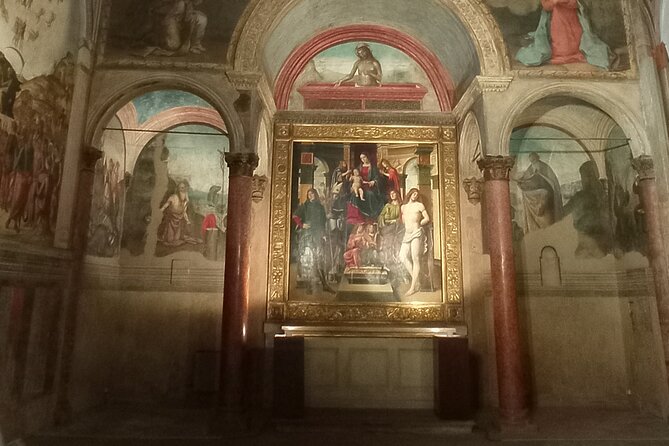
Next comes Piazza Santo Stefano, where the city gets clever. This is a complex of early medieval buildings with medieval and Romanesque interiors, plus Gothic palaces and art museum elements. The effect is like walking through time without changing cities.
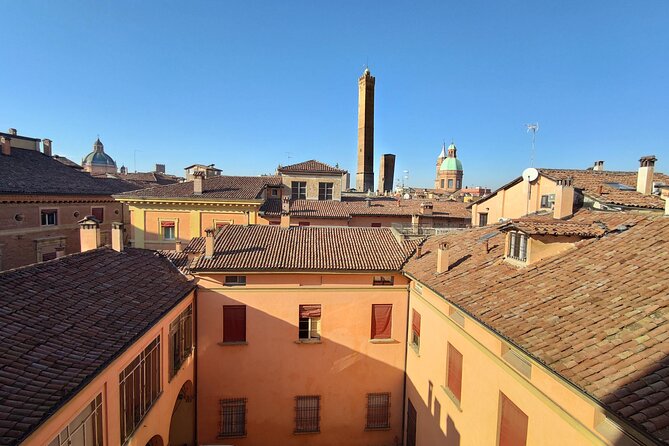
You’ll get a quick-but-meaningful look at frescoes, porticoes, and spiral staircases. Then there’s a terrace viewpoint that helps you read the skyline—towers, rooftops, and the sense that Bologna is built upward.
This stop is one of the best “wow per minute” sections of the day. It’s also a good breather. Compared with some museum-like interiors, Santo Stefano feels more hands-on: you’re walking through spaces that shaped everyday movement.
Santa Maria della Vita: baroque drama with terracotta power
At Chiesa di Santa Maria della Vita, the focus shifts to Baroque church impact, but through a specific masterpiece: the Lamentation by Nicolò dell’Arca. Bologna’s terracotta tradition is not a side note here—it’s part of what makes the city distinct.
If you care about how art communicates emotion, you’ll appreciate how this work is presented in a church context. Riccardo’s explanations help you see what makes the sculpture hit so hard, even when you only have a short visit.
More local food worth going out of your way for.

Archiginnasio di Bologna: the University of Bologna as living history
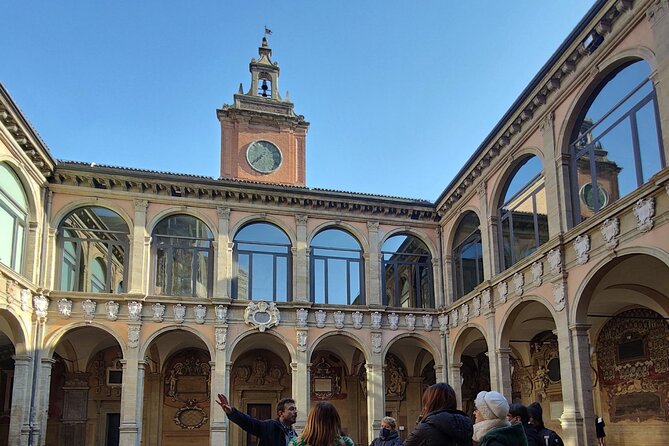
Then you step into Archiginnasio di Bologna, the palace tied to the University of Bologna. This is one of those places where “history” isn’t a word on a plaque—it’s built into the rooms.
Expect frescoes, a historical library feel, and the wooden anatomical theatre. Even if you’re not a science person, it’s the kind of structure that makes you rethink old ideas about learning. It’s architecture serving education, and the whole vibe is Bologna saying: we take knowledge seriously.
This stop is also a good moment to remind yourself what kind of tour this is. It’s not only about what to see. It’s about how Bologna became Bologna—through study, art, and public institutions.
Pinacoteca Nazionale di Bologna: a condensed art history hit
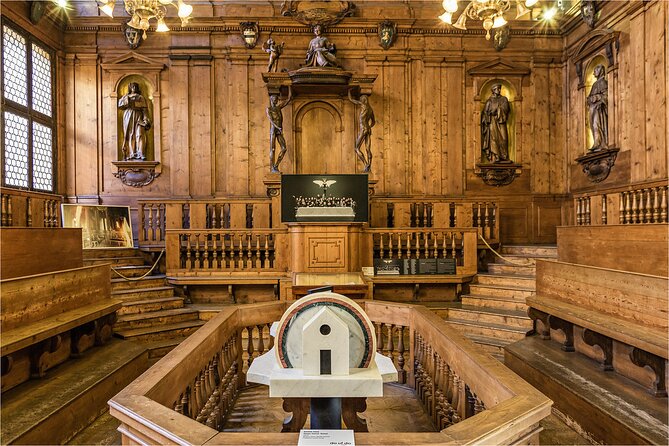
Next you’ll visit the Pinacoteca Nazionale di Bologna, one of Italy’s notable painting and ancient art museums. The advantage of a guided route is speed with meaning: in about 40 minutes, you’re steered toward key artists and themes rather than wandering.
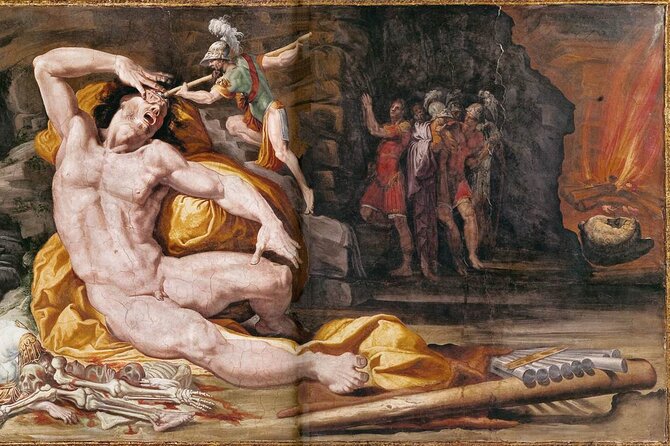
You’ll see major names in the story of Italian painting, from Giotto to Raphael, Titian to Guido Reni, and also works connected with artists like Parmigianino and the Carracci circle. It’s a strong “overview museum” stop, especially if you only have a day.
Practical tip: museums can be tiring if you’re chasing details alone. In this tour, you’ll get enough context to recognize what matters in each piece, so you leave feeling like you learned something instead of just walked past frames.
Quadrilatero: medieval lanes and the Bologna you can taste
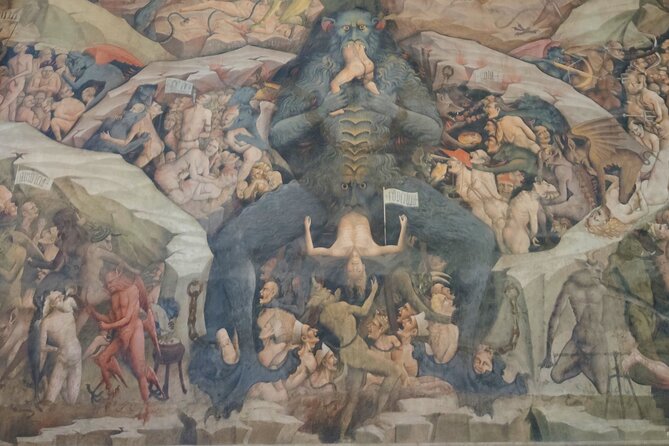
Then comes the most enjoyable shift: Quadrilatero and the historical market area around Mezzo di Bologna. This is where Bologna turns into food and daily rhythm—historic stalls, taverns, and traditional shops all packed into old lanes.
This stop works because it’s time-efficient. You’re not trying to “research lunch” for hours. Instead, you’re given a clear route into the food culture that locals take for granted.
And you’ll likely understand why Bologna is so food-first. The city doesn’t treat meals as an afterthought. It treats them like identity.
San Giacomo Maggiore and Bentivoglio Chapel: art in a church gallery setting
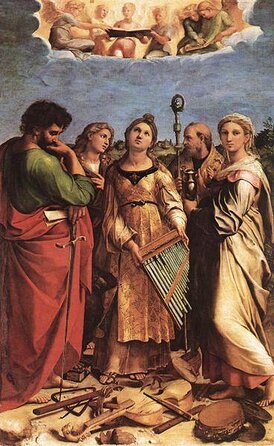
At Chiesa di San Giacomo Maggiore, the emphasis moves back to big art moments. You’ll see the famous Bentivoglio Chapel, often pointed to as a masterpiece of the Emilian Renaissance, and you’ll also get the Oratory of Santa Cecilia with frescoes and musical-related venues.
This is a church that feels like an art gallery. That’s useful because it helps you keep the day’s flow: architecture and history, then painting and sculpture, then food, then more art. It prevents the “see-same-thing” fatigue.
Canale delle Moline: a short stop with long visual payoff
Canale delle Moline is brief, but it’s not filler. You’ll spot towers, arcades, medieval houses, palaces, and the kind of architecture that feels slightly surprising in its creativity.
Hidden canals and noble staircases add to the sense that Bologna isn’t just famous—it’s inventive. And because it’s tied into the longer arc of the oldest university presence, it stays connected to the day’s main theme.
If you’re the type who likes photos, this is a great place to slow down for a minute and look up.
San Domenico and Santo Stefano: major treasures and a Jerusalem echo
Basilica di San Domenico brings you a bigger-scale art and architecture experience. You’ll hear about and see highlights ranging from the Ark of Nicola Pisano to works associated with Nicolò dell’Arca and Michelangelo. There’s also mention of an alchemical wooden choir, and even Mozart’s favorite organ is part of the conversation. That’s a lot of cultural weight for one stop, and Riccardo helps you keep it straight.
Then you move to Basilica – Santuario di Santo Stefano, a medieval and early medieval complex built to resemble the Holy Sepulcher of Jerusalem. If you like churches with layered meanings, this is one of the most interesting conceptual stops of the day, even if your time inside feels relatively short.
Bruno e Franco in Bologna: tastings that make the whole day click
Now for the part you’ll remember when your brain starts to feel full: Bruno e Franco – La Salumeria.
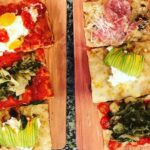
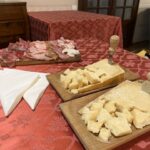
You’ll get tastings that sound like a Bologna food syllabus: figs and Parma ham, culatello, salami, mortadella, meatballs with peas in Bologna style, tagliatelle with ragout, Parmigiano Reggiano aged 3 to 4 years, traditional green lasagne bolognese, and traditional balsamic vinegar from Modena (with aging up to 24 years). You also get additional items as part of the tasting spread.
This isn’t just sampling for fun. It’s the best way to connect Bologna’s art of craft—terracotta sculpture, preserved tradition, and civic identity—with the food culture that grew up next to it.
If you’re worried about eating too much, don’t. The tasting is timed as part of the day, and it’s designed to keep moving without turning lunch into an all-day event.
Cooking class at Bruno e Franco: pasta alla Bolognese hands-on
To round it out, you’ll do a short cooking class for pasta alla bolognese—pasta with egg meant for tagliatelle, tortellini, lasagna, and other Bologna-style formats like balanzoni and tortelloni, plus passatelli.
Even if you’ve never made fresh pasta before, you’re getting enough instruction to walk away with context and a stronger sense of what makes Bologna’s pasta culture different. This is where the day shifts from “seeing” to “doing,” and it adds real value to the price.
Plan for a bit of standing and movement. It’s not described as a full-day workshop, but it does add energy to the end of the itinerary.
Price and value: why $174.69 can make sense here
At $174.69 per person for about 7 hours, you’re paying for a lot of structured access, not just a walk.
Here’s what the value is built on:
- Several stops include admission tickets, not only exterior viewing.
- You get a pasta class, which is usually priced higher than a typical tasting add-on.
- Food tastings at Bruno e Franco include a wide spread, including aged products like Parmigiano Reggiano and a labeled range of balsamic vinegar aging.
If you were to plan similar visits and then book a separate food experience, the coordination cost alone would eat time—and time is usually the real currency on a Bologna trip.
Also, it’s a private tour for your group, so you’re not sharing your guide’s attention with a huge crowd. That tends to matter on a day with this many moving parts.
What to expect: a packed day with a teacher’s pace
This is a “learn fast” style of touring. From the start, Riccardo’s explanations can go deep, including medieval history and art-religion connections. The upside is that you leave with a mental map of Bologna instead of a pile of names.
The downside is simple: you need to show up ready to listen. If you’re hoping for a relaxed stroll where you can daydream most of the time, you might feel rushed. Wear your best walking shoes, and keep water handy.
Who this tour suits best (and who should skip it)
This tour is ideal if you want:
- A one-day plan that hits major architecture, major art, and food
- A guide who connects dots between disciplines
- Included access to interior spaces and tastings
You might prefer a different style if you strongly dislike dense commentary, or if you want mostly free time at each stop. Bologna rewards curiosity, but this schedule doesn’t cater to slow wandering.
Should you book Best of Bologna in One Day?
If you have only a day in Bologna, I’d book it—especially because you get both culture and calories in one organized loop. It’s also a smart choice if you like learning with your eyes: churches, university history, and museum highlights all come with explanation that makes them feel less random.
If you can handle a full schedule and enjoy being guided through details, this one is a high-value way to see why Bologna keeps earning loyal fans. If you want something lighter or more flexible, look for a shorter option—but for a first, focused Bologna visit, this is a very strong bet.
FAQ
How long is the tour?
The tour lasts about 7 hours.
Is the tour in English?
Yes, it’s offered in English.
Is this a private tour?
Yes. It’s private, with only your group participating.
Where does the tour start and end?
It starts at Bar Vittorio Emanuele in Piazza Maggiore, and it ends back at the same meeting point.
Are tickets included for the major sites?
Admission tickets are included for several stops (such as Palazzo Comunale, Piazza Santo Stefano areas, Santa Maria della Vita, Archiginnasio, and Pinacoteca Nazionale). Other stops are free visits as part of the itinerary.
What food is included?
You’ll have tastings at Bruno e Franco – La Salumeria, including items like Parma ham, culatello, salami, mortadella, tagliatelle with ragout, aged Parmigiano Reggiano, green lasagne bolognese, and traditional Modena balsamic vinegar.
Is there a cooking class?
Yes. You’ll take a short pasta alla Bolognese cooking class.
Is the tour mostly walking?
Yes. It’s an all-day walking itinerary across multiple stops.
What should I bring for comfort?
Comfortable walking shoes are recommended, since it’s a fairly fast-paced day.
What is the cancellation policy?
You can cancel up to 24 hours in advance for a full refund. Cancellation less than 24 hours before start time isn’t refunded.
More Bologna Food Tours
More Emilia Food and Drink
More Tour Reviews in Bologna
After something different? More ways to fill a day in Bologna and across Emilia-Romagna





Food & Drink, compared.
 ★ 5.0Bologna Food & Market Tour with 6 Tastings, Pasta, Wines & MoreFrom $1181,328 reviews
 ★ 5.0Bologna Food Experience: Factory tours & Family-Style LunchFrom $2161,201 reviews
 ★ 4.8Walking Food Tour with a Local GuideFrom $90882 reviews
 ★ 5.0Bologna Food Tour from a local perspectiveFrom $133860 reviews
 ★ 5.0Private Half Day Parma Food Walking TourFrom $134561 reviews
 ★ 4.9Parmigiano Production and Parma Ham Tour & TastingFrom $126554 reviews
 ★ 3.7Open Bus City Tour and Local Food TastingFrom $46550 reviews
 ★ 5.0Full meal Food Tour with Local Delights by Do Eat BetterFrom $81541 reviews
Browse the lists this tour appears in