
Reviewed · BOLOGNA FOOD TOURS & THE QUADRILATERO MARKET
Bologna: Tastes and Traditions Food Tour with Market Visit
Bologna tastes better with a local route. This food tour strings together a market visit and classic trattoria stops in a small group (max 12), so you get real conversation and you don’t spend half the day stuck in lines. I like the way it starts gently with coffee and torta di riso, then ramps up to iconic bites like tagliatelle bolognese and tortellini, plus wine along the way. The trade-off is simple: it’s a walking tour with lots of standing, so you’ll want decent shoes and a little stamina.
I also like that the guide doesn’t just hand you food and move on. Expect clear talk about regional dishes and even the spaghetti bolognese question (the one that makes Italians raise an eyebrow), plus an eating setup that feels like an indoor picnic rather than a rushed tasting parade.
In This Review
- Key highlights at a glance
- Following the food clues: why Bologna’s classics are a big deal
- Starting at eXtraBO: pastry first, then confidence
- Café Pastry Gamberini: how torta di riso sets the tone
- Mercato delle Erbe: the market stop that actually teaches you what to look for
- Fresh pasta and tomatoes: why shape and freshness change everything
- The osterias: indoor picnic vibes and classic comfort food
- Wine and the cold cuts stop: why the pairing feels intentional
- “Spaghetti bolognese” and Bologna food logic
- Walking the city like you mean it (and what to watch for)
- Guides in the field: what consistently makes the experience work
- Price and value: why this isn’t just a “cheap sample”
- Who should book this tour (and who should skip it)
- My call: should you book Bologna: Tastes and Traditions?
- FAQ
- How long is the Bologna food tour with market visit?
- What’s included in the tastings and drinks?
- Where do I meet the guide?
- Is the tour suitable for vegans?
- Can the tour accommodate dietary restrictions?
- Is transportation included?
- What should I bring for the walk?
Key highlights at a glance
- 9+ tastings at 8 classic places: you leave full, not just “sampled.”
- Mercato delle Erbe: cheese, cured meats, and produce you can actually see being handled.
- Bolognese myths, explained: learn what spaghetti bolognese is and isn’t.
- Indoor picnic style: a different way to eat than the usual sit-down meal.
- Small group energy: max 12 keeps everyone together in crowded spots.
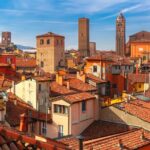
- Two Towers finish zone: you end where Bologna looks postcard-ready.
Following the food clues: why Bologna’s classics are a big deal
Bologna is one of those cities where food isn’t a separate activity. It’s the way locals pace their day—quick bites, long lunches, and an almost serious relationship with ingredients and technique. This tour works because it teaches you the logic behind the flavors. You taste, you listen, you connect the dots.
You also get a practical advantage. Instead of wandering into the first restaurant that looks busy, you go stop-to-stop with a guide who knows where to find authentic portions: pastry counter sweets, market cheese and balsamic use, fresh pasta shapes, then the osteria/trattoria rhythm that makes Emilia-Romagna famous. And yes, you’ll likely hear the kind of jokes and etiquette reminders that make eating feel like part culture, part comedy (in good Italian style).
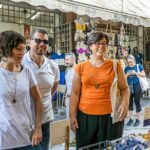
More tastings through the Quadrilatero and the old market stalls.
Starting at eXtraBO: pastry first, then confidence
The tour begins at eXtraBO, with the official meeting point at Piazza del Nettuno 1/ab in front of the ExtraBo info point. You’ll want to arrive 15 minutes early for check-in—this is one of those tours that doesn’t wait for latecomers.
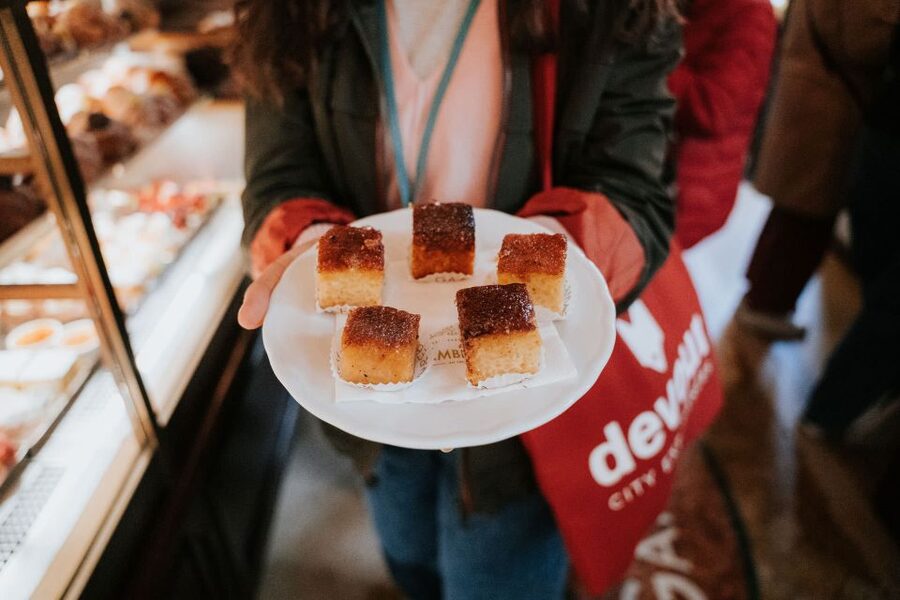
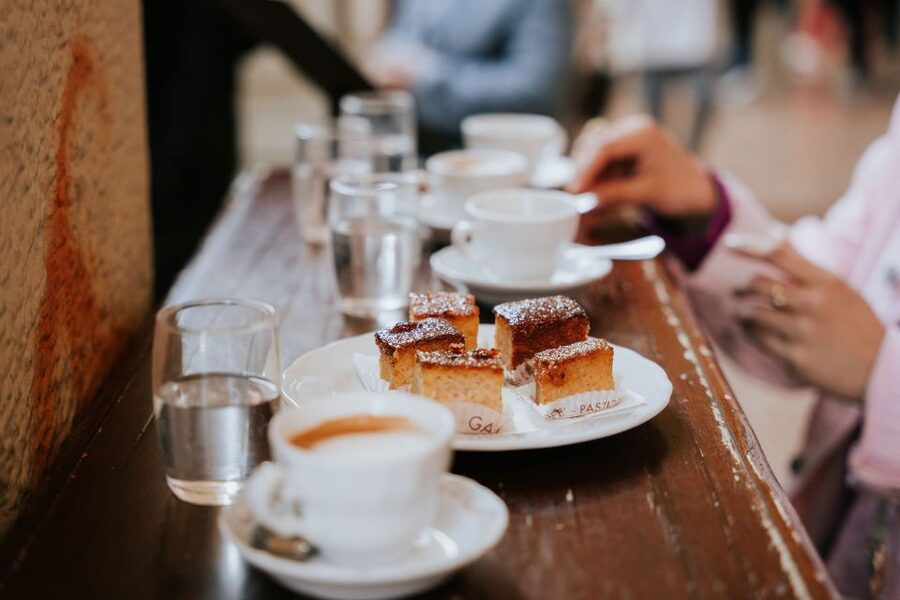
Why I like the start: it’s calm. You kick things off with coffee and a slice of torta di riso at Café Pastry Gamberini. That matters because rice cake sounds like something you’d skip until you try it. The point here is not just breakfast. It’s context. You’re learning what “Bologna sweet” tastes like before you hit the market and the savory world.
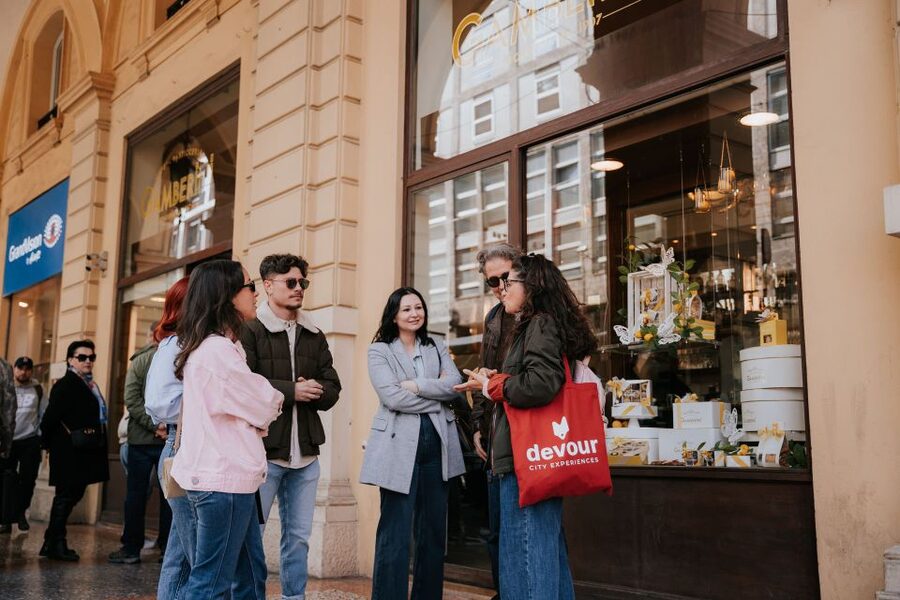
A small but useful detail: guides are easy to spot because they carry a red Devour Tours tote bag or sign at the exact meeting point. That’s not just convenience—it saves time when streets are crowded.
Café Pastry Gamberini: how torta di riso sets the tone
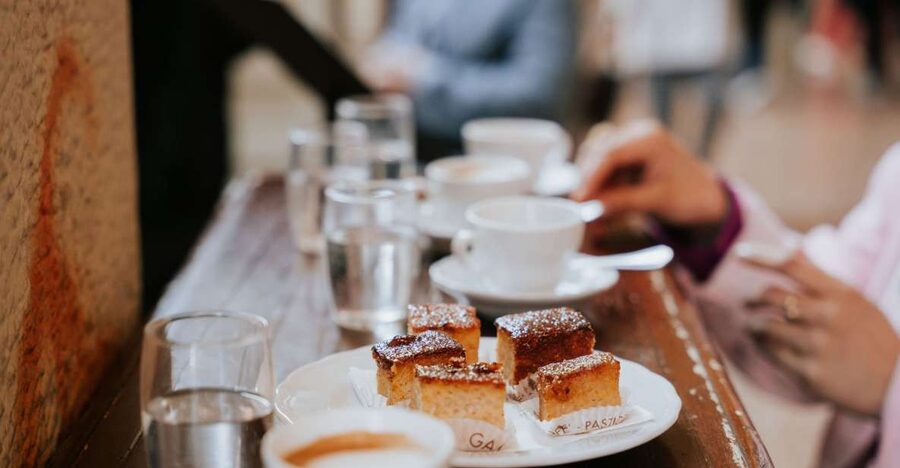
This first food stop is about 30 minutes. You’ll be looking at the pastry shop display while the guide gets you ready for what’s next.
Torta di riso is a great “gateway” taste because it’s not overly complicated, but it shows up in local traditions. The rice gives it a distinct texture, and the coffee gives you the baseline you’ll need later when you’re bouncing between cheese, cured meats, tomatoes, and pasta.
Practical tip: don’t overpack your stomach right before the tour. Several people note that the amount of food can be more than you expect, and starting with a proper pastry-and-coffee foundation helps you enjoy everything else without feeling sick.
Mercato delle Erbe: the market stop that actually teaches you what to look for
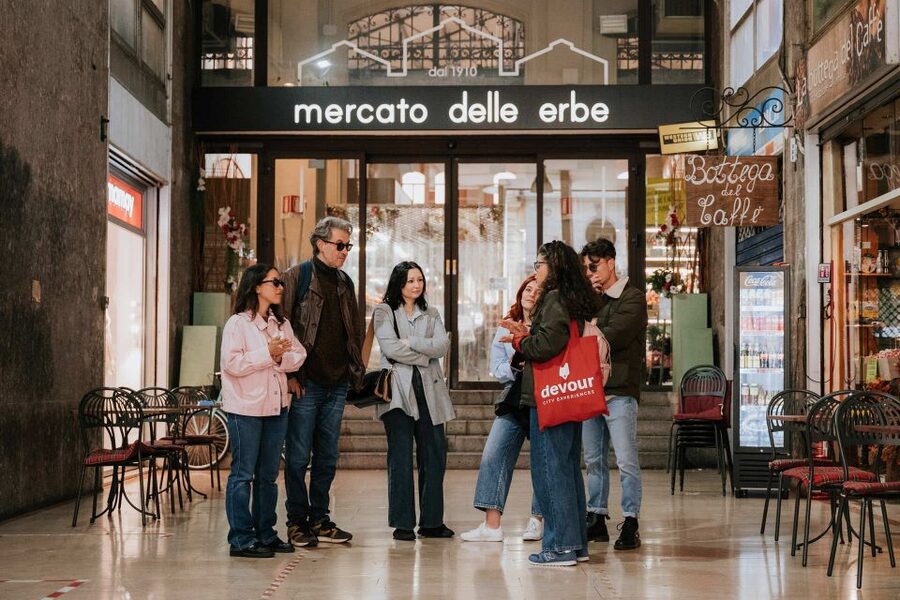
Next comes Mercato delle Erbe, about 65 minutes. This is the moment the tour stops feeling like “just eating” and turns into a real food education.
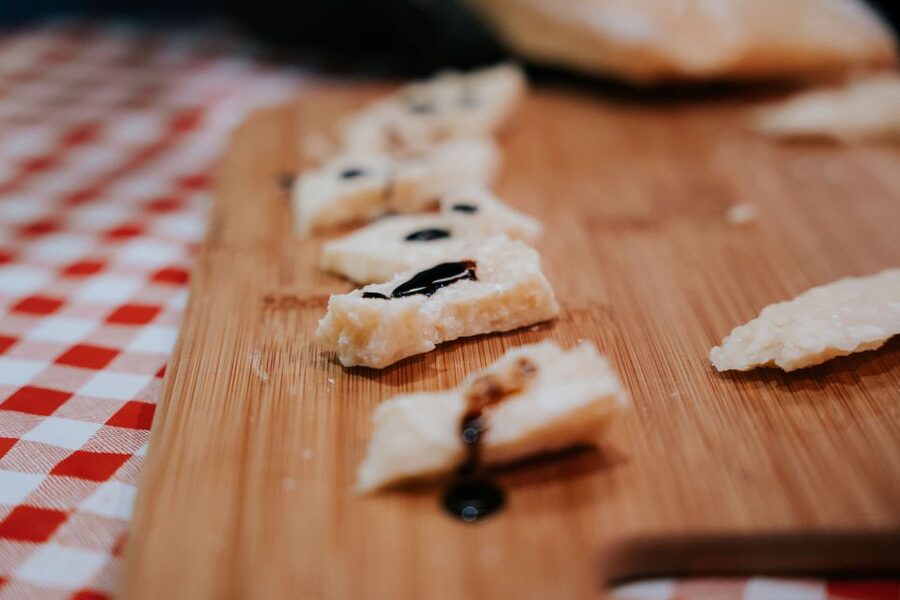
You’ll run into stalls that make Emilia-Romagna famous: cheese stands where you can sample different varieties and watch how things are put together. The guide also points out the role of parmigiano paired with balsamic vinegar—small detail, big payoff, because you start understanding why certain flavors seem to belong together.
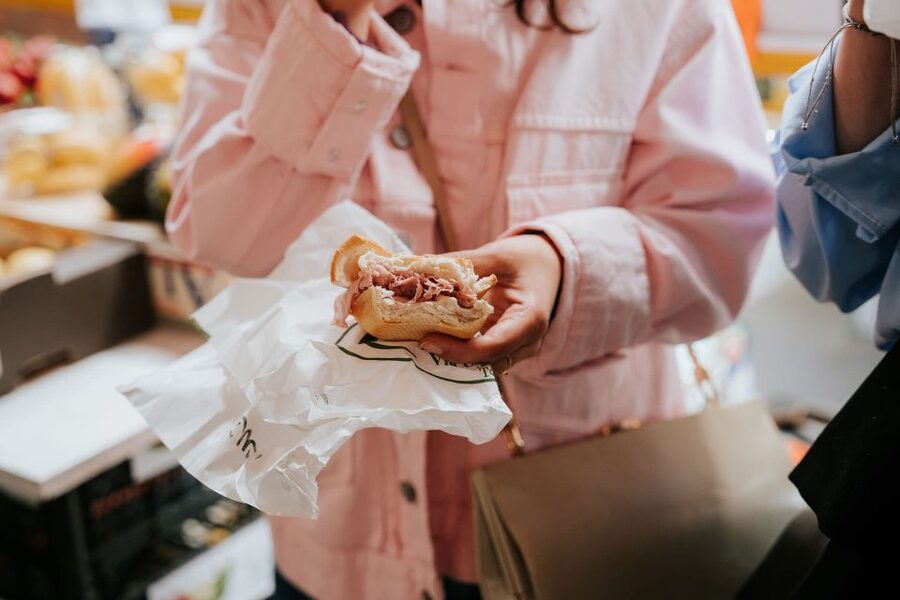
You’ll also get a panini with mortadella. That’s not random. Mortadella is a Bologna signature, and a market panini is a smart way to taste it without needing a sit-down meal.
And here’s another smart part: the guide shops for cold cuts during this segment for later pairing. That means you’re not just tasting whatever is convenient—you’re following the ingredients through the day, which makes the flavors stick in your memory.
Fresh pasta and tomatoes: why shape and freshness change everything
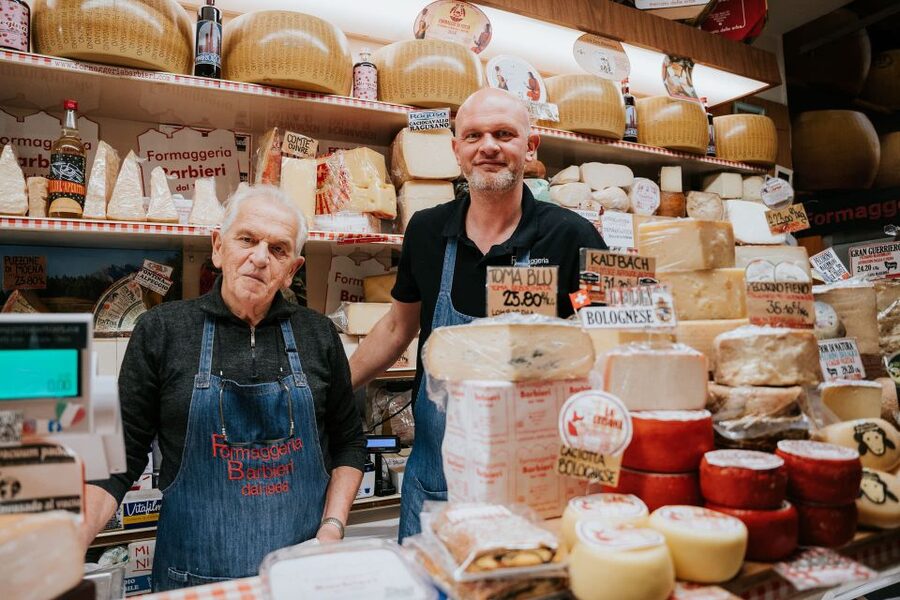
At the market, you’ll also see fresh produce (including tomatoes) and you’ll watch artisans craft pasta in different shapes. You’ll sample handmade tortelli, which is where the tour earns extra points.
Pasta shapes matter. They affect how sauce clings, how the filling tastes, and how the bite feels. When you watch the craft and then eat the result, it’s much easier to understand why Bologna takes pasta seriously.
Also, seeing tomatoes at the market helps you connect them to later dishes. If you’ve only had pasta sauce from a jar, this is the reset button. You start noticing how simple ingredients become something hearty and deep.
More Emilia food and drink to seek out.

The osterias: indoor picnic vibes and classic comfort food
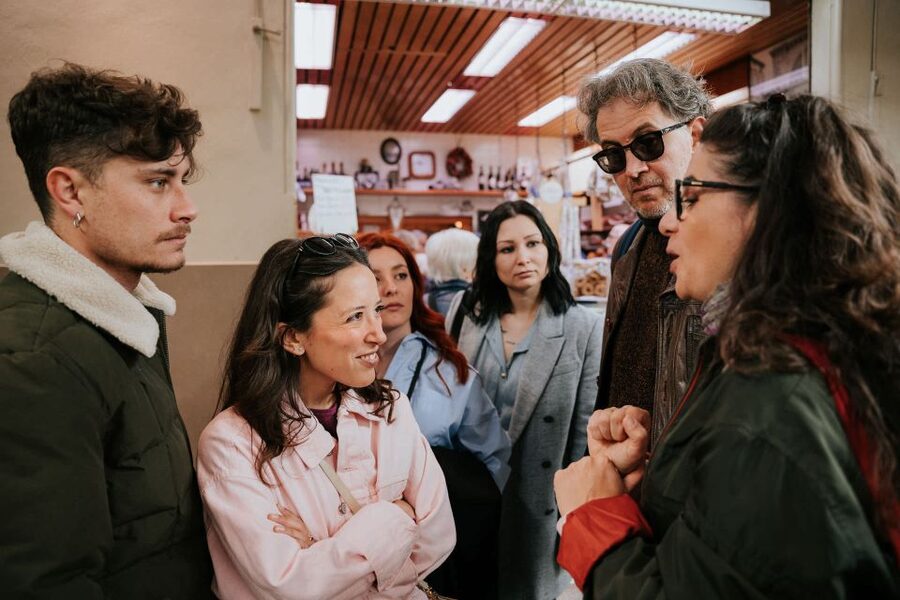
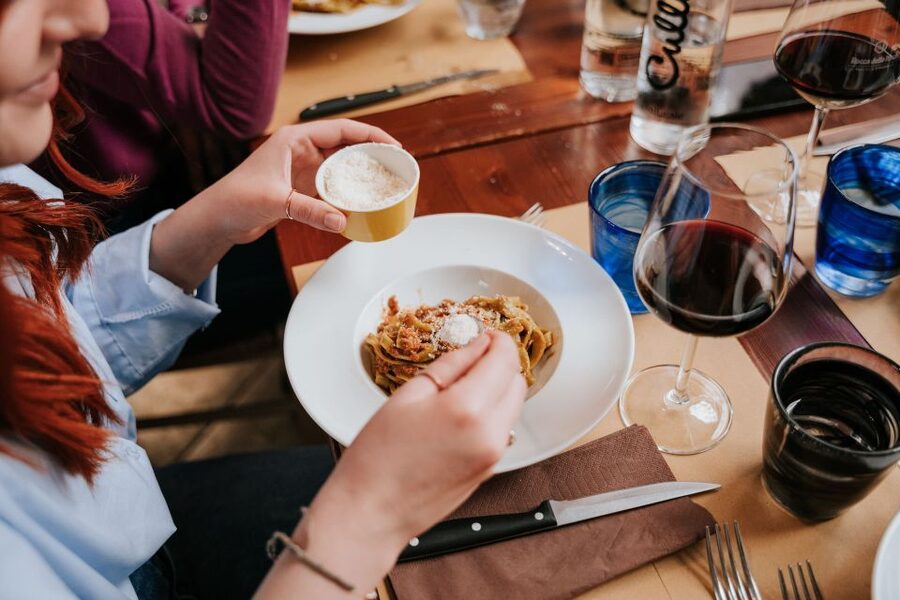
After the market, the tour moves into traditional trattorias and contemporary bistros. This is where the “local” part becomes real. You get more classic dishes and the pacing changes from market browsing to table-time eating.
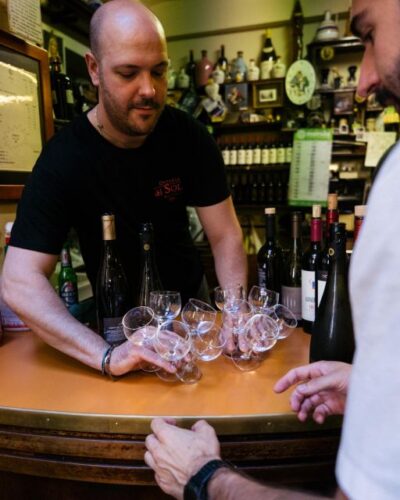
One stop is Osteria del Sole (about 45 minutes). Another is La Salsamenteria Bologna (about 45 minutes), which is a natural fit for cured meats, since Bologna’s food culture runs on high-quality salumi as much as it runs on pasta.
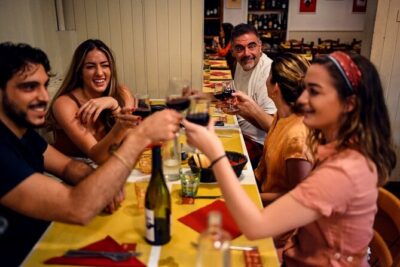
This is also where the tour’s indoor picnic style shows up. Instead of a stiff, formal tasting approach, you’re eating in a setting that feels relaxed and communal. It’s one of those choices that makes the tour feel less like a transaction and more like you’re joining the local rhythm for an afternoon.
A note on food volume: multiple people point out it’s filling early. So even if you arrive hungry, you may want to keep expectations realistic. You’ll likely stop thinking of it as “samples” and start thinking of it as a full meal with many chapters.
Wine and the cold cuts stop: why the pairing feels intentional
You’ll have two glasses of wine included across the experience, and you’ll also get that cold-cuts-and-wine setup that ties back to the market.
La Salsamenteria Bologna is the kind of place where cured meats are the main event. In a tour like this, the value is that you don’t taste cold cuts in a vacuum. You taste them after you’ve seen the market’s ingredient quality, after you’ve heard what makes Bologna-style cured meats stand out, and after you’ve already tried the earlier bites.
This is also a good reason the group size helps. With max 12 people, it’s easier for the guide to manage timing at each place without turning your afternoon into a sprint.
“Spaghetti bolognese” and Bologna food logic
One of the stated highlights is getting to the truth about spaghetti bolognese. Even if you’re not looking for an argument, this is valuable because it teaches you what people actually mean when they talk about regional dishes.
In Bologna, the culture behind the food is as important as the food itself. The guide’s explanations help you understand why some things travel badly outside Italy and why locals treat certain combinations like they have rules.
It’s also a great way to bring your tour into your future meals. After this, when you see a menu back home, you’ll know what to treat seriously and what to treat as a mislabel.
Walking the city like you mean it (and what to watch for)
This tour is built as a walking route with a moderate pace. Not wheelchair friendly, and many spots involve standing. Bathrooms aren’t guaranteed to be fully accessible.
That means your best move is logistical: wear supportive shoes and bring water (water is specifically recommended). Even with a great guide, you’re still walking between multiple food stops in a city center—crowded streets, frequent standing, and tight timings.
Timing matters for another reason. The tour is designed as a smooth sequence of tastings. If you miss the start, you might lose some food and momentum. One person in the reviews notes they missed the first hour and the company was helpful in finding a new meeting point and even saving food—but you shouldn’t plan on that. Show up early, stay with the group, and you’ll get the best flow.
Guides in the field: what consistently makes the experience work
This tour depends heavily on the guide. And the strongest pattern in feedback is not just friendliness—it’s organization, pacing, and story.
Different guides have been mentioned by name, including Benedetta and Isadora, and others like Elle, Michela, Micaela, Sacha, Margherita/Margheritt a, Christina, and Ella. The common thread: they tend to explain the “why,” not just the “what,” and they keep the group together in busy areas so nobody gets left behind.
You’ll also notice small practical leadership touches—like meeting at the exact point with a clearly branded sign and tote, and slowing down when crowds get thick. That kind of care makes a huge difference on a food tour.
One more funny (and useful) eating reminder showed up in feedback: you might get a playful note about proper table behavior—like not using a knife while enjoying certain bites. It’s half joke, half hint: Bologna expects you to eat the food the way it’s meant to be eaten.
Price and value: why this isn’t just a “cheap sample”
At $100.82 per person, you’re paying for a packaged experience: 3.5 hours of guided walking, a local English-speaking guide, and 8 tasting stops with 9+ tastings plus coffee and two glasses of wine.
Here’s how I think about the value:
- You get multiple food categories, not one theme: pastry, market bites, cheese and balsamic pairings, mortadella panini, fresh pasta tastings, and classic dishes at multiple eateries.
- You get wine included, which usually costs extra on its own in Italy when you’re buying drinks one by one.
- You get access to set-ups that are already prepared for a group of 12 or fewer, which means less waiting and more eating.
If you’re the type who wants to try a lot of Bologna without playing detective all day, this price starts to look fair. If you prefer to pace yourself with smaller portions and longer restaurant stays, it might feel like a lot of food in a short time—yet that filling factor is exactly why many people leave satisfied.
Who should book this tour (and who should skip it)
This tour is a great fit if you:
- want an organized way to learn Bologna through food
- like markets and want to see ingredients handled up close
- enjoy wine pairing with small bites
- prefer small groups (max 12) and a guide-led route
Skip it if you:
- are vegan (the tour is not suitable for vegans)
- struggle with frequent standing and walking at a moderate pace
- hate the idea of eating quite a bit in 3.5 hours
Dietary restrictions do have options, but you should plan smart. The tour can be adapted for pescatarians, vegetarians, and those who are dairy-free or gluten-free. Food restrictions or allergies should be shared when booking so the guide can arrange your meals.
My call: should you book Bologna: Tastes and Traditions?
Book it if you want a structured afternoon that feeds you properly and teaches you why Bologna tastes the way it does. The combination of Mercato delle Erbe, multiple classic eateries, coffee to start, and wine along the way is a strong formula—especially if you don’t want to spend your limited time in Bologna searching for the right place to eat.
If you’re the “one big meal only” type, or if walking/standing is hard for you, consider a gentler plan. But if you’re craving real regional flavors—and you’re ready to wear comfortable shoes—this tour is one of the most efficient ways to get a true taste of Bologna in one go.
FAQ
How long is the Bologna food tour with market visit?
It runs for about 3.5 hours.
What’s included in the tastings and drinks?
You’ll have 8 tasting stops with 9+ food tastings, plus 1 coffee and 2 glasses of wine.
Where do I meet the guide?
Meet at Piazza del Nettuno 1/ab in front of the ExtraBo info point. Your guide will have a red Devour Tours tote bag or sign.
Is the tour suitable for vegans?
No, this tour is not suitable for vegans.
Can the tour accommodate dietary restrictions?
It can be adapted for pescatarians, vegetarians, and those who are dairy-free or gluten-free. If you have a food allergy or dietary requirement, contact at the time of booking.
Is transportation included?
No, transport is not included.
What should I bring for the walk?
Bring water, and plan for a moderate walking pace with lots of standing.
More Emilia Food and Drink
More Bologna Food Tours and Market Walks
More Tour Reviews in Bologna
After something different? More ways to fill a day in Bologna and across Emilia-Romagna



Bologna Food Tours & the Quadrilatero Market, compared.
 ★ 5.0Bologna Food & Market Tour with 6 Tastings, Pasta, Wines & MoreFrom $1181,328 reviews
 ★ 5.0Bologna Food Experience: Factory tours & Family-Style LunchFrom $2161,201 reviews
 ★ 4.8Walking Food Tour with a Local GuideFrom $90882 reviews
 ★ 5.0Bologna Food Tour from a local perspectiveFrom $133860 reviews
 ★ 5.0Bologna gastronomic experience with a localFrom $95626 reviews
 ★ 5.0Private Half Day Parma Food Walking TourFrom $134561 reviews
 ★ 3.7Open Bus City Tour and Local Food TastingFrom $46550 reviews
 ★ 5.0Full meal Food Tour with Local Delights by Do Eat BetterFrom $81541 reviews
Browse the lists this tour appears in