
Reviewed · PARMIGIANO REGGIANO & PARMA HAM TOURS
Parmesan Cheese Factory Tour & Tasting near Parma
Parmigiano Reggiano isn’t made in a factory that feels modern. It’s made like a craft, in a setting tied to production traditions going back to 1895, and that old-meets-today approach is exactly why this visit works. I especially like the guided walkthrough (not just a quick look around) and the chance to taste three ages—15, 24, and 36 months—so you can actually connect time to flavor.
My only real caution: the most interesting part, the production rooms, is only available at two set start times (7:30 AM and 8:30 AM). If your schedule is flexible, great. If it’s not, you might end up with less of the live cheese-making action than you hoped for.
In This Review
- Key things I think you’ll notice fast
- Why this Parmigiano factory tour feels worth the drive
- Getting to Azienda Agricola Bertinelli near Parma without stress
- The 7:30 AM / 8:30 AM production-room window
- Aging rooms: hundreds of wheels and the real meaning of time
- The video lesson: a calm refresher, not a detour
- Tasting three ages of Parmigiano Reggiano (15, 24, 36 months)
- Sustainable farming and animal welfare: why it’s more than marketing talk
- Price and value: what $65 buys you (and what it doesn’t)
- Who should book this (and who might want a different plan)
- The bottom line: should you book the Parmigiano tour at Bertinelli?
- FAQ
- How long is the Parmigiano Cheese Factory Tour & Tasting near Parma?
- What times can I see the production rooms?
- What cheeses do you taste on this tour?
- What comes with the cheese tasting?
- What languages are the tours offered in?
- Is there free cancellation?
Key things I think you’ll notice fast
- Small group pace (max 10) makes it easier to follow along and ask questions.
- 7:30 or 8:30 AM production-room access controls how much you see the real-time making.
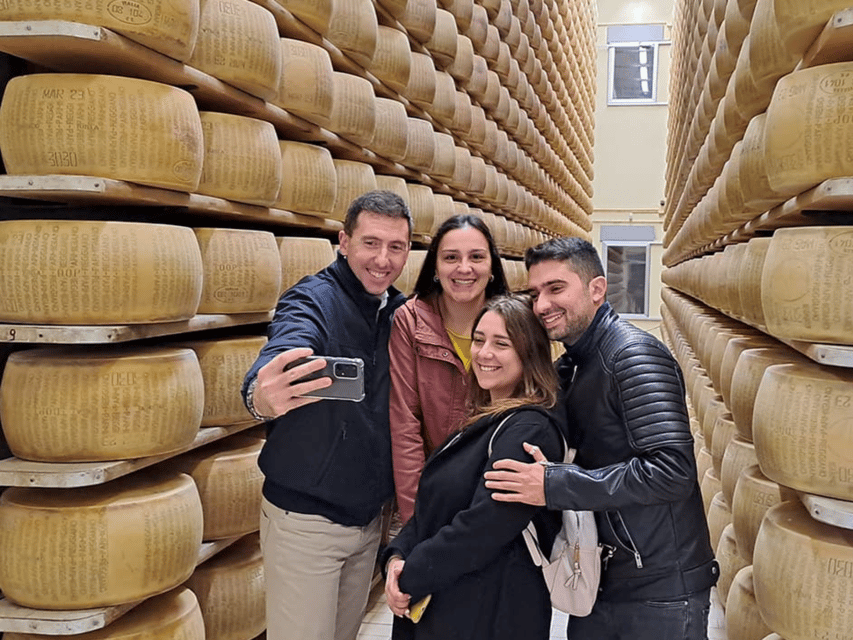
- Aging-room “wheel walls” show the scale of how time does the work.
- Three tastings (15/24/36 months) help you hear the cheese’s evolution in your own mouth.
- Wine pairing with Lambrusco or Malvasia keeps the tasting from feeling like a lecture.
- Animal welfare and organic feed details add meaning to the label beyond the food.
Why this Parmigiano factory tour feels worth the drive
This is one of those experiences in Emilia-Romagna where food culture is front and center, but you’re not stuck with a souvenir-only stop. You’re visiting an active cheese-making operation in Noceto, near Parma, and the format is tight: about 40 minutes of guided touring plus 20 minutes for tasting.
I like that the tour doesn’t treat Parmigiano Reggiano as a mystery. You get to see the actual process in the production rooms, then you see where the cheese goes to age, then you taste the result with planned pairings.
It’s also a good reminder that “world-famous” doesn’t automatically mean you’ll learn nothing. Here, you learn the why behind the flavor—starting from milk, moving through curd handling, and landing in those long aging rooms.
Out to the dairies and curing rooms for Parmigiano and Parma ham.
Getting to Azienda Agricola Bertinelli near Parma without stress
The meeting point is Azienda Agricola Bertinelli in Noceto, about 30 minutes from Parma by car. That means you’ll want to plan the same way you’d plan a museum day: arrive early enough to settle in, because the tour timing matters.
Transportation isn’t included, so budget for your own ride (30 minutes by car or public transport). If you’re using public transport, build in buffer time—small tours move to the clock, not to your map app.
Quick practical tip: if you’re eating before or after, plan around a casual meal nearby. Some visitors also point out there’s a friendly spot to grab food before and after your visit, which is handy if you want a full half-day out of Parma.
The 7:30 AM / 8:30 AM production-room window
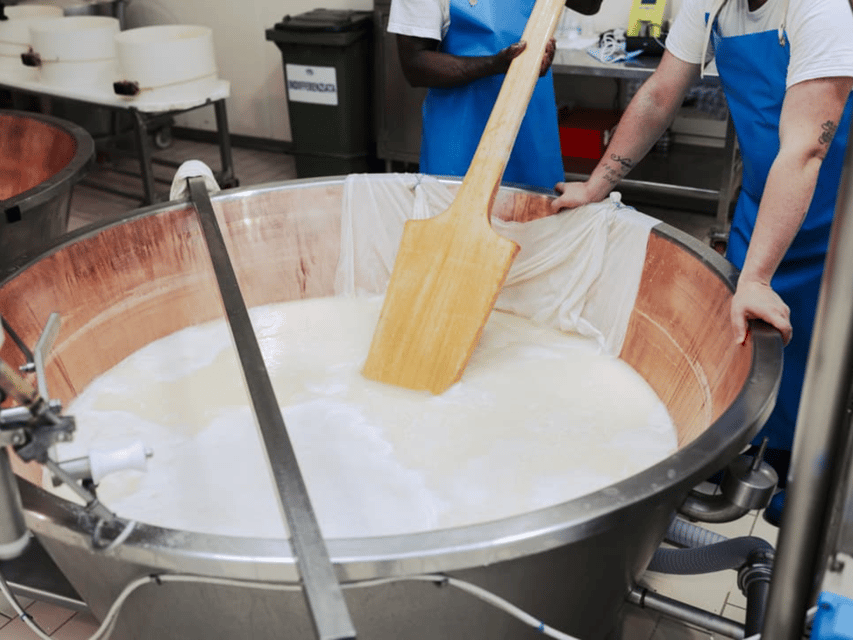
The standout moment is watching traditional cheese-making in the production rooms. Here’s the key detail: production-room access only happens at 7:30 AM and 8:30 AM. If you book a different time, you’ll miss that live, in-the-room action.
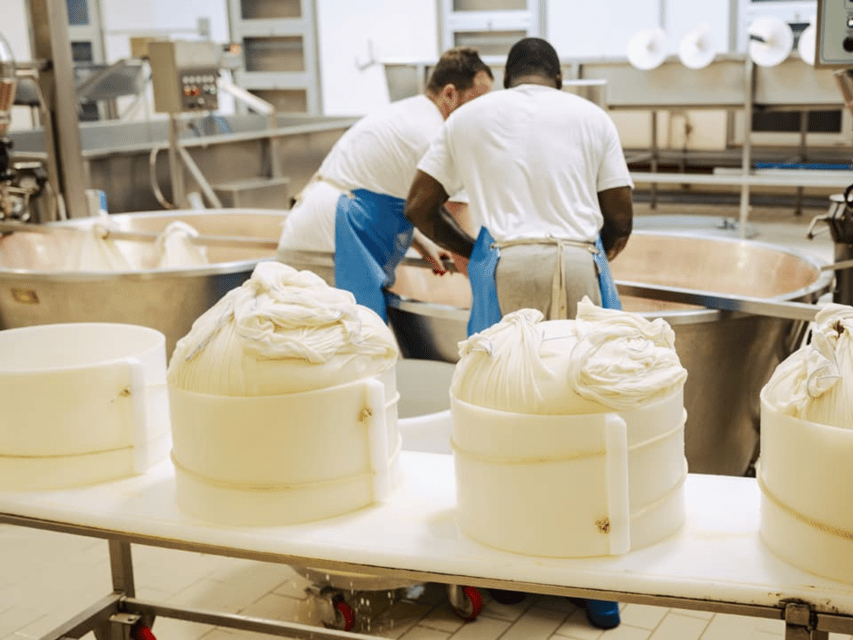
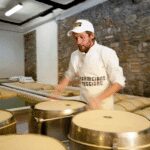
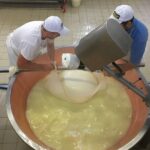
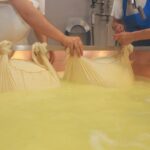
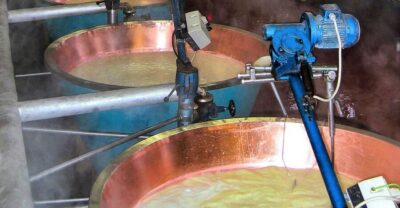
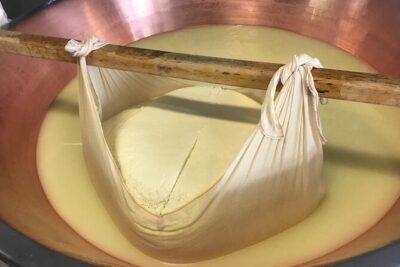
In the production area, artisans show how fresh milk becomes Parmigiano Reggiano using traditional steps—things like curdling and shaping—before wheels head to aging. Even if you’re not a dairy person, you’ll recognize the logic: carefully controlled processes, repeated daily.
English and Italian guidance matters too. The tour is run in those languages, and the guide explains clearly enough that mixed-language groups can follow without feeling lost. Guides like Giulia and Lorenzo get praise for being entertaining as well as knowledgeable, which makes the production-room segment feel more human and less like a slideshow.
Aging rooms: hundreds of wheels and the real meaning of time
After the production rooms, you move on to the aging facilities. This is where the tour goes from “how it’s made” to “what makes it Parmigiano.”
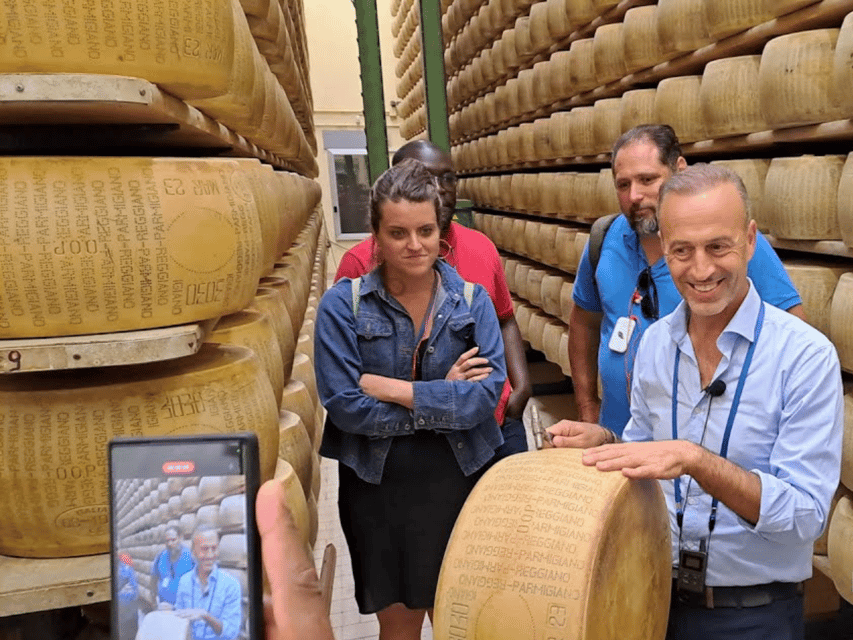
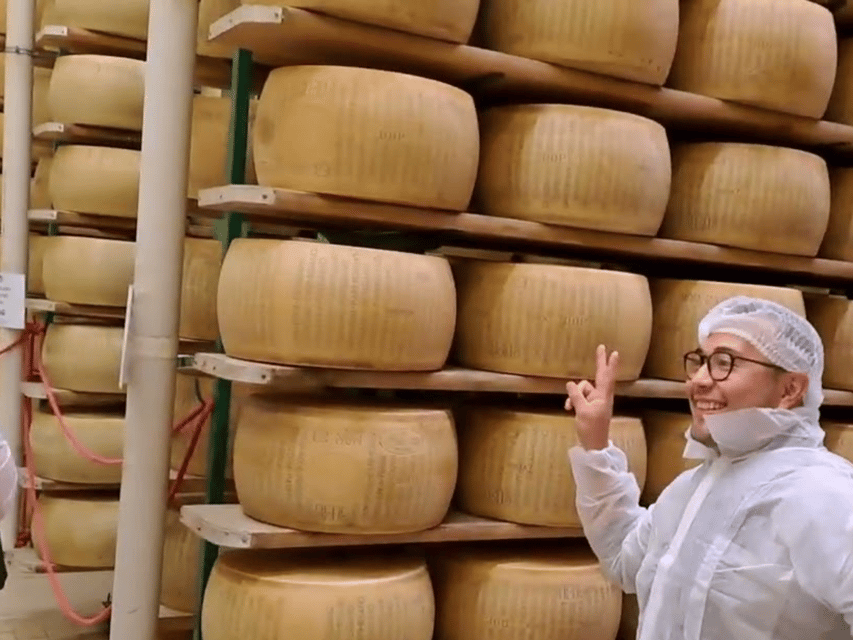
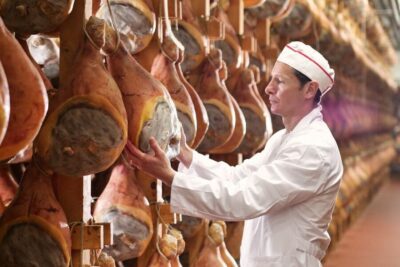
You’ll explore storage areas filled with hundreds of cheese wheels, stacked in long, orderly rows. The point isn’t just to see a lot of cheese. It’s to understand that Parmigiano Reggiano isn’t a quick product—it’s a slow transformation.
The guide’s messaging is practical: aging changes texture and flavor. When you later taste 15, 24, and 36 months, the aging-room experience helps your brain connect the dots. Without that walk through the aging rooms, the tastings can feel like three separate samples. With it, they feel like stages of the same story.
The video lesson: a calm refresher, not a detour
Between the physical rooms and the tasting, there’s a video lesson explaining the cheese-making process. It’s meant to reinforce what you just saw, including the steps behind how Parmigiano Reggiano is produced.
What you should like here is that it’s a structure the tour uses to keep things understandable. If you’re someone who struggles to hold onto details while walking, the video gives your notes a backbone.
Also, because the tour is designed for small groups, the guide can keep the pacing friendly. It doesn’t feel like you’re being marched from room to room with no context. You’re given a narrative.
More of the Motor Valley museums and factory floors.

Tasting three ages of Parmigiano Reggiano (15, 24, 36 months)
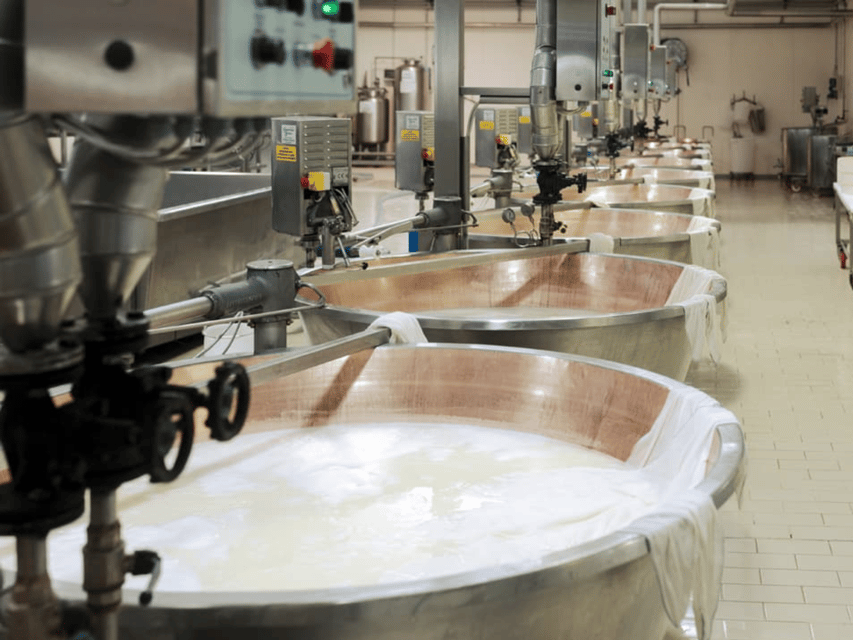
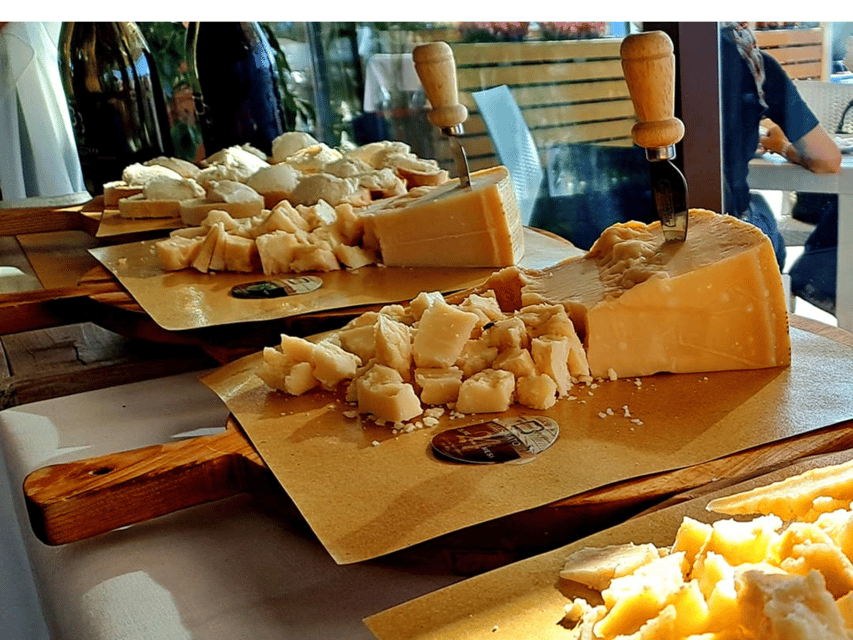
The tasting is the heart of the tour, and it’s built for learning with your palate. You’ll sample three different ages:
- 15 months: a younger profile that tends to feel more tender and mild
- 24 months: the middle stage, where flavor deepens
- 36 months: the longest-aging sample, typically firmer and more intense
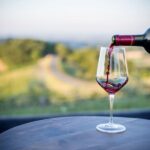
Along with the cheeses, you’ll also get Parmigiano cream, a glass of regional wine (either Lambrusco or Malvasia), and water. That pairing matters because Parmigiano doesn’t taste the same way in plain bites. Wine and accompaniments help you separate texture from saltiness and intensity.
I also like that the tasting setup is straightforward: three ages plus simple pairings. You’re not paying for a complicated spread. You’re paying for a focused lesson you can take home, meaning you’ll know what you’re buying when you see different-aged wheels in shops.
If you’re the type who loves comparing textures—crumbly versus more firm, buttery versus sharper—this is the moment to slow down and actually compare between samples.
Sustainable farming and animal welfare: why it’s more than marketing talk
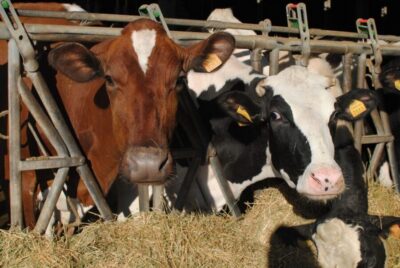
One of the more meaningful parts of this tour is the attention to sustainability and farm practices. The farm operates with a focus on animal welfare and cultivates organic feed for Friesian cows.
You don’t just hear generic claims. The way it’s presented connects care and environment to the quality of the production chain. That’s important because Parmigiano Reggiano is an ingredient product, not a flashy dish. You can taste differences in milk sourcing and process discipline, even if you’re not chasing a science degree.
This is also where the tour feels more grounded. You leave with a clearer sense that this isn’t only about cheese—it’s about the ecosystem around it and the consistent work required to keep tradition going while still meeting modern expectations.
Price and value: what $65 buys you (and what it doesn’t)
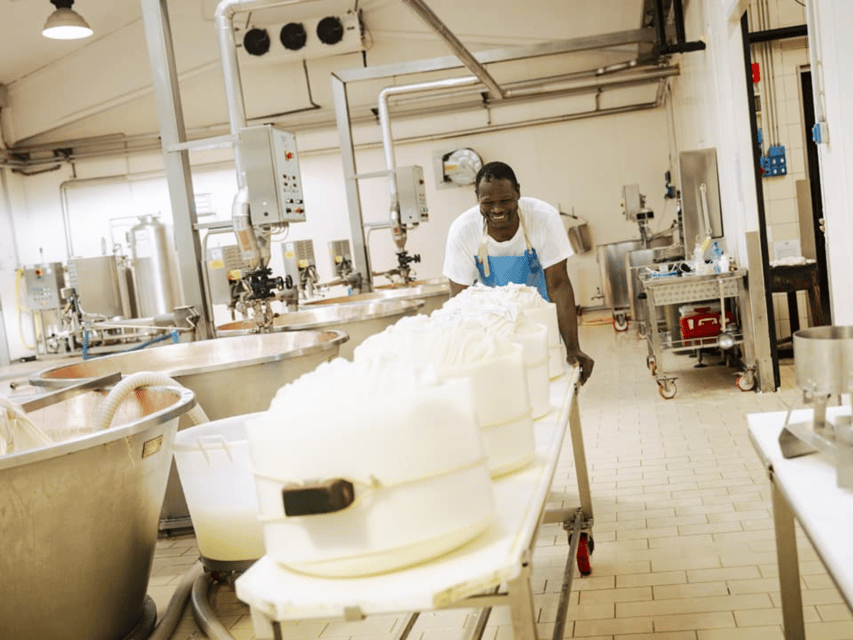
At $65 per person for about 1 hour, this isn’t the cheapest food stop near Parma. But it’s also not just a ticket to stand in a room and take photos.
For the price, you’re getting:
- a guided visit through production and aging rooms
- a tasting of three cheese ages (15/24/36 months)
- a wine glass plus Parmigiano cream and water
So the real value is that the tour compresses a lot of “learning time” into a short visit. If you hate long tours, this one is designed to be short and structured.
One value tip: a guide in the group may mention that booking directly through the dairy’s website can sometimes be cheaper. Since the experience is the same cheese-making operation, it’s smart to compare prices before you lock it in.
What $65 does not cover is transportation. Also, there’s no mention of a broader meal beyond the tasting items, so plan for food before or after if you’re hungry.
Who should book this (and who might want a different plan)
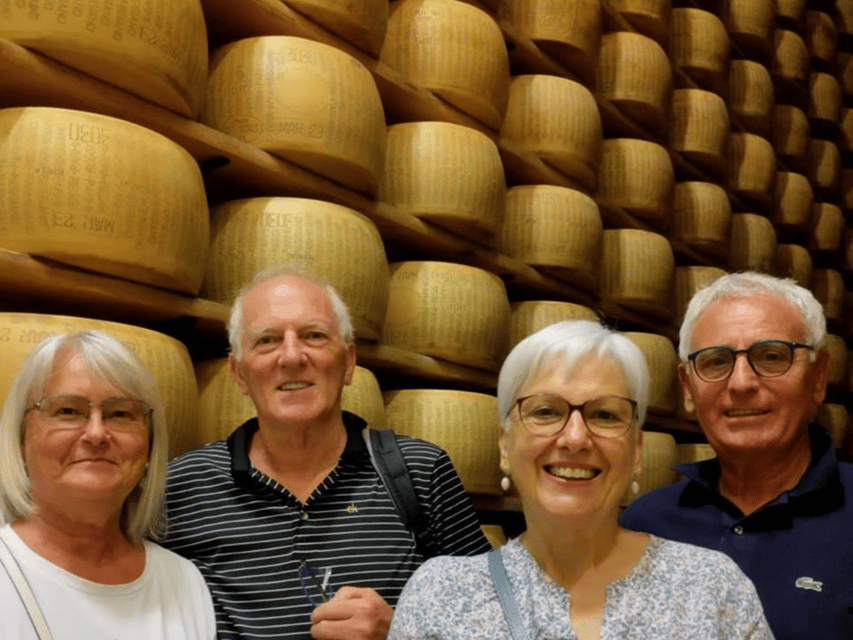
This works best for you if you:
- want a guided, practical look at how Parmigiano Reggiano is made
- care about tasting differences by age and want a structured way to compare
- enjoy food experiences that include farming and welfare details, not only tasting
It can be less ideal if you:
- can’t make the 7:30 AM or 8:30 AM start times and really want to see the production rooms in action
- prefer very long “full-day” itineraries and want more than one cheese-focused segment
It’s also a good option for families. One helpful detail from real-world experience: the tour timing and pace can work for children, and you can bring a stroller/buggy all the way to the tour area.
The bottom line: should you book the Parmigiano tour at Bertinelli?
If your schedule can match a 7:30 AM or 8:30 AM slot, I’d book it. Seeing the live production makes the tasting feel earned, not random. And the three-age tasting—15, 24, 36 months—means you’ll come away with real comparisons you can use when buying cheese later.
If you can’t do those early times, still consider booking, but set your expectations accordingly. The production-room timing is the hinge point for the most hands-on part of the experience.
FAQ
How long is the Parmigiano Cheese Factory Tour & Tasting near Parma?
The tour lasts about 1 hour, with roughly 40 minutes for the guided visit and 20 minutes for the tasting.
What times can I see the production rooms?
The production rooms are only accessible during the specific start times of 7:30 AM and 8:30 AM.
What cheeses do you taste on this tour?
You’ll taste three ages of Parmigiano Reggiano: 15, 24, and 36 months.
What comes with the cheese tasting?
The tasting includes Parmigiano cream, a glass of regional wine (Lambrusco or Malvasia), and water.
What languages are the tours offered in?
The live tour guide speaks English and Italian.
Is there free cancellation?
Yes. You can cancel up to 24 hours in advance for a full refund.
More Ferrari and Lamborghini Museum Tours
More Parmigiano and Parma Ham Tours

More Tour Reviews in Parma
After something different? More ways to fill a day in Bologna and across Emilia-Romagna


Parmigiano Reggiano & Parma Ham Tours, compared.
 ★ 5.0Tour Parmigiano Reggiano dairy and Parma hamFrom $151601 reviews
 ★ 4.9Parmigiano Production and Parma Ham Tour & TastingFrom $126554 reviews
 ★ 5.0Guided group tour TastyBus: Parmesan Cheese and Parma HamFrom $169241 reviews
 ★ 4.9Traditional Cheese Factory Visit with TastingFrom $82225 reviews
 ★ 4.9Parmesan, Parma Ham & Balsamic Vinegar TourFrom $220187 reviews
 ★ 5.0Parmigiano Cheese, Parma Ham and BalsamicFrom $205166 reviews
 ★ 4.8Parmigiano and Parma Ham Guided Food TourFrom $134144 reviews
 ★ 4.9Cheese, Ham, & Balsamic Vinegar Tour with TastingsFrom $181143 reviews
Browse the lists this tour appears in