
Reviewed · MODENA & PARMA CITY WALKS
Private Half Day Tour to Parma the City of Perfume
Perfume and city history meet in 3 hours. I love how the tour pairs the story of the Violetta di Parma with visits you don’t normally find on a standard checklist, and I especially enjoyed learning with guide Michelle Costa. The one thing to consider is that you’ll cover about 2 km at an easy pace, and several sights are viewed from the outside.
This is a true private half-day experience in central Parma, with a morning or afternoon departure. You meet at Ponte Giuseppe Verdi and finish around Piazza Giuseppe Garibaldi, so it feels like a focused walk through the core of town rather than a bus-and-stop-and-go day.
If you like practical, scent-based history, you’ll get your money’s worth: violet botanics, court-era buildings, operatic facades, and then the perfume supply chain from apothecaries to modern packaging. It’s offered in English, uses a mobile ticket, and is designed so most travelers can join with moderate walking.
In This Review
- Key things I’d plan around
- What this Parma perfume tour is really about
- Meeting points and how the route feels
- Stop 1: Greenhouses in the Ducal Park and Violetta di Parma
- The Pilotta exterior: court services, Farnese power, and dynastic change
- Palazzo di Riserva and the Glauco Lombardi Museum connection
- Teatro Regio façade: opera legends and Parma’s stage power
- Piazza Duomo and the Cathedral/Baptistery from outside
- Color Viola 1930 shop: Borsari, glassmakers, and the making of a brand
- Garibaldi Square walk: “Creative City of Gastronomy” in your line of sight
- Acqua di Parma store: origins, variations, and the supply chain behind perfume
- San Filippo Neri Antique Pharmacy: the 1789 apothecary that smells like history
- What’s included (and where the value comes from)
- Who this tour suits best
- How far in advance to book
- Should you book the Parma City of Perfume private tour?
- FAQ
- How long is the Private Half Day Tour to Parma the City of Perfume?
- What does the tour cost per person?
- Where do I meet and where does the tour end?
- Is the tour private?
- What’s included in the ticket price?
- How much walking is involved?
Key things I’d plan around
- A small, private format: only your group participates, so you can ask questions without feeling rushed
- The violet story is central: Violetta di Parma and how violet culture shaped Parma’s identity
- Access to a preserved 1789 apothecary: the San Filippo Neri Antique Pharmacy is the standout “how it was made” stop
- Real industry connections: Borsari and even local glassmaking tied to perfume bottles
- Historic monuments, but efficient: cathedral and Teatro Regio exteriors keep the pace easy
- Shopping streets without pressure: museum/pharmacy access is included; purchases are optional
What this Parma perfume tour is really about
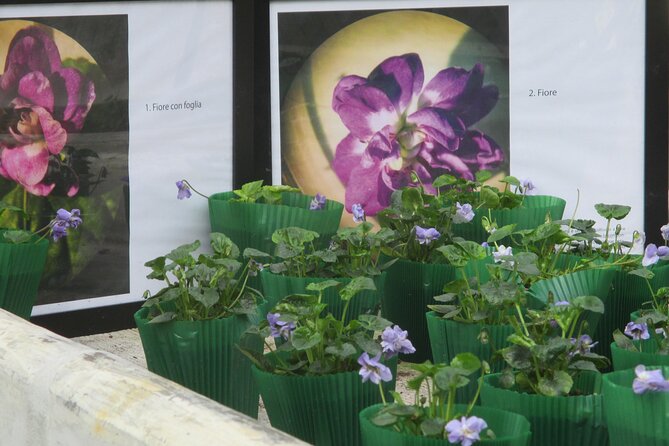
Parma gets labeled for food, but this tour reminds you the city has another claim to fame: fragrance. The core idea is simple. You start with the violet flower and Parma’s long relationship with it, then you move into the places where perfume and cosmetics were crafted, sold, and packaged—up close.
You’ll also notice the tour has a careful balance of outside sights and hands-on story stops. The exteriors (cathedral, baptistery, Teatro Regio, big palaces) help you place Parma in time, while the inside stops explain the craft and the supply chain. That mix is what makes the 3-hour timing feel right instead of frantic.
And because this is guided privately by Artemilia Guided Tours, you can expect a more conversational pace. In the reviews, people singled out the guide’s ability to connect details—like how buildings relate to dynasties and why violet culture mattered to the perfume economy.
Time on foot through the Modena and Parma old towns.


Meeting points and how the route feels
You’ll start at Ponte Giuseppe Verdi in Parma, right in the middle of town, and you’ll end at Piazza Giuseppe Garibaldi. That’s a smart setup because once the tour ends, you’re already where most restaurants, cafes, and post-tour wandering happen.
The route is designed for a moderate walking load (about 2 km). That’s enough to feel like you’ve moved through the historic center, but not so much that you need long breaks. If you prefer to take it slow, tell your guide at the start—this tour’s format makes small pacing adjustments realistic.
You’ll also want to dress for comfort. Some stops are outdoors and you’ll likely do your best looking with your neck tilted up at façades.
Stop 1: Greenhouses in the Ducal Park and Violetta di Parma
The tour begins with the greenhouses in the Ducal Park, and that botanical start matters more than you’d expect. You’re not just hearing that Parma is famous for perfume. You’re learning why the violet became a symbol worth cultivating—linked to the Violetta di Parma and its presence within the Duchy of Parma and Piacenza in the second half of the 18th century.
This is a great first move because it gives you a mental anchor before the city-hopping begins. Once you understand the flower’s significance, the perfume stops later feel less like random store visits and more like chapters in a story.
Practical tip: if you care about smells and plant details, take a moment here to ask your guide what to pay attention to. Even if you don’t see every botanical nuance, the explanation sets up everything after.
The Pilotta exterior: court services, Farnese power, and dynastic change
Next you’ll see the exterior of Palazzo della Pilotta, a massive early-17th-century building created by the Farnese. The key idea your guide will bring is that the palazzo wasn’t just for show. It functioned as an imposing container for the court’s services, meaning day-to-day life of power.
Then comes the dynastic angle: you’ll retrace the passages that followed the extinction of the Farnese dynasty. This is one of those “history with a reason” stops—rather than memorizing dates, you connect how ownership and political shifts changed the use and meaning of major buildings.
Drawback to note: since this is an exterior stop, you’ll get your best value if you like architectural context. If you want lots of interior access, know that the tour reserves the deeper inside time for places tied to perfume and pharmacy.
Palazzo di Riserva and the Glauco Lombardi Museum connection
The tour then heads to the exterior of Palazzo di Riserva, where the Glauco Lombardi Museum is located. If you’re doing the museum option, this stop helps you understand why the violet wasn’t just a nice scent—it became a fashionable success.
Your guide will connect violet popularity to the First and Second Empire and to Maria Luigia of Austria, including her preference for the small flower. It’s a useful reminder that fashion and fragrance often move together. In perfume history, who wanted it and when can be as important as how it was made.
What to expect: you’re not touring the whole museum from the outside, but you’re getting the context that makes the museum visit feel like a continuation, not a separate experience.
More ways to get the measure of Bologna.
Teatro Regio façade: opera legends and Parma’s stage power
You’ll get a look at the exterior of Teatro Regio, one of the world’s notable opera houses. This part works best if you enjoy cultural crossovers. The guide will point out famous names connected to performances and work there, including Paganini, Verdi, Toscanini, Callas, and Beniamino Gigli.
Why this matters in a perfume-focused tour: opera houses were major cultural engines. When cities build grand venues, they’re also shaping how tastes travel—fashion, music, and luxury goods often ride the same social currents.
Again, exterior only. Still, the façade and the storytelling make it worth the time.
Piazza Duomo and the Cathedral/Baptistery from outside
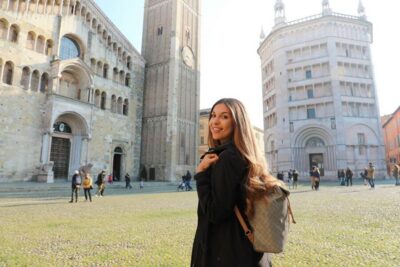
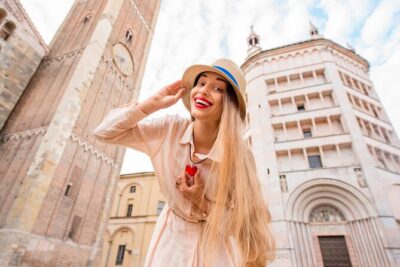
Now you cross Piazza Duomo and admire the Parma Cathedral from the outside, followed by a view of the magnificent Baptistery of Parma.
These are classic “stop and look up” moments. The value here is less about long photo time and more about having someone explain what you’re seeing while you’re still standing in the right place. You’ll also get a clean flow through the historic center without turning the tour into a marathon of indoor tickets.
If you want interior cathedral visits, you can plan those separately. This tour prioritizes perfume craft, not religious interiors.
Color Viola 1930 shop: Borsari, glassmakers, and the making of a brand
Then you step into a more direct perfume-world stop: Color Viola 1930. The tour includes about 30 minutes here, with admission listed as free.
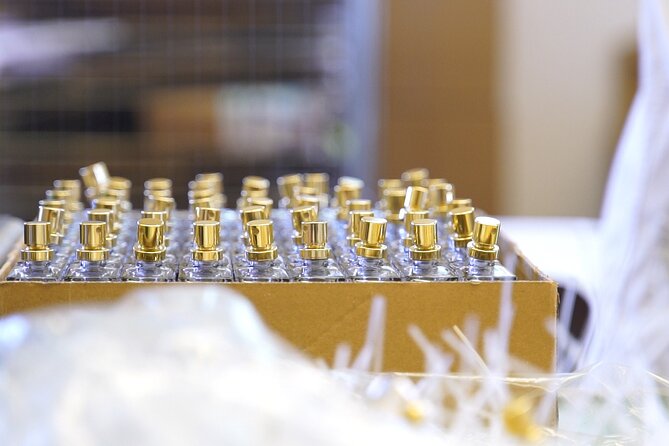
This is where the story connects people, product, and materials. You’ll learn about Ludovico Borsari and the Borsari Company products from the first half of the 20th century. The guide also ties in contemporary local glass industry represented by Bormioli, which is a neat detail because perfume isn’t just scent. It’s also design and packaging—bottles, caps, labels, the whole identity.
What I liked most about this kind of stop: it explains why Parma perfume isn’t only about smell. It’s about the look of luxury, and local manufacturing that made that look possible.
If you’re a collector type, keep your eyes open for vintage bottle details. This is the kind of shop visit where your guide can point out what makes one era different from another.
Garibaldi Square walk: “Creative City of Gastronomy” in your line of sight
After the Color Viola stop, the tour walks through Garibaldi Square. You’ll see buildings like the Captain’s Palace, the Town Hall, and the Governor’s Palace, plus shops, restaurants, and cafes.
The tour ties this area to Parma’s UNESCO Creative City of Gastronomy label. Even if you’re on a perfume-focused mission, this context helps you connect why people care about Parma beyond fragrance.
This is also a good breathing moment. You’re not standing in a queue, you’re walking and looking, and your guide can keep the storytelling moving at a comfortable pace.
Acqua di Parma store: origins, variations, and the supply chain behind perfume
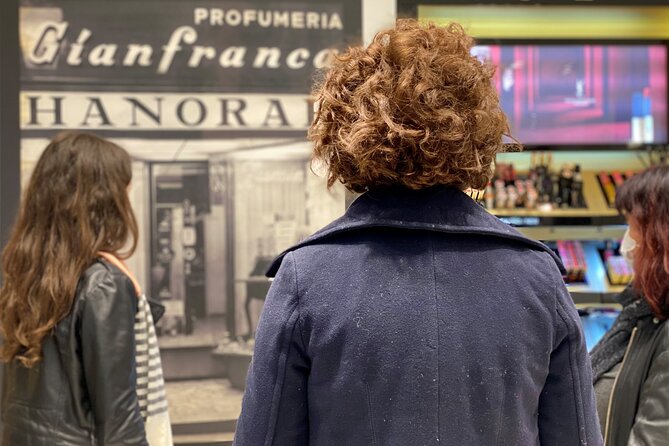
Next is an Acqua di Parma store visit (about 40 minutes, with free admission included). This stop is one of the most practical for modern visitors, because it links brand history to the broader perfume supply chain.
You’ll learn about the brand from origins through newer variations, plus the history of companies in Parma’s perfume ecosystem. The key idea is how the supply chain expanded over time—from founders working in small laboratories to becoming major references worldwide for perfume packaging, including bottles, caps, and labels.
This is great if you’ve ever wondered why perfume brands feel so different just by looking at their containers. Parma didn’t just produce scents. It supported the whole visual and industrial system that sells scent.
You won’t be forced to buy anything. The stores are there to give you context and examples, not to turn your tour into a sales pitch.
San Filippo Neri Antique Pharmacy: the 1789 apothecary that smells like history
If you want one stop to plan your entire trip around, make it San Filippo Neri Antique Pharmacy and Oratory of San Tiburzio.
Your visit includes about 50 minutes, and admission is free as part of the tour. This is described as hidden in the historic center, and it functions as a guardian of Parma’s cosmetic and pharmaceutical heritage.
Here’s what makes it special in a way no brochure can copy:
- it has a galenic laboratory preserved with structure dating back to 1789
- you can discover and understand the raw materials once used by apothecaries and perfumers
- you’ll hear about ancient recipe books based on natural ingredients
In the reviews, people highlighted the fact that this kind of place is not normally open in the same way you can access during the tour. That access is a big part of the value: you’re not just hearing perfume anecdotes; you’re seeing how the craft and the science were housed in real space.
Practical consideration: this stop is your “pay attention” moment. If you’re the type who likes smelling and touching materials during guided explanations, bring your curiosity here. If you prefer to skip sensory details, you can still follow along by focusing on the history and how the lab is preserved.
What’s included (and where the value comes from)
This tour includes:
- a professional local guide
- entrance to either the Glauco Lombardi Museum or the San Filippo Neri Antique Pharmacy and Oratory of San Tiburzio (your itinerary route covers that choice)
- entrance to an Acqua di Parma store
- entrance to one historic perfumery in the city center
Not included is simply what you might buy at shops and perfumeries. That’s normal, but it also means you can enjoy this as a learning tour without spending extra.
About the price: at $216.29 per person, you’re paying for a guided route plus multiple entry experiences that you likely can’t reproduce as easily on your own in the same time window. You’re also getting a guide who connects perfume details to Parma’s buildings and eras, which is where most self-guided “store hopping” stops fall short.
Who this tour suits best
This is ideal for you if:
- you like perfume history tied to real places (not just brand names)
- you enjoy thoughtful museum-style context in a short timeframe
- you want a private, easier walk through the center
- you appreciate the craft side of luxury (materials, packaging, lab process)
It’s less ideal if:
- you want mostly inside monument tours and long museum time blocks
- you get easily impatient with outdoor façades and short exterior stops
How far in advance to book
This one is booked far ahead on average. If you have a specific morning or afternoon preference, I’d plan early. A private tour format like this doesn’t leave much flexibility once your dates are set.
Also, it’s worth noting that the experience can be canceled if a minimum number of travelers isn’t met. If you’re traveling in a busy season, you’ll likely have better luck, but don’t wait until the last days if your schedule is tight.
Should you book the Parma City of Perfume private tour?
I’d book it if you want a smart, intimate way to see Parma through scent, craft, and period buildings—without turning the day into a checklist sprint. The standout value is the combination of violet-based perfume identity with the 1789 San Filippo Neri Antique Pharmacy visit, plus the Acqua di Parma and Color Viola shop stops that show how the industry works.
Skip it only if you already know you want heavy interior sightseeing every stop. This tour is built for walking, story, and a few high-impact indoor experiences—not for filling every minute with museums.
If your goal is to leave Parma with more than photos—if you want a real sense of how violet perfume became a Parma signature—this is one of the best ways to do it in half a day.
FAQ
How long is the Private Half Day Tour to Parma the City of Perfume?
The tour lasts about 3 hours.
What does the tour cost per person?
The price is $216.29 per person.
Where do I meet and where does the tour end?
You start at Ponte Giuseppe Verdi, Parma PR, Italy, and the tour ends at Piazza Giuseppe Garibaldi, 43121 Parma PR, Italy.
Is the tour private?
Yes. It’s a private tour/activity, and only your group participates.
What’s included in the ticket price?
You get a professional local guide, entrance to Glauco Lombardi Museum or San Filippo Neri Antique Pharmacy and Oratory of San Tiburzio, entrance to an Acqua di Parma store, and entrance to one historic perfumery in the city center.
How much walking is involved?
There is a moderate amount of walking, about 2 km. Most travelers can participate. Service animals are allowed.
More Bologna City Tours
More Modena and Parma City Walks
More Tour Reviews in Parma

After something different? More ways to fill a day in Bologna and across Emilia-Romagna





Modena & Parma City Walks, compared.
 ★ 5.0Private Half Day Parma Food Walking TourFrom $134561 reviews
 ★ 4.2City Walking TourFrom $27203 reviews
 ★ 4.8A Full Meal Walking Food Tour with a LocalFrom $10598 reviews
 ★ 5.0Taste Parma: A Full Meal Walking Food Tour by Do Eat BetterFrom $8064 reviews
 ★ 5.0Taste Modena: A Full Meal Walking Food Tour by Do Eat BetterFrom $9652 reviews
 ★ 4.5Parma Classic Walking TourFrom $2639 reviews
 ★ 4.0Modena City Walking TourFrom $3038 reviews
 ★ 4.92-Hour Private Walking TourFrom $14720 reviews
Browse the lists this tour appears in