
Reviewed · BOLOGNA WALKING TOURS & CITY HIGHLIGHTS
Parma Classic Walking Tour
Parma tells its story through stone and paint. This Parma Classic Walking Tour strings together the city’s top sights in a way that’s easy to follow, with plenty to look up at and talk about. It’s built for a quick but meaningful first pass through Parma, plus a food moment at the end that makes the whole walk feel more like Parma and less like a checklist.
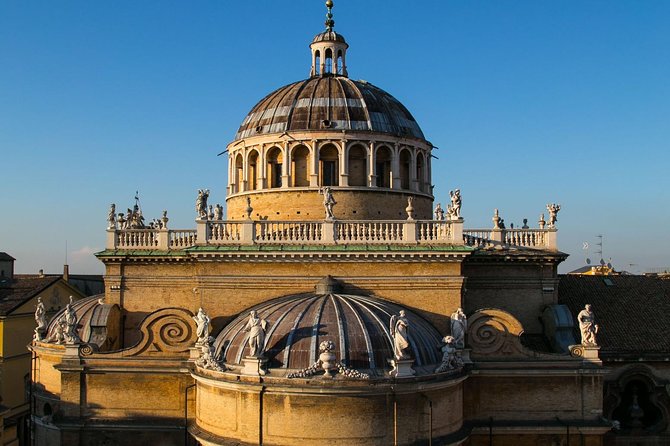
I especially like the stop choices around major landmarks: Parma Cathedral for the big art-and-architecture moments, and Santa Maria della Steccata for a strong sense of how 1500s Parma looked and thought. I also like that the tour format stays focused—short visits at each site, so you get context without getting stuck in lines all day.
One thing to consider is that the guide runs a bilingual (English/Italian) approach depending on the group. If your group has more Italian speakers, you may hear more Italian than you expected, and that can affect pacing and how many spots feel fully covered.
In This Review
- Key highlights you’ll feel on the ground
- Walking pace and what you’ll actually see in 2–3 hours
- Parma Cathedral: Antelami’s legacy and Correggio’s painted dome
- Old streets of Parma where the city still feels medieval
- Palazzo della Pilotta and Teatro Farnese: exteriors first, interiors later
- Basilica di Santa Maria della Steccata and 1500s Parma’s visual language
- Mercato coperto di Piazza Ghiaia: the market-glance that grounds it
- The bilingual guide setup: English, Italian, and timing
- Price and logistics: why $26.43 can still feel fair
- Cheese tasting at the end: Parma’s culture in one bite
- Who should book this Parma Classic tour—and who might want something longer
- Should you book the Parma Classic Walking Tour?
- FAQ
- How long is the Parma Classic Walking Tour?
- Is the tour available in English?
- Do you need tickets for the attractions?
- What’s included in the tour price?
- Where do we meet for the tour?
- Can I cancel and get a full refund?
Key highlights you’ll feel on the ground
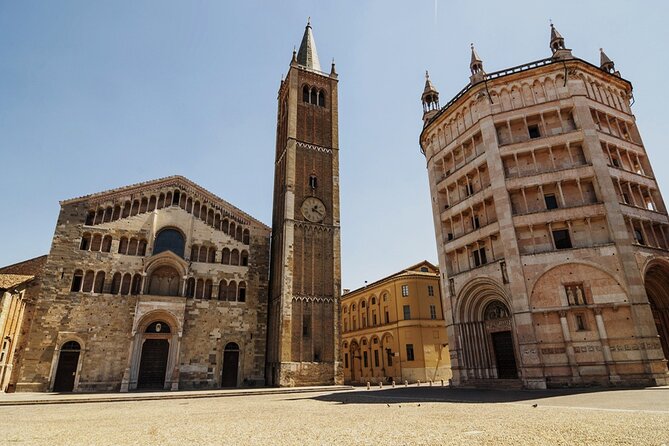
- Parma Cathedral’s dome moments: you’ll look up at the painted figures tied to Correggio, plus references to Benedetto Antelami and the Baptistery.
- Antelami + Renaissance art connections: the tour doesn’t treat names like trivia; it ties them to what you’re actually seeing.
- Exteriors that set you up for later: you get smart orientation at Palazzo della Pilotta and Teatro Farnese, even without full museum time.
- A practical market stop: Piazza Ghiaia’s covered market area gives Parma flavor without turning the tour into a food crawl marathon.
- The guide-led story arc: the walk keeps returning to how Parma’s culture and architecture fit together.
- A cheese tasting finish: multiple guides wrap things up with a Parmesan/cheese moment, which is a great final “now I get it” payoff.
Walking pace and what you’ll actually see in 2–3 hours
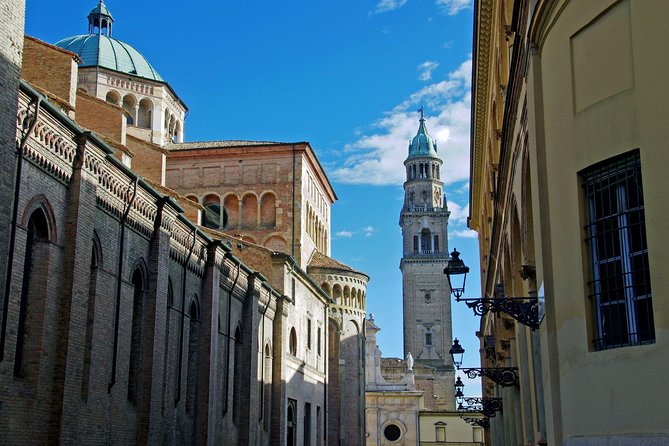
This is a 2–3 hour walking experience designed to get you oriented fast. You’ll cover multiple neighborhoods and landmarks on foot, with each stop timed so you spend a short amount of time at each highlight and still keep moving.
The format is ideal if you’re the kind of traveler who wants to understand what you’re looking at before you start wandering on your own. Parma can feel compact, but it rewards attention—good light, good stonework, and those church interiors you’ll want to return to after you know what matters. This tour gives you the map in your head.
You’ll meet at Str. Giuseppe Garibaldi, 18 (43121 Parma) and return there at the end. It’s also noted as near public transportation, which matters because Parma is easy to navigate but you still don’t want a long haul before you even start.
Now the practical bit: because the tour is short and covers several major points, you shouldn’t expect every stop to turn into a full, slow interior visit. Some sites are exterior-focused, and the tour keeps you in motion. If you love deep museum-style time, you’ll likely want to pair this with a longer second visit later.
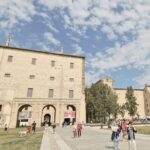
More of the old town on foot, towers and squares and back streets.

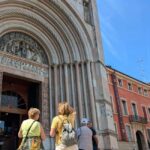
Parma Cathedral: Antelami’s legacy and Correggio’s painted dome
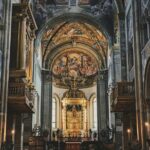
Parma Cathedral is where the tour starts earning its keep. You get the grand entrance moment first: the cathedral’s major works span roughly 11th to 13th centuries, and the guide connects that timeline to what you can still see today.
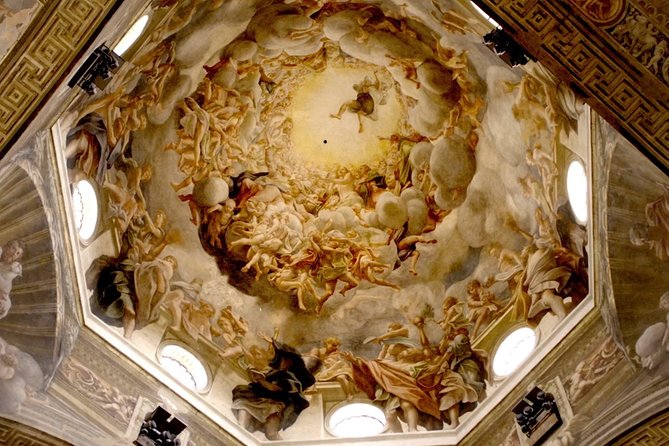
The big “look up” payoff is the dome. You’ll hear about the thousand-figure painted program associated with Correggio, and it’s the kind of visual that changes how you see the building. Instead of passively walking past, you’re coached into noticing—angles, scale, and the way the artwork ties to the architecture.
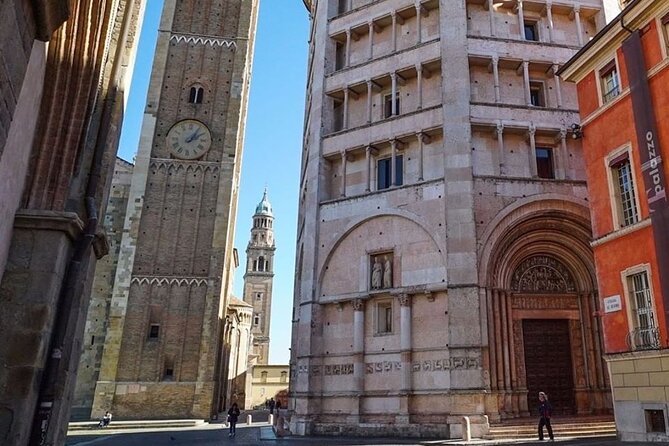
The guide also brings in key figures like Benedetto Antelami, tied to the Baptistery, so you’re not just absorbing art names. You’re learning what those names mean in Parma’s story. Another name you may hear is Francesco Mazzola, better known as Parmigianino, connected to the Renaissance arc the tour traces.
Time-wise, this stop runs about 30 minutes, and it’s marked as free admission. Even if you’ve visited cathedrals before, this one is worth starting with because it anchors the entire walk. After you understand the Cathedral’s artistic and architectural “why,” the later stops land better.
Quick tip: bring a little patience for the “dome moment.” If you’re tall (or have neck flexibility), it’s great. If you’re shorter, you may find yourself craning upward—so comfortable shoes are your best friend.
Old streets of Parma where the city still feels medieval
After the cathedral, the tour shifts from grand monument to street-level Parma. You’ll visit the oldest streets of Parma, spending about 20 minutes here.
This part matters because it’s not just a pause—it’s the bridge. When your brain is still in cathedral mode, it helps to step back to narrow lanes and older street patterns. The guide’s job here is to make those “just streets” feel readable: where you’re standing, how the city’s layout tells you something about growth, and how Parma’s identity shows up outside of big buildings.
You won’t need a lecture to enjoy this section. The value is that you’re not just snapping photos—you’re getting a framework that makes your self-guided wandering afterward more satisfying.
Palazzo della Pilotta and Teatro Farnese: exteriors first, interiors later
Two stops in this stretch help you understand Parma’s theatrical and institutional side without asking you to commit to an all-day indoor plan.
First is Palazzo della Pilotta. You’ll see the exterior in about 15 minutes. The upside of an exterior-first stop is that you can take in the building’s massing and presence from the outside—often easier to process than rushing through interiors.
Next comes Teatro Farnese, where you’ll also get an outside visit for about 20 minutes. Here’s the key detail to know ahead of time: an internal visit is only available in the afternoon, and the admission ticket isn’t included. So if your tour time isn’t in the afternoon window, you’ll still get the architectural orientation, but you won’t automatically get the inside experience.
This is one of those cases where the tour does a smart thing: it teaches you what to look for so you can decide whether to return later. If Teatro Farnese is on your must-see list, do not treat this stop as your only chance.
Basilica di Santa Maria della Steccata and 1500s Parma’s visual language
Next up: Basilica di Santa Maria della Steccata. You’ll spend around 20 minutes here, and it’s listed as free admission.
This stop is described as a showcase of how the sixteenth century shaped Parma’s cultural patterns. Translation: you’ll see how the city’s ideas about art, design, and devotion show up in the architecture rather than just in books.
What I like about including a stop like this mid-walk is that it keeps the tour balanced. After the Cathedral and street-level glimpses, you get a different kind of “anchor.” Churches in Parma often reward you when you compare them—how they feel, how they’re decorated, and how the guide connects them to a broader timeline.
If you like Renaissance-era art and you’re trying to figure out what you’ll want to revisit later, this basilica is a strong candidate.
Time on foot through the Modena and Parma old towns.

Mercato coperto di Piazza Ghiaia: the market-glance that grounds it
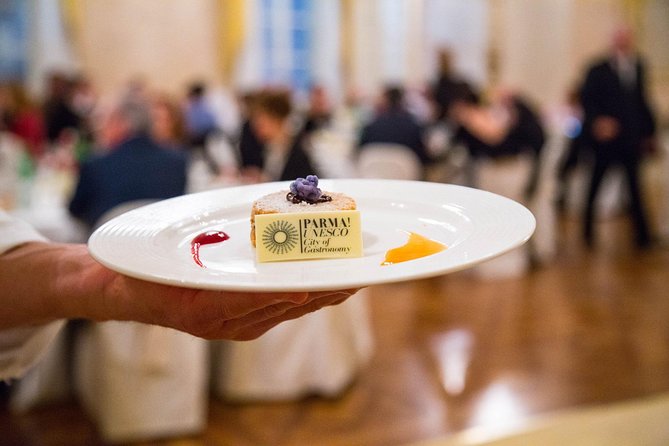
The tour ends with a quick look at Mercato coperto di Piazza Ghiaia, about 15 minutes. It’s marked as free and it’s positioned like a calm, local palate cleanser after heavier monument stops.
Even though this is a short stop, markets are one of the fastest ways to understand a city’s everyday rhythm. You’re not learning facts for the sake of facts—you’re getting a sense of how food culture sits inside Parma’s public life.
This is also a nice moment for photos that don’t look like postcard-sights. The value is in the atmosphere and the contrast: grand churches earlier, everyday market life now.
The bilingual guide setup: English, Italian, and timing
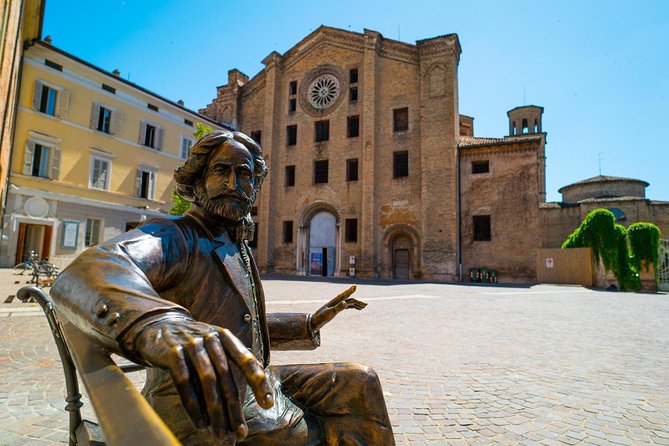
This tour is offered in English, but it also operates with Italian and English depending on the group. That’s a real factor, not a small footnote.
In practice, what this can mean is simple: if your group has more Italian speakers, the guide may speak more Italian during parts of the walk. Some people love this setup because it gives more than one angle on the same story—especially if you’re studying Italian. Others find it slows the flow because waiting for the English portion (or for translation) can break momentum.
How do you make this work for you?
- If English is your top priority, book with the expectation that you may still hear Italian at times.
- If you like history explained with extra detail, bilingual delivery can actually be a plus—it gives the guide freedom to tell the full story rather than shrinking everything for one language.
The tour is private for your group, which helps a bit, but it doesn’t change the bilingual nature of delivery.
Price and logistics: why $26.43 can still feel fair
At $26.43 per person, this tour is one of the more affordable ways to get structured context on key Parma sights. The real value isn’t the sticker price—it’s the mix:
- a certified guide,
- multiple landmark stops that cover different eras and styles,
- free admission tickets for several sites,
- and a planned walking route that keeps you from overthinking where to go first.
Short tours can be hit-or-miss, but this one is built around “high signal” sights: Parma Cathedral, Santa Maria della Steccata, and an orientation stop at Teatro Farnese. You’re not paying to stroll through filler.
Another practical point: it’s booked about 20 days in advance on average, so don’t wait until the last minute if your dates are firm. Parma is a popular stop for food and art travel, and this kind of timed tour can disappear.
Also, the tour uses a mobile ticket and includes group discounts. Those aren’t flashy perks, but they make the experience smoother once you’re on the ground.
Cheese tasting at the end: Parma’s culture in one bite
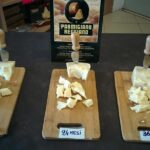
A standout repeated theme in the experience is the finishing touch: Parmesan/cheese tasting. People described it as a must-do bonus and said it can even change your whole day’s eating plan.
That matters because Parma’s identity isn’t only architectural. It’s also the food people travel for—cheese and cured meats are part of the city’s pride. A small tasting at the end works because you’ve just walked through the “why” of Parma. Then you get the “taste” of it.
Two useful expectations:
- If you’re there for food, this gives you an easy win without turning the tour into a long meal.
- If you’re food-sensitive (or have dietary needs), it’s worth checking with the provider during booking—because a tasting is still a tasting.
Even if your main goal is art and architecture, this last step gives the whole walk a satisfying closure.
Who should book this Parma Classic tour—and who might want something longer
This tour is a great fit if:
- you’re a first-timer in Parma and want a guided overview,
- you love church architecture and Renaissance art details like the Cathedral’s dome connections,
- you want to see Teatro Farnese’s exterior and understand why it’s important before you decide if you want an inside visit later,
- and you enjoy a light food moment at the end.
You may want to look for a longer or more interior-focused option if:
- you’re hoping for extended time inside multiple sites,
- you need slow, quiet viewing of artworks,
- or you’re very strict about hearing only English for every sentence.
Because the tour is short and site visits can be exterior-focused, it’s best used as your “get oriented” tour, not your only Parma experience.
Should you book the Parma Classic Walking Tour?
Yes, I’d book it if you want a smart, time-efficient Parma overview with real art and architecture moments—and you don’t mind a bit of bilingual pacing. It’s priced fairly for what you get: major stops, free admission for many sights, a certified guide, and a cheese tasting finish that makes the city feel personal fast.
If you’re sensitive to language switching, or you’re set on full inside visits at every stop, treat it as a guided sampler. In that case, do the tour, then plan at least one extra self-guided or separate timed visit to the spots that matter most to you—especially if you’re aiming for Teatro Farnese inside access in the afternoon.
FAQ
How long is the Parma Classic Walking Tour?
It runs about 2 to 3 hours.
Is the tour available in English?
Yes, it’s offered in English. The tour can also be bilingual (English and Italian) depending on the group.
Do you need tickets for the attractions?
Many stops are listed as free admission, but Teatro Farnese has an admission ticket that is not included.
What’s included in the tour price?
You get a certified tour guide, and the experience is a private activity for your group.
Where do we meet for the tour?
The meeting point is Str. Giuseppe Garibaldi, 18, 43121 Parma PR, Italy.
Can I cancel and get a full refund?
Yes. Free cancellation is available up to 24 hours in advance for a full refund.
If you tell me your travel dates and whether you want mostly English or mostly interior time, I can help you decide if this tour is the right “first move” in Parma or if you’d be better off pairing it with something else.
More Modena and Parma City Walks
More Bologna Walking Tours
More Tour Reviews in Parma

After something different? More ways to fill a day in Bologna and across Emilia-Romagna




Bologna Walking Tours & City Highlights, compared.
 ★ 4.5City Center Walking TourFrom $263,478 reviews
 ★ 4.8Walking Food Tour with a Local GuideFrom $90882 reviews
 ★ 5.0Private Half Day Parma Food Walking TourFrom $134561 reviews
 ★ 3.7Open Bus City Tour and Local Food TastingFrom $46550 reviews
 ★ 5.0Bologna Private Highlights & Hidden Gems Tour with a LocalFrom $77359 reviews
 ★ 4.6City Highlights Walking Tour with Local GuideFrom $17219 reviews
 ★ 4.9City Center Guided Wine Walking TourFrom $70210 reviews
 ★ 4.2City Walking TourFrom $27203 reviews
Browse the lists this tour appears in