
Reviewed · BOLOGNA WALKING TOURS & CITY HIGHLIGHTS
Parma: City Walking Tour
Parma can feel like a food story you can walk. This two-hour guided walking tour brings you through the historic center with a local, Italian-and-English guide who links monuments, culture, and the city’s famous culinary identity. You also get the human side of Parma, including anecdotes connected to Giuseppe Verdi.
What I like most is the way the guide ties details to real context. I love that you’ll hear about Parma’s role as an old university seat since the 11th century and its past as the Duchy capital area (Parma and Piacenza). I also like that the tour is anchored around the cathedral of Parma, plus outdoor streetscapes where your guide points out what you might otherwise miss.
One thing to consider: this is an outdoor walk with a set group size, and some feedback points out that larger groups can mean less personal interaction. If you want lots of back-and-forth, or if you’re sensitive to crowded walking pace, plan accordingly.
In This Review
- Key highlights worth your time
- Parma in two hours: what this walking tour covers
- Start at Strada Giuseppe Garibaldi, then head to Piazza Garibaldi
- Outdoor sightseeing only: what you gain (and what you won’t get)
- The cathedral of Parma: why this guide makes it the anchor
- Giuseppe Verdi anecdotes: how music history becomes street-level
- Parma’s university and Duchy past: the context behind the streets
- Food secrets and culture 2020: how gastronomy fits the city tour
- Bilingual guide delivery: Italian and English pacing
- Group size, earphones, and how to get the most from the walk
- Price and value: is $27 for 2 hours a smart deal?
- Planning tips: shoes, rain, and what to watch for
- Who should book this Parma walking tour?
- Should you book this tour?
- FAQ
- How long is the Parma City Walking Tour?
- Where do I meet for the tour?
- What languages is the tour offered in?
- What time does the tour run?
- Are monument entrances included?
- Is the tour suitable for people with mobility impairments?
Key highlights worth your time
- Bilingual live guide (Italian and English) so you can follow the story without guessing
- Cathedral-focused sightseeing outdoors, with no monument entry required
- Giuseppe Verdi anecdotes tied to Parma, not just random dates
- Parma’s food and culture angle, including the city’s recognition as Italian culture 2020
- Earphones for groups of 6+, which helps you keep up on the move
Parma in two hours: what this walking tour covers
This is a practical “get oriented fast” tour. In about two hours, you’re shown the main treasures of Parma’s historic center, with the guide doing the heavy lifting: explaining what you’re looking at and why it matters.
The core promise is simple. You’ll walk the city center with a local guide, and you’ll leave with a clearer picture of Parma as more than postcards. You’ll connect the city to gastronomy, arts, and music, especially through the link to Giuseppe Verdi. The tour also emphasizes Parma’s cultural identity, including its recognition connected to Italian culture 2020.
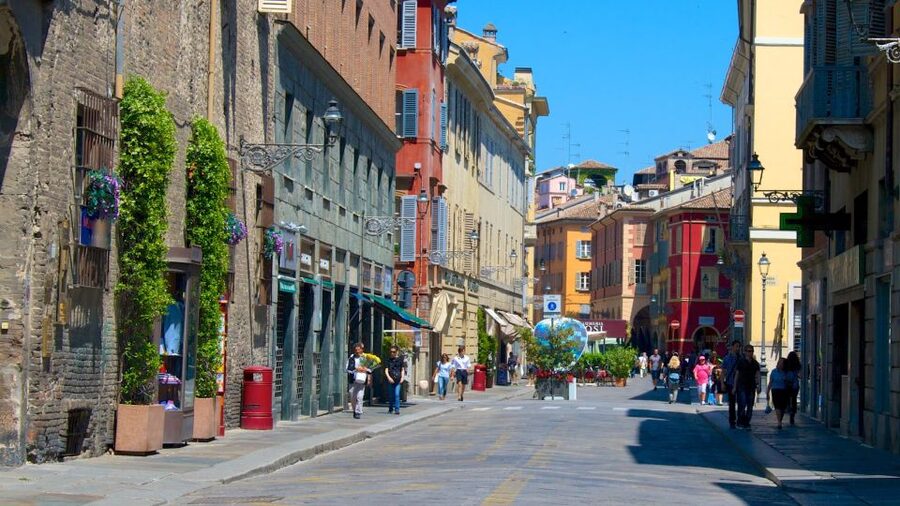
Because it’s a walking tour with only outdoor stops, you’ll spend your time moving between sights rather than waiting in lines. That’s good value in a place like Parma, where small streets can make self-guided sightseeing feel a bit scattered.
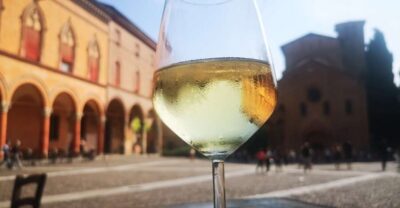
More of the old town on foot, towers and squares and back streets.


Start at Strada Giuseppe Garibaldi, then head to Piazza Garibaldi
The meeting point is at IAT, Strada Garibaldi 18, Parma. That matters because it’s a real, fixed spot in the center area—easy to find and easy to plan your morning around.
From there, the walk centers on Piazza Garibaldi, which the tour describes as the heart of the city. This is a smart starting choice. A piazza helps you understand the layout before you start wandering alleys and lanes, so the rest of the tour feels connected rather than random.
If you’re the kind of traveler who likes to visualize the city as you move, you’ll probably appreciate this flow: start in the public square, then progress through the monuments of the historic core. And since the tour ends back at Strada Giuseppe Garibaldi 18, you’re not stuck trying to navigate across town when you’re done.
Outdoor sightseeing only: what you gain (and what you won’t get)
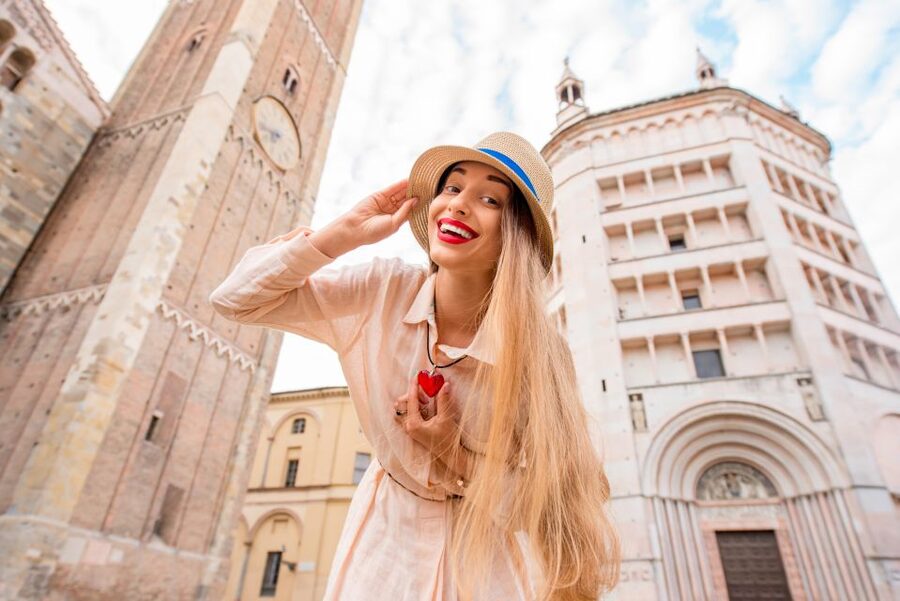
This tour is explicitly only outdoors. There are no entrances to monuments, meaning you won’t be going inside the sites during the 2-hour window.
That can be a plus. Outdoor-only sightseeing is usually less stressful on a tight schedule. You avoid the “time tax” of entrances, and you can keep the pacing of a guided walk even if you’re not trying to do museums.
But it also sets an expectation: if you want interior details—chapels, galleries, or anything inside—this tour won’t fill that need by itself. You’ll get exterior context and story-led viewing, not a deep interior visit.
So I’d treat this as a “story and orientation” tour. Then, if you want more, you can come back later for any entries that matter to you.
The cathedral of Parma: why this guide makes it the anchor
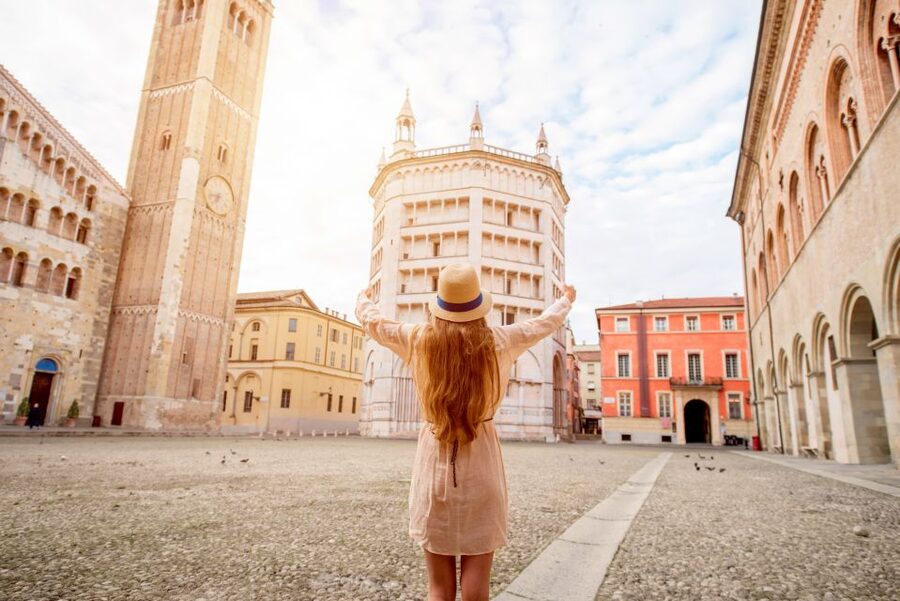
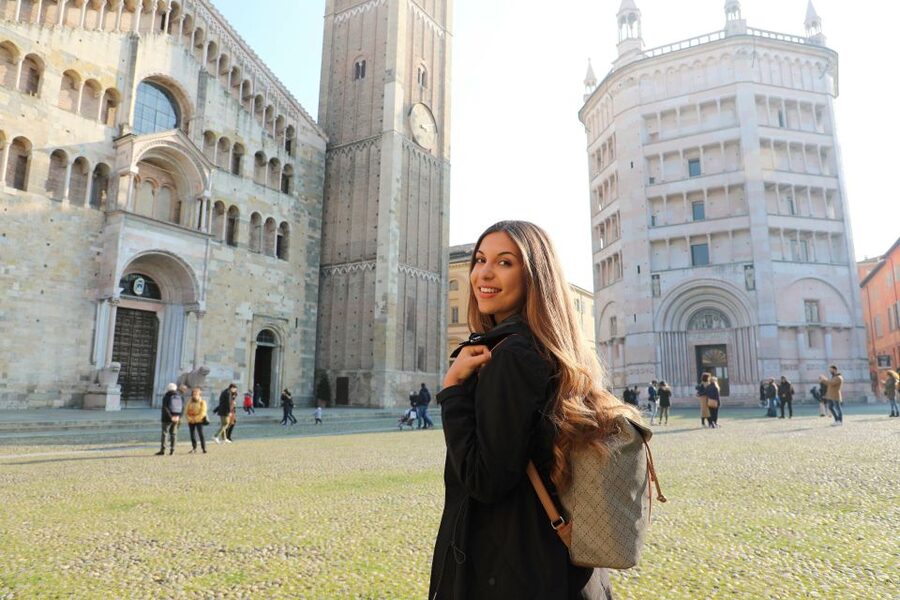
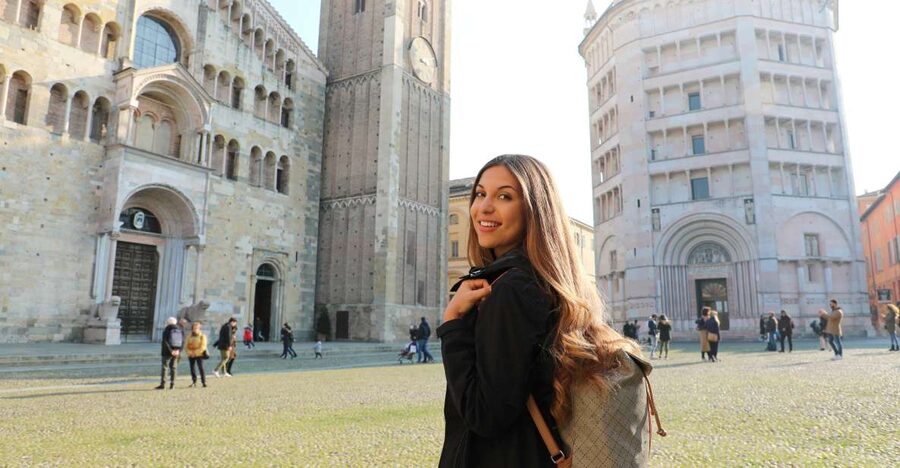
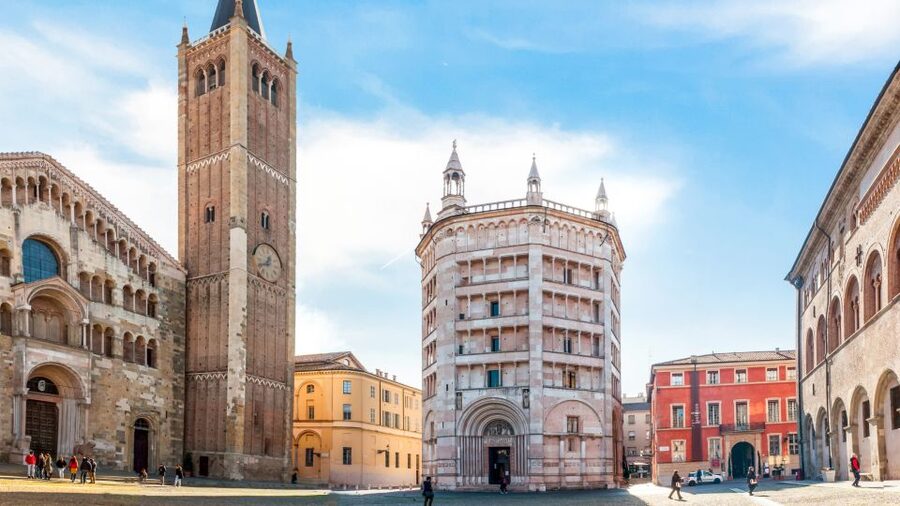
One of the highlights is admiring the cathedral of Parma. Since the tour is outdoor-only, the cathedral stop is where the guide’s explanations really matter.
Even without entering, a cathedral exterior can tell you a lot: style choices, the way the building dominates the surrounding streets, and how the square and nearby streets shape how the city shows itself. The guide’s job is to help you “read” those features instead of just seeing a big building.
This is also where earphones become useful. If you’re in a group of 6 or more, the tour includes earphones, which helps you hear the guide clearly while walking around the monuments. You’re less likely to miss key points when the guide is speaking from slightly ahead or beside you.
If you’re someone who usually skips “big churches” because you think you’ve seen it all, this kind of guided cathedral stop can change your mind—especially if you like architecture explained through city life rather than art-history jargon.
Giuseppe Verdi anecdotes: how music history becomes street-level
Parma is closely tied to Giuseppe Verdi, and your guide will share anecdotes about the composer. That’s not just a trivia add-on. It’s a way to make cultural history feel present in the streets.
When a guide connects a figure like Verdi to the city, you tend to start noticing how a place earns its reputation. Even if the composer story isn’t visible in every corner, the guide can point out the kind of cultural environment Parma supported—music, education, and courtly life tied to its history.
Reviews reinforce that this part can be the emotional payoff. One review specifically praised a guide named Alice for knowing local history and anecdotes and for offering practical ideas on what to visit next and where to find typical shops. Another review described the guide as very prepared and good at keeping the tour moving even with rain.
I’d come into this tour expecting stories. If you like narrative—how people lived, what mattered, and why certain cultural symbols show up—you’ll probably enjoy this section more than you expect.
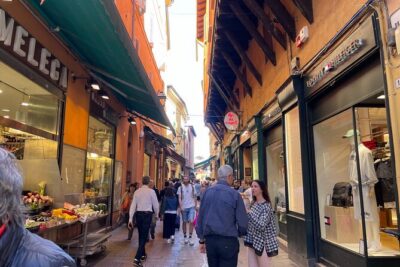
Time on foot through the Modena and Parma old towns.




Parma’s university and Duchy past: the context behind the streets
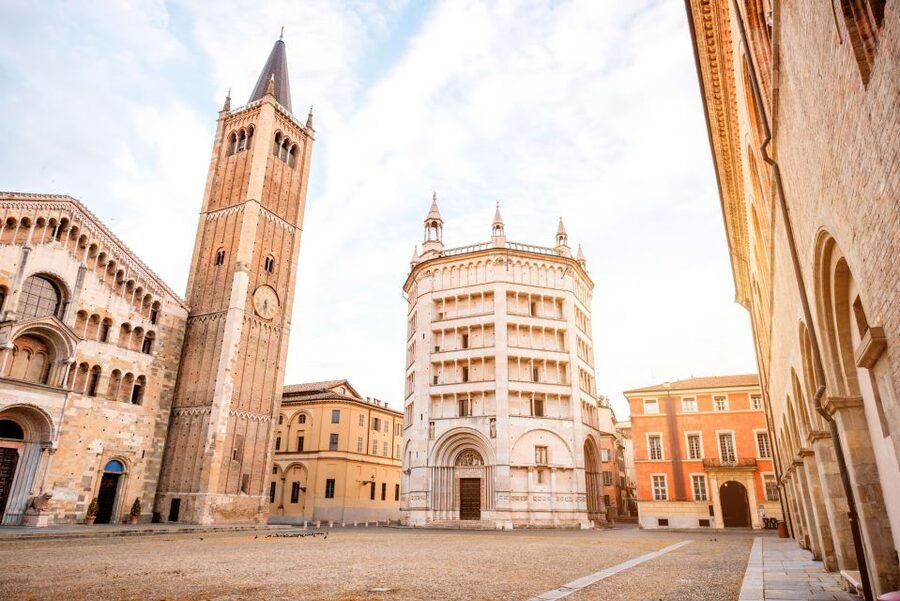
The tour also highlights Parma’s earlier identity: it was an ancient capital connected with the Duchy of Parma and Piacenza, and it became a university seat starting in the 11th century.
Here’s why that matters for you as a visitor. When you know a place had educational importance for centuries, you start to understand why a city center feels built around institutions, learned culture, and long-term civic power. The streets aren’t just pretty; they’re part of a long timeline of decision-making.
In a two-hour walking tour, you’re not getting a textbook. But you are getting a framework. With that framework, the monuments you see can feel less like isolated highlights and more like a connected civic story—one where culture, education, and identity overlap.
Food secrets and culture 2020: how gastronomy fits the city tour
Parma’s reputation for food isn’t a marketing slogan. The tour frames it as part of why Parma became a creative city for gastronomy and a capital connected to Italian culture 2020.
This matters because it changes how you look at the center. Instead of thinking food is just about restaurants you’ll choose later, you start seeing Parma as a place where gastronomy is part of its identity—woven into culture, daily life, and even how locals present themselves.
Your guide’s “food secrets” angle is also likely to be the kind of advice you can use immediately after the walk. Even if the tour doesn’t include a meal, it can help you decide what to look for later: what to try, what to ask for, and which parts of town feel more aligned with typical Parma experiences.
One practical tip from review-style feedback: a well-prepared guide can also point you toward specific shops to keep exploring after the tour. That’s a real value add, because finding good local places on your own in a small city can take longer than you think.
Bilingual guide delivery: Italian and English pacing
This tour runs in Italian and English every day at 10:00, and on Saturdays at 15:00. That’s helpful if you’re traveling at different rhythms—especially if you prefer a later start on weekends.
Bilingual tours can be tricky when the guide has to switch languages mid-sentence. Some feedback has pointed out that bilingual delivery can reduce what feels like total immersion or interaction, depending on the pace and how close the guide is to the group.
Also, one review noted that the guide wasn’t always close enough while explaining parts of buildings or features like fountains, which can make it harder to see what’s being described. That’s not always within a guide’s control—street geometry and crowding play a role.
So if you’re the type who learns visually and likes to see details up close, arrive ready to stand where you can get a clear view. Don’t hover at the back expecting every explanation to come with a perfect line of sight.
Group size, earphones, and how to get the most from the walk
The tour includes earphones for groups of 6 people and up. That’s a meaningful upgrade for a walking tour, because it reduces the “voice in the distance” problem—especially on lively city streets.
Still, group size can affect the experience. Some feedback mentioned being in a larger group (around 25), and that can mean less chance to ask questions or get individual attention. Other comments mentioned that the tour could use more talking and interaction.
If you want the best possible outcome from this format, do two things:
- Position yourself where you have a clear view of the guide and the monument features being discussed.
- Treat the tour like guided storytelling, not a one-on-one conversation. You’ll still learn a lot, but the value comes from hearing the big picture, not from deep personal Q&A.
If you’re traveling with a niece or a friend and you’re mainly interested in learning quickly, this tour format often works well. If you’re traveling with someone who needs lots of engagement, you may want to pair it with additional self-guided time afterward.
Price and value: is $27 for 2 hours a smart deal?
At $27 per person for a 2-hour local-guided walk, you’re paying for three things: time saved, a local storyteller, and a guided route that makes the center feel coherent.
Because the tour is outdoor-only with no monument entry fees included, you’re not paying for admissions. Instead, your cost goes directly into having a guide explain what you’re seeing—plus earphones if the group is large enough.
For me, the value hinges on what you expect from a city tour. If you want a simple stroll with no real context, you’ll find it easy to do on your own. If you want to understand Parma’s cultural backbone—university roots, Duchy legacy, Verdi anecdotes, and food identity—then $27 for a guided orientation can be a very efficient spend.
This is also the kind of tour you can use to decide what to do next. A good guide doesn’t just show sights; they help you choose your next steps in Parma with confidence.
Planning tips: shoes, rain, and what to watch for
You should bring comfortable shoes. Parma’s historic center means walking on outdoor streets that can feel uneven or slippery, especially in wet weather.
The good news: one review explicitly said the visit was very accurate despite rain. That suggests the tour continues in typical weather conditions, so plan to dress for the day rather than waiting for a perfect forecast.
Also remember this tour is not designed for mobility-impaired visitors. If that applies to you, you’ll want to look for a different format—either a more accessible guided option or a shorter, less walking-heavy plan.
Finally, keep your expectations aligned with the schedule. It’s 2 hours, so you’ll see the key “main treasures” of the center rather than doing a slow, detailed museum-style pace.
Who should book this Parma walking tour?
Book it if:
- You want a guided overview of Parma’s historic center in a short time.
- You like stories—especially Giuseppe Verdi anecdotes tied to place.
- You want context for Parma’s food reputation and cultural identity, not just where to eat.
Skip or rethink if:
- You need monument entrances or interior access during the tour.
- You strongly prefer small-group interaction and worry about large group pacing.
- You need accessibility accommodations, since it’s not suitable for people with mobility impairments.
Should you book this tour?
Yes, I’d book it if you’re in Parma for a limited time and want your first day—or your first afternoon—to feel organized and meaningful. The combination of a local bilingual guide, outdoor sightseeing focused on the cathedral of Parma, and the cultural threads (university roots, Duchy legacy, and Verdi) can turn a quick walk into real understanding.
If you’re price-sensitive, $27 is reasonable for a 2-hour local-guided experience, especially with earphones included for larger groups. If you’re interaction-focused, position yourself well and treat it as guided storytelling rather than an intimate chat. Done that way, this tour earns its keep and helps you explore Parma with your eyes open.
FAQ
How long is the Parma City Walking Tour?
It lasts 2 hours.
Where do I meet for the tour?
You meet at the IAT in Strada Garibaldi 18, Parma.
What languages is the tour offered in?
The tour is offered in Italian and English.
What time does the tour run?
It runs every day at 10:00, and on Saturdays at 15:00.
Are monument entrances included?
No. The tour is only outdoors, with no entrances to monuments.
Is the tour suitable for people with mobility impairments?
No, it is not suitable for people with mobility impairments.
More Modena and Parma City Walks
More Bologna Walking Tours
More Tour Reviews in Parma



After something different? More ways to fill a day in Bologna and across Emilia-Romagna









Bologna Walking Tours & City Highlights, compared.
 ★ 4.5City Center Walking TourFrom $263,478 reviews
 ★ 4.8Walking Food Tour with a Local GuideFrom $90882 reviews
 ★ 5.0Private Half Day Parma Food Walking TourFrom $134561 reviews
 ★ 3.7Open Bus City Tour and Local Food TastingFrom $46550 reviews
 ★ 5.0Bologna Private Highlights & Hidden Gems Tour with a LocalFrom $77359 reviews
 ★ 4.6City Highlights Walking Tour with Local GuideFrom $17219 reviews
 ★ 4.9City Center Guided Wine Walking TourFrom $70210 reviews
 ★ 4.9Walking Food Tour and Highlights with a Local GuideFrom $82179 reviews
Browse the lists this tour appears in