
Reviewed · BOLOGNA BIKE, E-BIKE & VESPA TOURS
BOLOGNA BIKE TOUR
Bologna is best slowed down on two wheels. This 2-hour bike tour is built for an easy pace, with an expert guide adding stories, curiosities, and practical stops you can actually see from the saddle. I really like the mix of portico streets and city landmarks, plus the way the route strings them together without turning the day into a museum sprint. The second thing I like is the people factor: guides such as Luca, Sara, and Stella get high marks for energy and for sharing restaurant tips after the ride. One thing to consider: it’s cycling on city routes, and one review notes the ride includes some ups and downs, so you’ll want a decent comfort level on the bike.
You’ll start near Piazza Maggiore and spend about two hours riding in short segments—then pausing for explanations and photos—so your brain stays fresh. The route leans into Bologna details you might miss on foot: places like the Portico of Casa Azzoguidi, the wooden porticoes of Via Marsala, and smaller stop-overs such as the Small window and Piazzetta della Pioggia. Still, if you’re craving deep, landmark-by-landmark explanations for every stop, one review says the info can feel limited at a few key sites. In that case, bring questions.
In This Review
- Key things that make this Bologna bike tour worth your time
- Where you meet: Slow Emotion and a bike-ready start
- The $88 value: bike rental + a guided route that covers real ground
- Porticoes, little details, and how the route keeps the pace friendly
- XI Settembre and the former water-factory vibe: Bologna as an engineering story
- Toward Certosa via canals and Rhine-named waters
- Meloncello Arch and San Luca portico: where the views do the talking
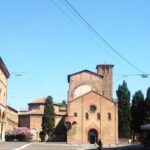
- Piazza Santo Stefano and the Two Towers area: center-city payoff
- Piazza Cavour, Via Farini porticoes, and the Pavaglione Portico
- Getting back: finishing at Piazza Maggiore area with ideas for the rest of your day
- Who should book this bike tour (and who might want a backup plan)
- Final verdict: Should you book Bologna by bike for 2 hours?
- FAQ
- What is the duration of the Bologna bike tour?
- How much does the tour cost?
- Where does the tour start?
- What’s included in the price?
- Is a helmet included?
- Are there bikes for children or teenagers?
- What language is the guide?
- Who is the tour not suitable for?
Key things that make this Bologna bike tour worth your time
- Expert-guided, English-language storytelling at multiple stops, with high praise for guides like Luca, Sara, and Stella.
- A “slow city” routing style: short rides (often 5–15 minutes) followed by stops, so you’re not just biking past things.
- Porticoes and side streets such as Via Marsala and the Pavaglione Portico, with architectural moments you can actually appreciate.
- Water and engineering-focused scenery around the XI Settembre park, former water factory areas, and Opificio delle Acque / La Grada.
- City-center landmarks on the same loop, including Piazza Santo Stefano and viewpoints toward the Two Towers area.
Where you meet: Slow Emotion and a bike-ready start
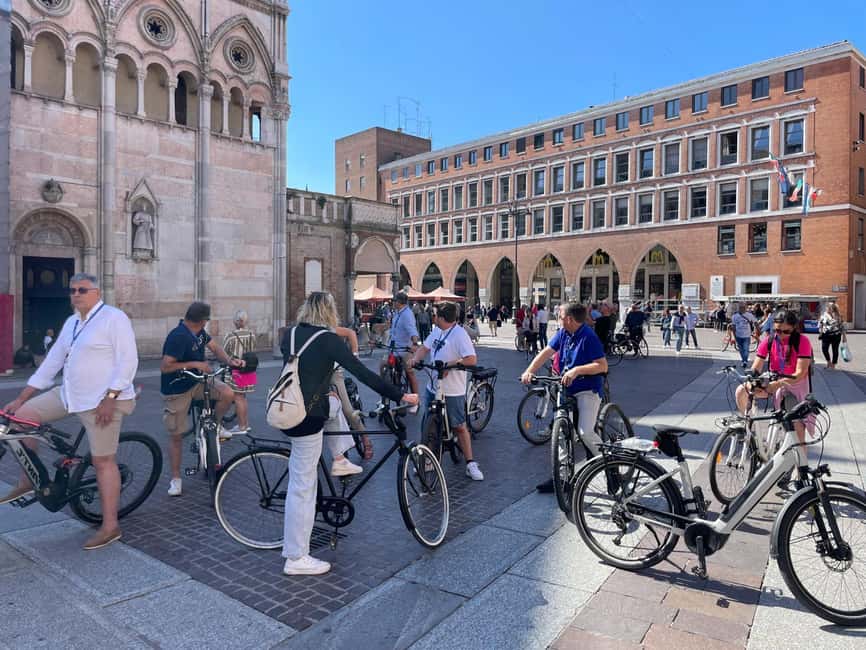
This tour starts at Slow Emotion, Via Montegrappa 22/B, with an entrance from Via Ugo Bassi 13. The meeting point is only a few minutes’ walk from Piazza Maggiore, which matters because you’re less likely to waste time hunting buses, tracks, or confusing landmarks before the ride even begins.
When you arrive, you’ll be fitted with an adult bike. The good news: the tour is set up for adults with adult bikes, and the pace is designed to let you take in the city rather than race through it. If you’re traveling with kids or teens, bikes for them may be available on request and subject to availability, and the operator notes you can also request accessories like helmets and phone holders (availability-dependent).
A small practical note: the tour doesn’t list food or water as included, so plan to grab a drink before you start. Bologna afternoons can be deceptive—your bike time adds up fast, even with breaks.
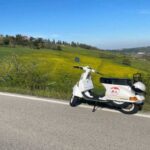
See the city and the hills by bike, e-bike or Vespa.
The $88 value: bike rental + a guided route that covers real ground
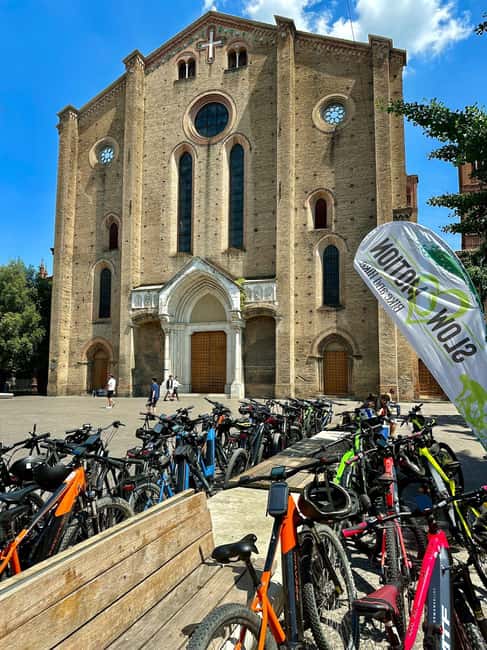
At $88 per person for 2 hours, the value comes from two things: you get the bike rental and you get a live guide. Without the guide, you’d still see porticoes and landmarks, but you’d miss the added context and the “why here” details that turn random streets into a coherent story. Reviews specifically praise the guides for being fun and for giving restaurant suggestions and secret-spot type recommendations once the tour ends.
Is it cheap? No. But it’s also not trying to replace a half-day walking tour plus a separate transportation plan. Think of it as paying for (1) the bike, (2) a route that makes sense, and (3) someone watching the timing so you don’t spend your trip weaving between sights.
Also watch for one mismatch: the tour info says helmets and other accessories aren’t included, yet one review says helmets were provided for all. If helmet comfort is important to you, you should ask ahead (or bring your own) so you don’t end up wishing you had a plan.
Porticoes, little details, and how the route keeps the pace friendly
A big part of this tour’s charm is that it treats Bologna’s signature streets as the main event. You start by passing through portico-rich areas and you’ll move from one architectural “moment” to another without the dead time you often get in group sightseeing.
On the early stretches, you’ll cruise along spots such as:
- Portico of Casa Azzoguidi
- Wooden porticoes of Via Marsala
- A quick stop for the Small window
- Piazzetta della Pioggia
- And the XI Settembre park, including the former water factory area called out as Cavaticcio
The benefit for you is simple: porticoes give you a visual framework and a break from direct sun and glare, and the bike format lets you “collect” these scenes faster than walking. The stops are short, which means you’re not stuck waiting while the group gathers a long lecture. You’ll spend enough time to look, listen, and reset—then you’re rolling again.
There’s also a subtle advantage if you’re there for the first time: porticoes can be confusing to navigate on your own because they shape street patterns. With a guide, you get a sense of flow—what connects to what—and that makes the rest of your stay easier.
XI Settembre and the former water-factory vibe: Bologna as an engineering story
One of the most interesting shifts on this tour happens when the route moves beyond postcard squares and into areas tied to water and infrastructure. You’ll spend time around the XI Settembre park, including the mention of the former water factory and Cavaticcio.
Then the ride continues toward the bicycle ring road route heading up to Opificio delle Acque and La Grada. Even if you don’t consider yourself a “systems” person, this is where the guided element matters most. A good guide can make practical things—how water moved, where it went, how an area was used—feel like story instead of signage.
What to expect on the bike here:
- More riding in connected stretches (rather than constant stopping)
- A chance to see another side of Bologna that isn’t just central squares
- Short pauses for explanation, usually timed so you don’t freeze and get cold or impatient
One practical consideration: because you’re cycling across city routes, it helps if you’re comfortable with light traffic conditions and sharing roads with cars and bikes.
Toward Certosa via canals and Rhine-named waters
The tour route includes canals described as Canals on the Rhine, continuing toward Certosa, plus the Portico of the Certosa. Even with the poetic naming, the takeaway for you is that the tour creators intentionally built a detour from the obvious center into calmer-looking water and corridor areas.
Why this matters: it changes the feel of the day. If your Bologna plans are mostly squares and porticoes, this gives you a different texture—more linear, more “walk-and-look,” but delivered at bike speed. It’s also one of the reasons the tour lasts only two hours: you’re not trying to see everything; you’re sampling multiple “Bolognas.”
If you like photos, this is a portion where you’ll likely want to slow down at the stop points. The guide can also help you find angles you’d miss, especially in places with porticoes and arches that can hide details from street level.
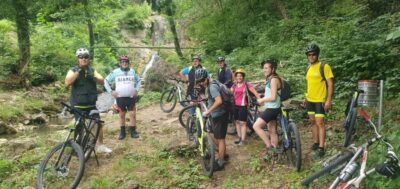
More of the flat roads and the hill climbs by bike.
Meloncello Arch and San Luca portico: where the views do the talking
Next comes a more scenic, iconic transition. You’ll ride by the Arco del Meloncello, and later into the Portico of San Luca route. These are the kinds of stops that tend to turn bike riders into part-time photographers.
From what’s laid out, this portion includes multiple short rides followed by brief viewing/explanation windows (for example, around the Arco del Meloncello and later toward the Piazza San Domenico area). The rhythm matters: you don’t get stuck overthinking logistics while you’re trying to enjoy the sights.
If you want a tip for your own day planning: after the more open, view-friendly areas, you’re usually mentally ready for denser city streets again. That’s exactly what this tour does. It uses the “big sight” moments to balance the more subtle portico and engineering stops.
Piazza Santo Stefano and the Two Towers area: center-city payoff
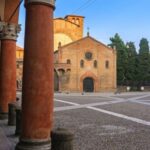
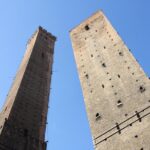
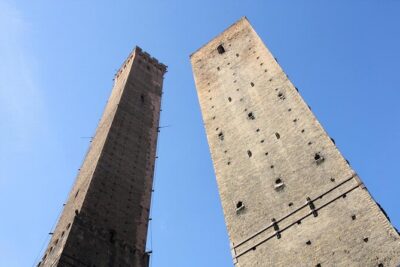
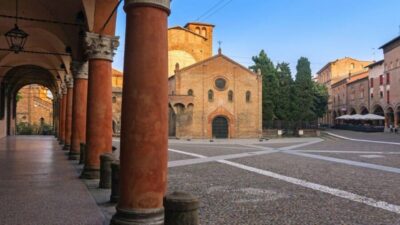
The tour then swings back toward major center-city energy, including time around Piazza Santo Stefano, and riding segments tied to the Two Towers, Bologna area. This is where you get that unmistakable Bologna feel—concentrated sights that make your bike loop feel complete.
In the itinerary description, the timeline includes stops that add up to a good sightseeing chunk: a series of short bike segments and stops such as Piazza Santo Stefano, plus time near Two Towers. For you, that structure helps because you can see the landmarks without feeling like you’re trapped in a long walking line.
One review note is worth keeping in mind: while the guide can be excellent and fun, there can be limited information about some key landmarks. So if you care deeply about the details of the Two Towers or the sites around Santo Stefano, don’t be shy. Ask your guide a couple of targeted questions like what to notice first or what the place is for today.
Piazza Cavour, Via Farini porticoes, and the Pavaglione Portico
After the towers and Santo Stefano, the route continues with more portico-focused city center wandering. You’ll pass through:
- Piazza Cavour, including a mention of a frescoed portico of the Bank of Italy
- Porticoes of Via Farini
- Piazza Porticata di Santo Stefano
- And the Pavaglione Portico
This portion is great if you like Bologna’s everyday beauty rather than only its headline attractions. Porticoes are basically a parallel city: the building edges turn into streets, and you experience the city differently depending on whether you’re under cover.
The practical value for you: once you’ve seen these porticoes from a bicycle route, you’ll be better equipped to explore them on foot later. Even if you don’t remember the exact names, you’ll remember the feeling—shade, rhythm, and repeated arches that make navigation easier than you’d expect.
Getting back: finishing at Piazza Maggiore area with ideas for the rest of your day
The tour ends back at Slow Emotion. Because you’re finishing near the start point (and close to Piazza Maggiore), it’s easy to fold the rest of your day into something simple: lunch, gelato, and a more relaxed walk through whatever you didn’t manage to explore yet.
One reason I’m happy this tour exists: multiple reviews mention guides shared restaurant and gelato recommendations. That’s not just helpful—it’s useful travel value. It saves you from guessing where to eat when you’re tired and hungry and your phone battery is already doing its best.
If you’re the type who likes to keep momentum, you can also use the route as a map for your next walk. The stops like Via Marsala and the larger portico areas give you a “starting set” for independent exploring.
Who should book this bike tour (and who might want a backup plan)
Book it if:
- You want a 2-hour, guided way to see a lot without tiring out.
- You like porticoes, streetscapes, and side routes—not just a checklist of big monuments.
- You’ll appreciate a guide who adds stories and practical suggestions. Names like Luca, Sara, and Stella come up repeatedly in feedback, and that matters for the overall vibe.
Consider a different option if:
- You want heavy, technical explanations at every major landmark. One review suggests the info can be limited at a few “key” stops.
- You prefer fully off-road or fully traffic-free cycling. This tour is described as cycling on city routes, which may feel more suited to people who are comfortable biking around streets.
Also note who it’s not suitable for: the tour info lists it as not suitable for pregnant women, people with mobility impairments, and people over 95. If any of that applies, you’ll want another style of tour.
Final verdict: Should you book Bologna by bike for 2 hours?
Yes—if your goal is to see Bologna with a guide, get a bike you don’t have to rent and figure out, and enjoy a route that mixes portico charm with a surprising water-and-infrastructure side.
The price is reasonable for what you’re getting: bike rental + live guidance over a tight two-hour window, with enough variety to make you feel like you actually toured the city (not just biked in a circle). The only “wait, think twice” factor is the depth of explanations at certain headline stops. If you’re that kind of history-hunter, plan to ask questions—or pair this with one focused museum or walking tour later.
If that sounds like your style, book it. Bologna on a bike is one of those practical joys that makes the city feel like it’s working for you.
FAQ
What is the duration of the Bologna bike tour?
The tour lasts 2 hours.
How much does the tour cost?
The price is $88 per person.
Where does the tour start?
The meeting point is Slow Emotion, Via Montegrappa 22/B, with an entrance from Via Ugo Bassi 13.
What’s included in the price?
The tour includes bike rental and a guide.
Is a helmet included?
Helmets are listed as not included in the tour details, but at least one review mentions helmets being provided. If helmet use matters to you, ask ahead.
Are there bikes for children or teenagers?
The tour provides adult bikes only, but you can request children’s or teenagers’ bikes upon request and subject to availability.
What language is the guide?
The live tour guide runs in English.
Who is the tour not suitable for?
It’s not suitable for pregnant women, people with mobility impairments, and people over 95.
More Bologna Cycling
More Bologna Bike and Vespa Tours
More Tour Reviews in Bologna


After something different? More ways to fill a day in Bologna and across Emilia-Romagna




Bologna Bike, E-Bike & Vespa Tours, compared.
 ★ 5.0Tasting and Biking ParmaFrom $107218 reviews
 ★ 5.0Guided E-bike Tour in Bologna with aperitifFrom $15797 reviews
 ★ 4.5CSTRents – Bologna Segway PT Authorized TourFrom $14940 reviews
 ★ 4.7E-Bike Guided Tour with AperitivoFrom $15239 reviews
 ★ 5.03 Hour E-bike Tour with Parmesan and Balsamic VinegarFrom $26336 reviews
 ★ 5.0Vespa Tour in the Hills of BolognaFrom $13522 reviews
 ★ 4.3Bologna Guided Bike TourFrom $8815 reviews
 ★ 4.0Bologna Panoramic Bike TourFrom $5414 reviews
Browse the lists this tour appears in