
Reviewed · BOLOGNA WALKING TOURS & CITY HIGHLIGHTS
Bologna: Guided Walking Tour
Bologna rewards slow walking, and this tour makes it easy. You’ll hit the big landmarks around Piazza Maggiore and the covered streets that make Bologna feel special, plus University of Bologna stops that explain why locals call it La Dotta.
What I like most is the focus: you see the city’s signature look, including the porticoes and the two leaning towers, and you get clear context for what you’re actually looking at. One thing to consider: you’ll walk for about 3 hours, and church visits require rules—no shorts, and shoulders covered.
In This Review
- Key Takeaways Before You Go
- Where This Tour Starts: Piazza del Podestà and Piazza Maggiore
- The Piazza Maggiore to Towers Section: Marrying Sights With Context
- San Petronio and the Long Sundial: The Best Kind of Weird
- Archiginnasio and the Anatomy Theater: Old University in Real Life
- Torre Galluzzi and Via Farini: Reading the Medieval City
- Porticoes of Piazza Santo Stefano: The Bologna You Came For
- Court Isolani and Via Strada Maggiore: Covered Passageway Vibes
- Mercato di Mezzo and La Grassa: Why Bologna Talks Food
- Palazzo Salina-Amorini and the Faces: Details That Reward Attention
- The Role of the Guide: Why Names Like Manuela and Giulia Matter
- Price and Value: $118.95 for Up to 5 People
- Practical Tips That Make the Tour Easier
- Who This Tour Is Best For
- Should You Book This Bologna Walking Tour?
- FAQ
- Is the Bologna walking tour about Piazza Maggiore and porticoes?
- How long is the tour?
- What is included in the price?
- Do I need to pay extra for the Anatomy Theatre at the Archiginnasio?
- Where does the tour start?
- Does the tour end somewhere else?
- What languages are the tour guide options?
- Is the tour wheelchair accessible?
- What should I bring and wear?
- Is there a refund if plans change?
Key Takeaways Before You Go
- Private group feel (small, comfortable pace) for a city with serious “wow” architecture
- Piazza Maggiore to Santo Stefano covers Bologna’s main squares plus the famous covered walkways
- University highlights including the anatomical theater (optional extra ticket)
- San Petronio’s long sundial gives you a fun, very Bologna kind of detail
- Food culture stop at Mercato di Mezzo ties La Grassa to daily life
- Bring comfortable shoes and plan for some church dress-code moments
Where This Tour Starts: Piazza del Podestà and Piazza Maggiore
The tour kicks off at Piazza del Podestà, right by Piazza Maggiore, near the entrance door of the Bologna Welcome tourist office (look for it close to the meeting point). From the start, the route makes sense: you begin in the heart of town where Bologna’s main story is easiest to read in stone, arches, and statues.
Piazza Maggiore is where the city’s public face shows up. You’ll see the Fountain of Neptune and the Palazzo del Podestà, and your guide will connect those landmarks to how Bologna thinks of itself. The tour also frames the nicknames you’ll hear around town:
- La Dotta (The Learned) points to the oldest university culture
- La Grassa (The Fat) is about food as an identity, not a side quest
- La Rossa (The Red) links to Bologna’s reddish tones, especially the look of older buildings and roofs in the centro storico
This is a good start point because it’s visually dramatic, but also practical: you’re not sprinting to “see things,” you’re getting orientation. It helps you understand why Bologna’s architecture isn’t random—it’s designed for city life.
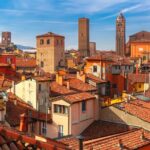
More of the old town on foot, towers and squares and back streets.


The Piazza Maggiore to Towers Section: Marrying Sights With Context
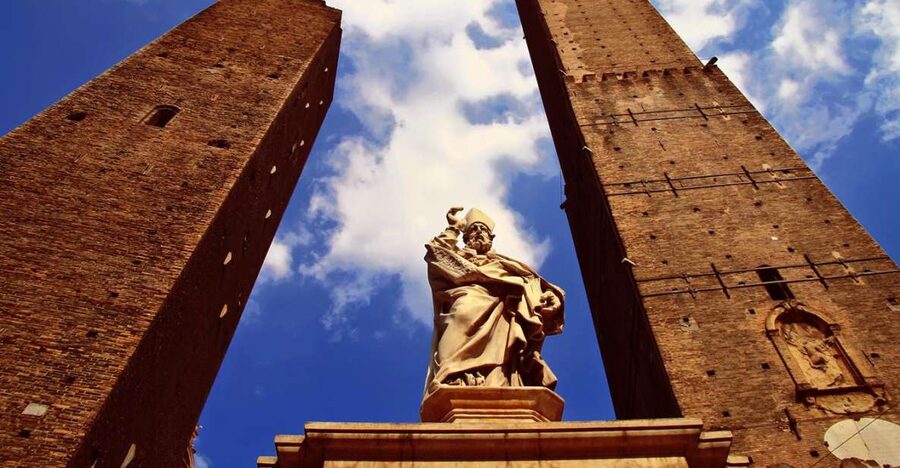
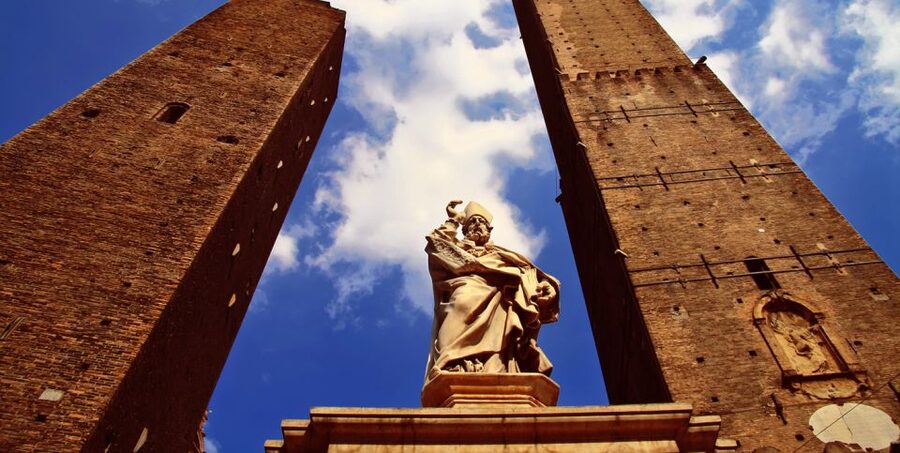
After you get your bearings in Piazza Maggiore, you’ll move into the center of Bologna’s standout skyline. The two leaning towers are part of that “postcard effect” you’ve probably heard about—yet what matters on a guided walk is the why, not just the wow.
You’ll see the two leaning towers and learn how they fit into the older medieval fabric of the city. This is one of those moments where a guide can turn a famous view into an actual story: why tall buildings belonged to power, why some neighborhoods evolved the way they did, and why Bologna’s old center feels dense even when you’re just walking between squares.
A smart bonus here is that you’re not just staring upward. Your guide keeps pulling you back to what you’re seeing at street level, too—arches, courtyards, and the way buildings “hug” the road. That matters because Bologna isn’t only a collection of monuments. It’s a city designed to be walked through.
San Petronio and the Long Sundial: The Best Kind of Weird
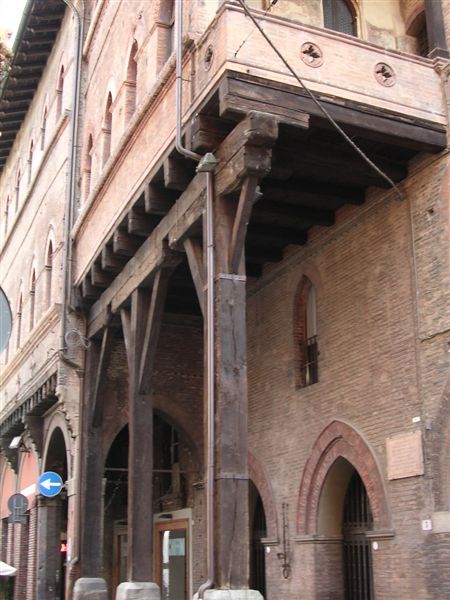
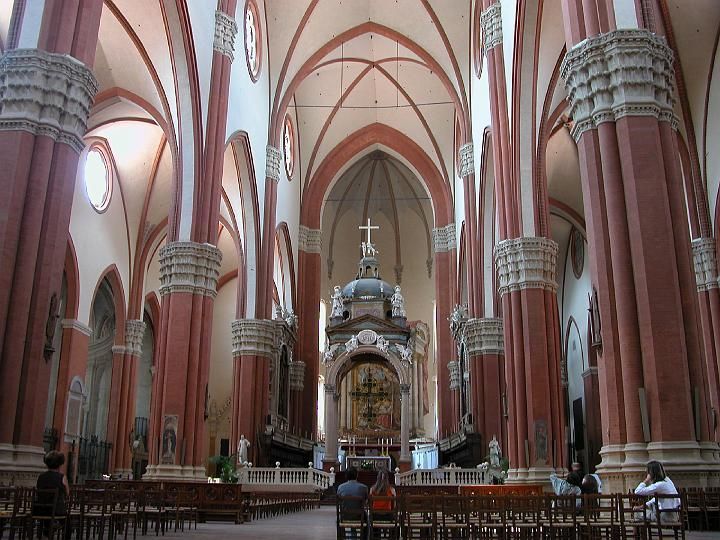
One highlight on this route is Basilica of Saint Petronio. It’s big, it’s imposing, and it can feel overwhelming if you show up cold. On this tour, you get a specific hook: the basilica’s longest sundial.
That detail is a great example of what makes this tour feel different from a basic monuments checklist. You’ll likely spend a moment learning how the sundial works and why it’s such a perfect Bologna idea—science and art living in the same place. Even if you don’t care about the mechanics of timekeeping, it’s the kind of fact that makes you look closer at surfaces you’d normally pass.
San Petronio also gives you a real sense of scale. You get to see how Bologna’s identity can lean serious and monumental, not only charming and postcardy.
Archiginnasio and the Anatomy Theater: Old University in Real Life

Bologna’s “The Learned” nickname comes alive around the Archiginnasio, the historic university complex. The star feature here is the anatomical theater, which is one of Europe’s most distinctive spaces.
Here’s the practical part: entrance to the Anatomy Theatre of the Archiginnasio isn’t included in the tour price. You’ll need to pay the extra ticket (listed as €3.50 per person) and it must be booked in advance. If you’re the type who likes to plan ahead, it’s worth doing, because this is not the kind of museum stop you can casually replace.
If you opt in, the pay-off is the contrast. You’re walking through public squares, then you step into a room designed for learning and performance—anatomy treated like serious knowledge in a period when that meant both science and spectacle. It’s a memorable stop precisely because it’s specific and odd in a good way.
Also, the tour’s approach helps you connect the dots: university culture wasn’t a background detail. It shaped Bologna’s identity in visible ways.
Torre Galluzzi and Via Farini: Reading the Medieval City
As you continue, you’ll pass through parts of the old center where the medieval texture becomes easier to spot—especially around Torre Galluzzi and along Via Farini. These aren’t always the “first photo” stops, but they’re valuable because they show you how Bologna grew.
Your guide’s job here is to keep you from treating side streets like “between points.” When the story clicks, you start seeing the city the way a local might: streets as links between neighborhoods, and buildings as signs of family power, guild life, and civic pride.
Via Farini also helps bridge the feeling of open squares with the covered streets that come next. It’s a transition section, but it matters because Bologna’s best walking experience happens when you move from exposed sunlight to the rhythm of arcades.
More days out with a local guide.

Porticoes of Piazza Santo Stefano: The Bologna You Came For
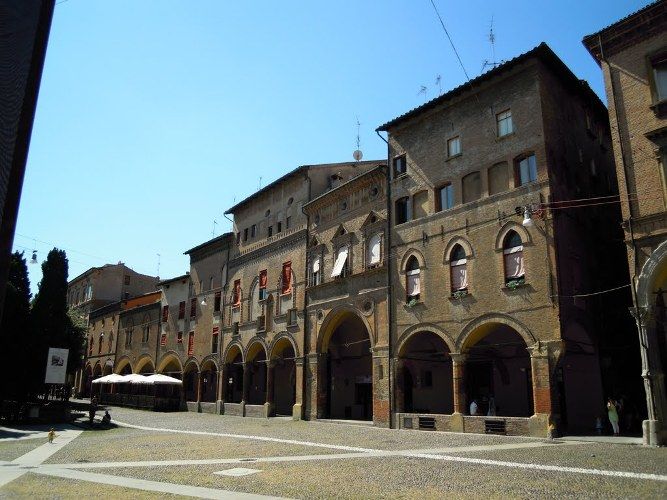
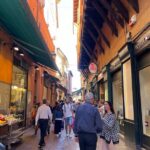
Now you get to one of Bologna’s defining features: its covered walkways. The tour takes you to the porticoes of Piazza Santo Stefano, and this is where the city’s architecture starts to feel like daily life, not just heritage.
Porticoes change walking. They soften weather, create shade in warm months, and make long routes feel shorter. Even if you already knew Bologna was famous for arches, this part helps you see why locals love it. It’s not only aesthetic. It’s practical design.
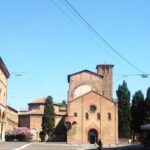
Piazza Santo Stefano also connects you to one of Bologna’s most charming church complexes: the Santo Stefano basilica area (often talked about with the “seven churches” idea). The guided pacing matters here; otherwise, it’s easy to get distracted and miss the overall layout.
If you’re someone who enjoys architecture and spatial planning—how rooms relate to each other—this section will be a highlight.
Court Isolani and Via Strada Maggiore: Covered Passageway Vibes
On the way to Via Strada Maggiore, you’ll see the covered passageway of the Court Isolani. This is the kind of stop that’s short on paper but big in feel.
A covered passage is Bologna at street level: narrow, sheltered, intimate. It also reinforces a core tour lesson—Bologna’s charm is built into the movement, not only into the monuments. You’re walking through spaces that were designed to protect people, goods, and daily routines.
It’s a great pause point if you’re traveling on a day when the weather is moody. The reviews you’ll see for this tour often mention how the guide handled rain with care, and the city’s covered routes make that kind of planning pay off.
Mercato di Mezzo and La Grassa: Why Bologna Talks Food
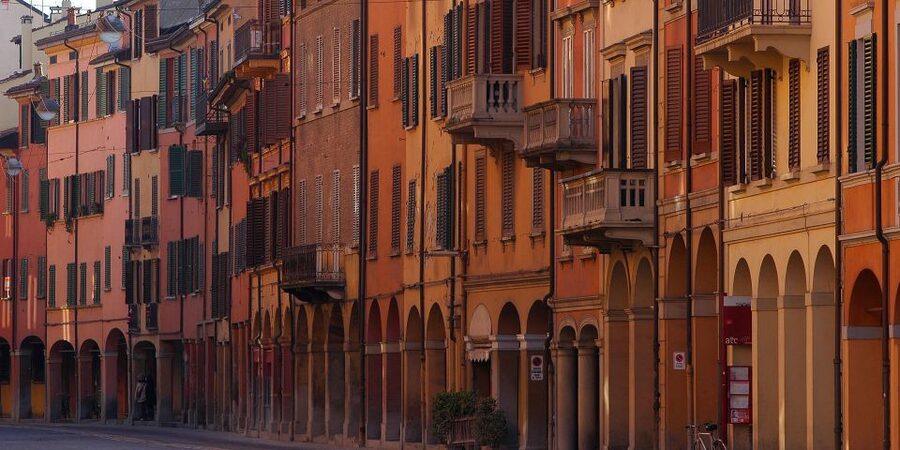
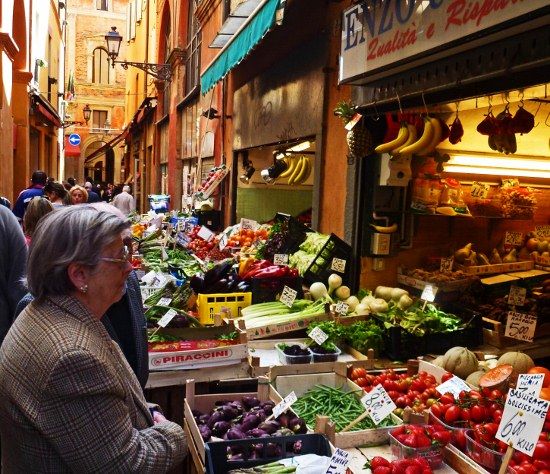
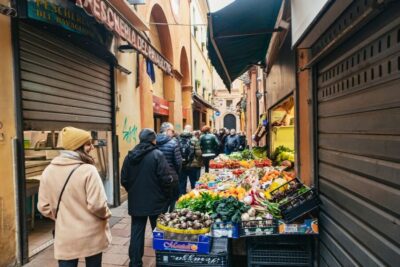
One of the smartest tour choices is stopping in Mercato di Mezzo. Food isn’t an add-on here. In Bologna, it’s part of the city’s culture and pride—hence La Grassa, The Fat.
Your guide will explain why food matters and how Bologna’s markets shaped daily life. Even if you don’t eat anything on the spot, this stop gives you a lens. It turns what could be just a pretty market into a place with real meaning: people gathered here because this is how a city stays fed, social, and connected.
I also like that this moment balances the heavier monuments. You get science (Archiginnasio), civic power (Piazza Maggiore and palaces), and then human-scale culture (markets). That keeps the tour from feeling like a nonstop museum.
Palazzo Salina-Amorini and the Faces: Details That Reward Attention
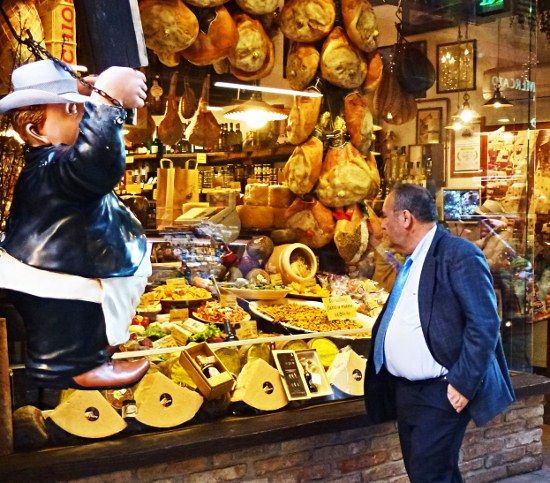
Some parts of the route also include Palazzo Salina-Amorini, and a standout detail mentioned is the idea of the faces you’ll see there. That matters because Bologna’s art isn’t always about huge fresco scenes. Sometimes it’s about close-up character, ornamentation, and how buildings tell stories through small repeated features.
This is a good stop for anyone who likes to slow down and notice. If you’re the kind of traveler who usually rushes photos, you’ll probably enjoy this, because it’s built for looking closer than you might at first.
The Role of the Guide: Why Names Like Manuela and Giulia Matter
The tour is led by Manuela Roversi (based on the experience provider info), and the reviews highlight her as a major reason people love the experience. One review specifically praises Manuela for being amazing and extremely knowledgeable, and another points out her pride in Bologna and the way she answers questions thoughtfully.
You’ll also see mention of other guides like Giulia delivering a similarly strong architecture-and-history experience, including stops like the old university and the anatomical theater. Even with different guides, the pattern is consistent: the best tours here are the ones that explain what you’re looking at while keeping the walk engaging.
If you want a tour where you can ask questions—why something was built, what a detail means—this format is a strong match. The guide is a translator between your eyes and the city’s older language.
Price and Value: $118.95 for Up to 5 People
At $118.95 per group up to 5, the value depends on how you travel.
- If you’re a couple or a small family, you’ll likely feel good about the price because it’s not priced per person in a way that balloons quickly.
- If you’re solo, it can still make sense if you like a private guide experience and want a more relaxed pace than group tours.
The added ticket for the Anatomy Theatre (listed at €3.50 per person) is the main extra cost mentioned. But that’s optional in practice—you can’t always count on skipping it and still getting everything. If you plan to go in, book the time you want and budget for the ticket.
For me, the value comes from the combination: major monuments, porticoes, university culture, plus food-market context in just 3 hours. That’s a tight route that avoids the common problem of “too much walking, not enough meaning.”
Practical Tips That Make the Tour Easier
This is a walking tour, so your biggest prep item is obvious: comfortable shoes. Less obvious is the church dress rule. When you enter churches, you must be covered—no shorts—and your shoulders must be covered. If you forget, you might not be able to enter, and you’ll lose time.
Weather matters too. Bologna can be rainy, and the tour runs on foot. The route includes plenty of covered spaces, which helps, but you’ll still want a light layer and something to protect yourself.
Finally, if you’re traveling with mobility needs, this activity is listed as wheelchair accessible. The tour being private can also help with pacing if you need slower movement.
Who This Tour Is Best For
This tour fits especially well if:
- you want the main sights without turning it into a sprint
- you like architecture and history explained clearly as you walk
- you care about Bologna’s identity beyond food or beyond buildings alone
- you want a private guide experience rather than a large-group shuffle
It might be less ideal if:
- you hate walking for about 3 hours
- you’re not interested in university and church interiors (since those are core stops)
Should You Book This Bologna Walking Tour?
I’d book it if you want Bologna in a single, well-structured loop: Piazza Maggiore, towers, porticoes, the university story, San Petronio’s sundial, and a market stop that connects La Grassa to real daily life. The private size and the guides (with Manuela Roversi highlighted, and Giulia mentioned in reviews) seem to make the experience feel personal and question-friendly.
Skip it only if you’re trying to cover Bologna with zero walking, or if you know you won’t follow the church dress requirements and don’t want that part of the itinerary.
If you want a tour that doesn’t just point at sights but helps you understand why Bologna looks and feels the way it does, this one is a strong bet.
FAQ
Is the Bologna walking tour about Piazza Maggiore and porticoes?
Yes. You’ll see major monuments around Piazza Maggiore and also walk the porticoes connected with Piazza Santo Stefano.
How long is the tour?
It lasts 3 hours.
What is included in the price?
The tour includes the 3-hour walking tour and a live guide.
Do I need to pay extra for the Anatomy Theatre at the Archiginnasio?
Yes. Entrance to the Anatomy Theatre is listed as €3.50 per person and must be booked in advance.
Where does the tour start?
The meeting point is Piazza del Podestà, Piazza Maggiore 1/e, close to the entrance door of the Bologna Welcome tourist office.
Does the tour end somewhere else?
No. It ends back at the meeting point.
What languages are the tour guide options?
The guide is listed as available in Spanish, English, Italian, and German.
Is the tour wheelchair accessible?
Yes, the activity is listed as wheelchair accessible.
What should I bring and wear?
Bring comfortable shoes. For church entrances, you must be covered up: no shorts, and your shoulders must be covered.
Is there a refund if plans change?
Yes. Free cancellation is available up to 24 hours in advance for a full refund.
More Guided Bologna Tours
More Bologna Walking Tours
More Tour Reviews in Bologna



After something different? More ways to fill a day in Bologna and across Emilia-Romagna







Bologna Walking Tours & City Highlights, compared.
 ★ 4.5City Center Walking TourFrom $263,478 reviews
 ★ 4.8Walking Food Tour with a Local GuideFrom $90882 reviews
 ★ 5.0Private Half Day Parma Food Walking TourFrom $134561 reviews
 ★ 3.7Open Bus City Tour and Local Food TastingFrom $46550 reviews
 ★ 5.0Bologna Private Highlights & Hidden Gems Tour with a LocalFrom $77359 reviews
 ★ 4.6City Highlights Walking Tour with Local GuideFrom $17219 reviews
 ★ 4.9City Center Guided Wine Walking TourFrom $70210 reviews
 ★ 4.2City Walking TourFrom $27203 reviews
Browse the lists this tour appears in