
Reviewed · BOLOGNA WALKING TOURS & CITY HIGHLIGHTS
Modena: Private Walking Tour with A Guide
Modena rewards slow walking, and this tour gets you there fast. I love how the route ties together UNESCO-level Romanesque landmarks and the everyday city fabric, so you see Modena as a living place, not a checklist. I also like that the guide, Manuela Roversi, explains what you’re looking at in plain, practical language while keeping the pace comfortable for a private group.
The one thing to plan around is the church dress code and clothing rules: no shorts, short skirts, or sleeveless shirts. If you’re dressed casually for summer heat, you’ll want to adjust so you can step into the cathedral areas when they’re open.
In This Review
- Key Highlights You’ll Actually Feel
- Why Piazza Grande Is the Best Place to Begin in Modena
- The UNESCO Trio: Cathedral, Ghirlandina, and Piazza Grande
- Dress Code Rules That Affect What You Can Actually See
- Piazza Grande to the Albinelli Market: Local Life Between Big Monuments
- Via Emilia: The Roman Backbone You Can Walk Along
- The Old Jewish Ghetto and the New Synagogue View
- Palazzo Ducale: Power, Then Power With a Uniform
- Timing and Logistics for a Smooth 2-Hour Walk
- Price and Value: When $113.29 Makes Sense
- The Guide Factor: Manuela Roversi’s Clear, Kind Style
- Who This Private Modena Tour Is Best For
- Should You Book This Modena Private Walking Tour?
- FAQ
- FAQ
- How long is the Modena private walking tour?
- Where does the tour start?
- What are the main sights you’ll see?
- Can I enter the cathedral during the tour?
- What languages is the guide available in?
- Is the tour wheelchair accessible?
Key Highlights You’ll Actually Feel
- Start at Pietra Ringadore in Piazza Grande, the perfect city-power backdrop for your bearings
- UNESCO trio in one stop area: the Cathedral (Saint Geminiano), Ghirlandina tower, and Piazza Grande itself
- Via Emilia + old Jewish ghetto in a short walk, showing Roman roots and later communities
- Albinelli covered market for an easy look at local produce and the province’s tastes
- Palazzo Ducale as an Este court landmark that later became the Modena Military Academy
Why Piazza Grande Is the Best Place to Begin in Modena
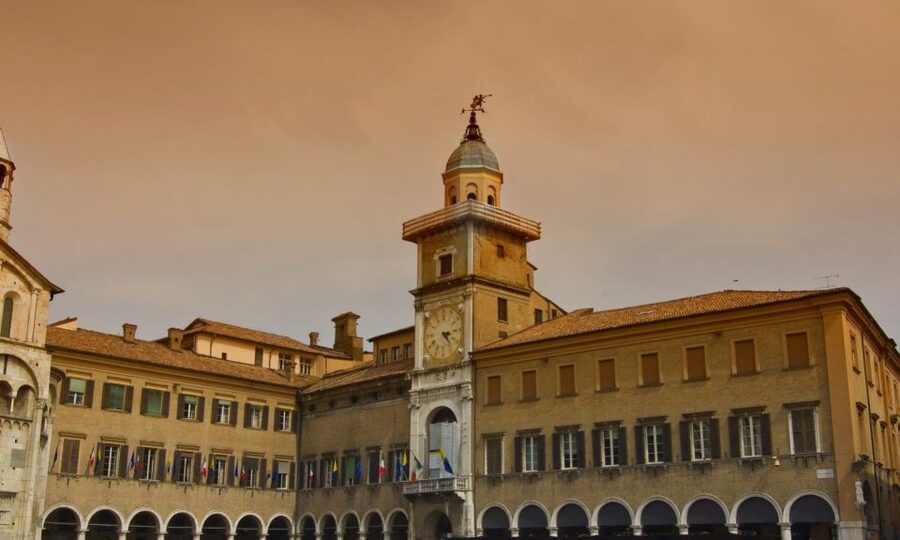
Your tour starts at the Pietra Ringadore, a huge red marble stone people call the Speaker’s Corner. It sits on one corner of Piazza Grande, near where the two arcades meet. That’s more than a convenient meeting spot. It’s a spot that makes sense of Modena right away: this square is where civic and religious power have long been on display.
From here, you can orient yourself visually. The walls, streets, and open spaces show how Modena grew its identity around central authority. And because this tour is only two hours, starting in Piazza Grande helps you get meaning fast, instead of spending the first half wandering.
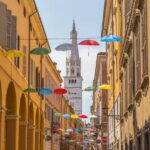
More of the old town on foot, towers and squares and back streets.
The UNESCO Trio: Cathedral, Ghirlandina, and Piazza Grande
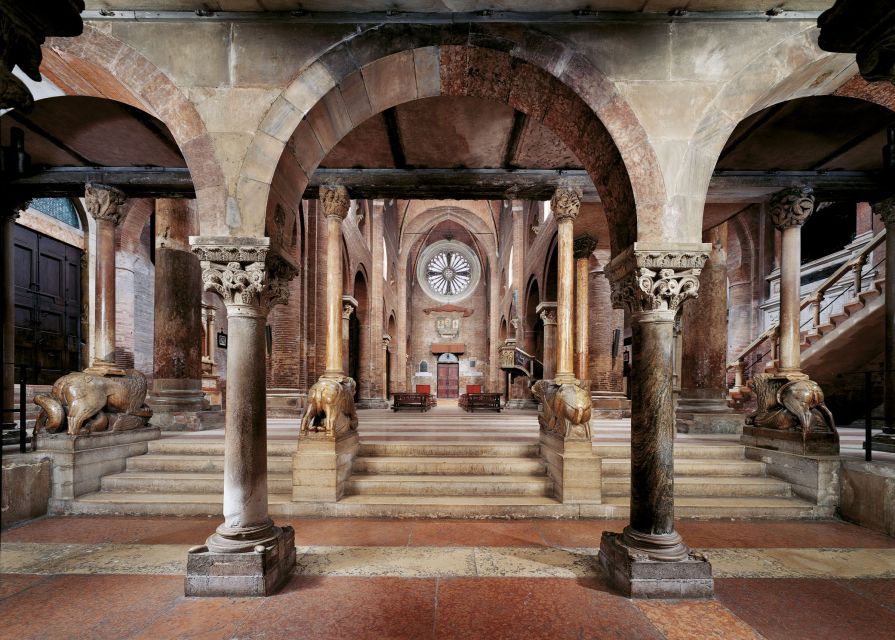
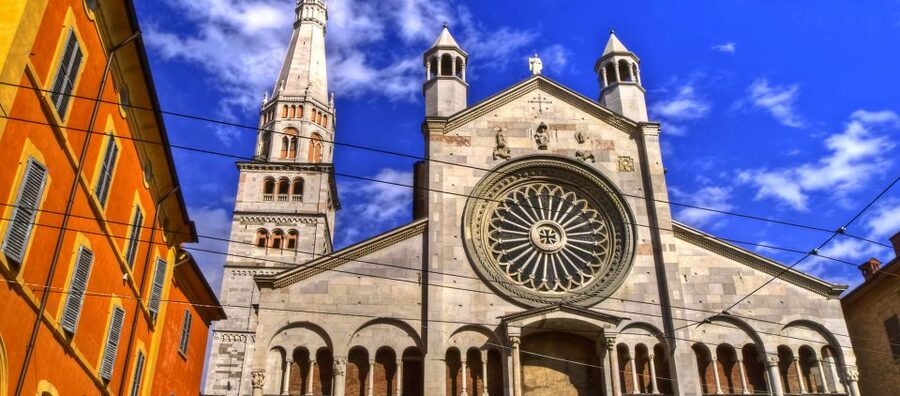
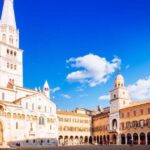
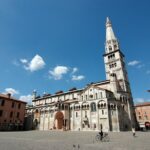
The heart of this walk is the UNESCO cluster tied to Modena’s Romanesque tradition. You’ll see three UNESCO sites connected to the Cathedral complex: the Saint Geminiano Cathedral, the Ghirlandina tower, and Piazza Grande itself.
Here’s why that matters for you as a visitor. Romanesque architecture isn’t just a style word. It’s a whole way of building with strong geometry, sculptural forms, and a sense of permanence. Modena is known as the capital city of Romanesque art, and the guide is there to translate the visual clues. You’ll understand why the shapes and the placement of these buildings became so influential in a 12th-century Italian cultural-artistic tradition.
About the cathedral interior: you can potentially enter depending on opening times and services. The schedule is specific, and the practical tip is to treat this as a possible bonus, not a guarantee. Still, knowing the hours means you can plan your day around it.
If you want the key timings for the Duomo/cathedral, use these guidelines:
- Monday: 3:30 PM–5 PM
- Tuesday to Saturday: 10:30 AM–5 PM
- Sunday: 1:30 PM–4:30 PM
Dress Code Rules That Affect What You Can Actually See
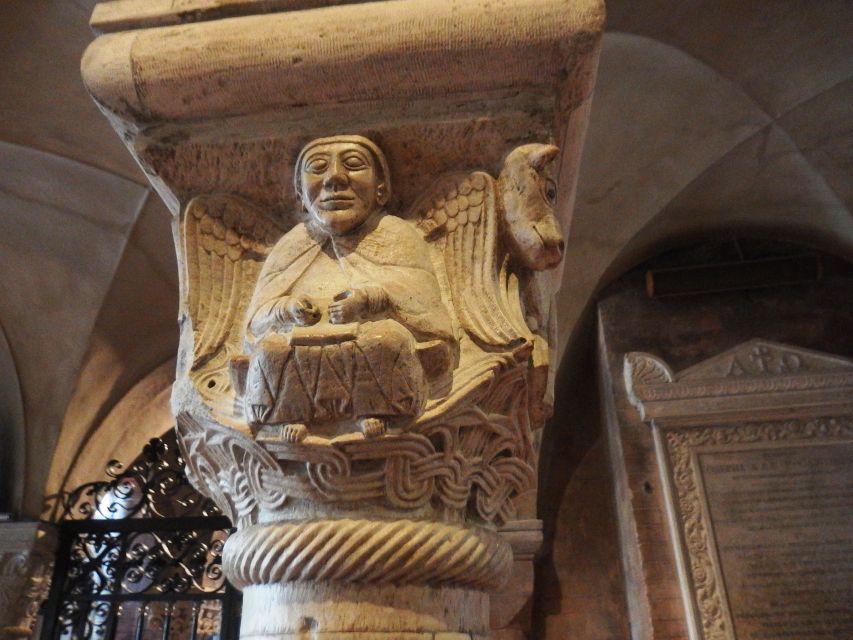
This tour is straightforward, but churches in Modena require preparation. It’s not just about politeness. If you want to go inside or even fully participate in cathedral areas, you need shoulders covered and you should avoid casual summer gear.
Not allowed during the tour:
- Shorts
- Short skirts
- Sleeveless shirts
For entering churches, the guidance is clear: cover your shoulders, and a wide shawl is suggested. I’d treat that as a small packing win. If you arrive with a light shawl, you keep your options open without having to scramble for a change of clothes near the square.
Also, if you’re traveling with kids or in a group where someone always wears summer gear, this is the one moment where the plan depends on everyone cooperating with the dress rules.
Piazza Grande to the Albinelli Market: Local Life Between Big Monuments
After Piazza Grande, you’ll move through nearby lanes, including Piazzetta delle Ova, toward one of Modena’s most distinctive everyday stops: the Albinelli covered market.
This market is described as the oldest covered market in town and also among the most beautiful in Italy. That combination is exactly why it’s worth your attention on a short walking tour. You’re not adding a random food stop. You’re stepping into a place designed for local routines, where the architecture is part of the atmosphere.
You’ll be able to see and buy typical products from the province. You’ll also get the most accurate experience if you respect the opening pattern:
- Open Monday to Friday morning
- Closed on Sundays
If your visit is on a Sunday, you’ll still pass through the area, but the market itself may not offer the same opportunity to browse and buy. That’s the trade-off with a small-city walking plan: the calendar matters.
And even without shopping, the market helps you understand Modena’s character beyond UNESCO plaques. The guide’s commentary tends to connect what you see here with what you saw in Piazza Grande, like how civic life, trade, and community identity live next to each other.
Via Emilia: The Roman Backbone You Can Walk Along
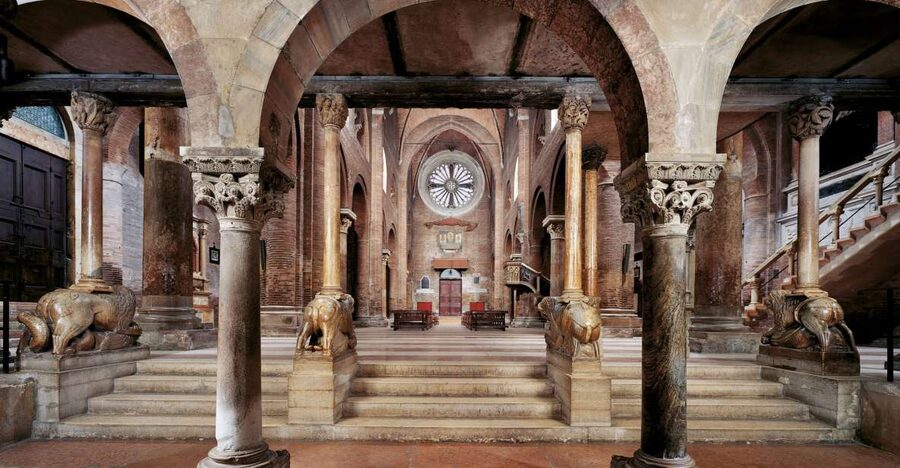
Next comes one of the easiest “wow” moments in the entire city. You’ll reach the Via Emilia, described as the backbone of Emilia-Romagna and the main urban artery since Roman age.
This is the kind of detail that changes how you read a city. Standing on or near Via Emilia makes the Roman influence feel physical, not academic. You see the street as a framework that later generations built around, adapting it for new eras without erasing it.
The guide helps you connect it to what you’re seeing around it. That’s important because Roman-age streets can look like normal streets unless someone points out what to notice: how the urban pattern holds, how the city grew around the axis, and why central corridors mattered for trade and movement.
Your own local guide, the day built around you.
The Old Jewish Ghetto and the New Synagogue View
Crossing to the other side of Via Emilia leads you to the old Jewish ghetto. You’ll also pass the area associated with the new synagogue, which overlooks Piazza Mazzini.
For me, this is one of the most meaningful parts of the tour because it adds layers. You’re not only learning about Romanesque architecture or ducal power. You’re seeing how Modena’s urban story includes different communities and how those communities shaped the city’s geography.
It’s also a practical segment: the tour keeps the walking distance reasonable, so you can absorb the context without feeling rushed.
When the guide explains the relationships between these places, the city feels more coherent. Streets stop being lines on a map and start becoming chapters in how Modena changed over time.
Palazzo Ducale: Power, Then Power With a Uniform
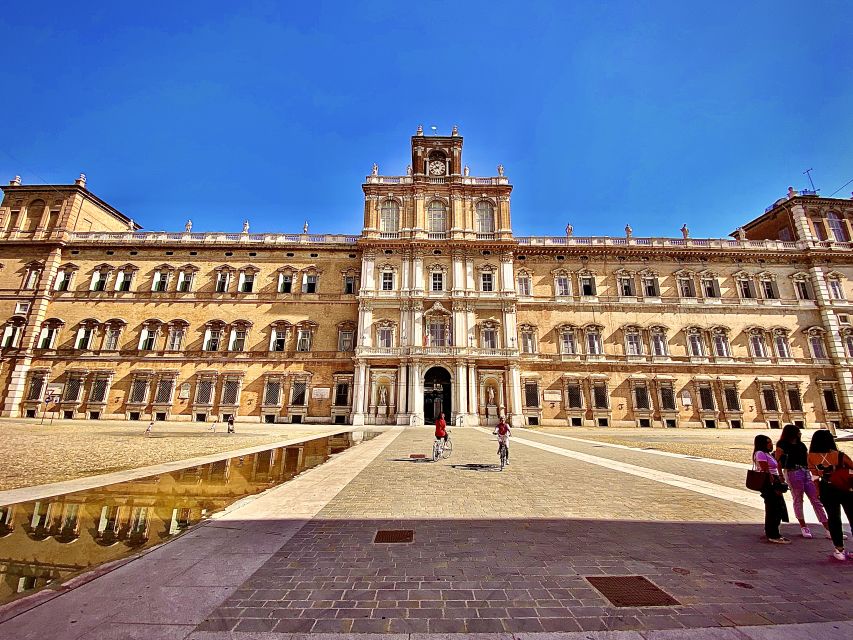
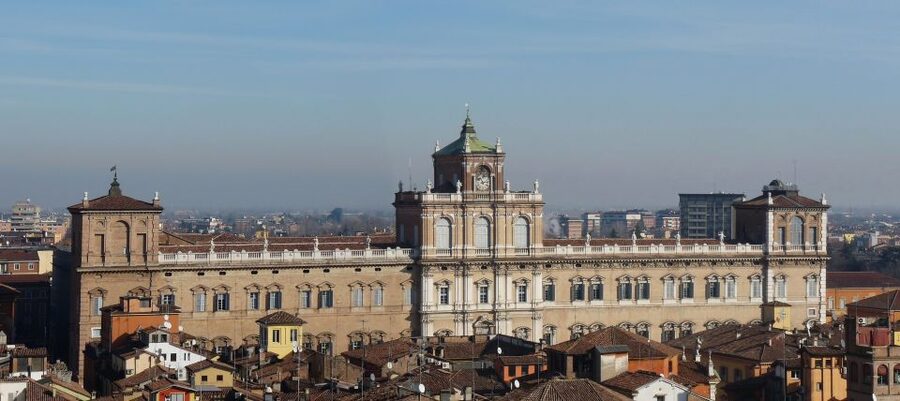
Just a few steps from the Jewish ghetto area, you’ll reach the majestic Palazzo Ducale, a 17th-century palace that served as the residence of the Court of the Estes. Later, it became the seat of the Modena Military Academy.
This is a great stop if you like architecture that tells you something about governance. You’re seeing how ruling families shaped the city with grand spaces, then how those spaces were repurposed when the world shifted. The guide’s job here is to connect the building to power—what it meant to live in a ducal seat, and what it meant when that role changed to a military institution.
Even if you’re not an architecture fanatic, Palazzo Ducale works because the story is simple. It’s an example of how buildings can outlast regimes and keep serving new purposes without losing their presence on the street.
Timing and Logistics for a Smooth 2-Hour Walk
This tour lasts two hours, and starting times depend on availability. That short format is part of the value. You’re not spending half a day in transit or doing a “big day” schedule that turns into fatigue.
For a tight itinerary like this, a few practical reminders help:
- Wear comfortable shoes for medieval streets and short city segments
- Bring a shawl if you want the best chance to enter the cathedral areas
- Check whether your day includes the Albinelli market morning hours
Also note the tour ends back at the meeting point, so you’re not left navigating back through the center after the last story.
Price and Value: When $113.29 Makes Sense
The price is $113.29 per group, up to 10 people, and the tour includes a guide. That pricing structure is important to understand.
For one or two people, it’s not “cheap,” but it can still be good value if you want:
- a private pace
- focused explanations
- fewer crowd-control compromises than group tours
For larger groups up to 10, the cost becomes much easier to justify because the guide fee spreads across your party. And since it’s only two hours, you’re paying for concentrated time in the city center, centered on the main sights.
If you’re the type who likes to understand what you’re seeing rather than just snapping photos, this format tends to feel worth it fast.
The Guide Factor: Manuela Roversi’s Clear, Kind Style
The experience is led by Manuela Roversi. Based on the feedback, she’s described as competent, kind, and helpful, and she answers doubts clearly. That matters on a tour like this because Modena’s appeal is partly in the connections: Romanesque art, UNESCO status, ducal power, and community history all in one walking loop.
When a guide communicates well, you don’t just memorize facts. You start noticing details yourself, like how squares frame authority, how street layouts echo older eras, and how a palace’s story fits its architecture.
The fact that the feedback repeatedly signals that it was molto interessante isn’t just praise fluff. It points to a tour that stays engaging, even though Modena is smaller than the headline cities.
Who This Private Modena Tour Is Best For
I think this one is ideal if you:
- want a structured introduction to Modena in a 2-hour window
- care about UNESCO sights but still want local context like the market
- prefer a private-group experience where questions don’t feel like interruptions
- want a guide who can explain Romanesque landmarks and urban layers in plain language
It’s also a good choice for couples and small groups who don’t want to fight for position around major monuments.
If you’re traveling in very hot weather and rely on shorts or sleeveless outfits, plan ahead with the shawl and shoulder-covering layer. That’s the one practical “gotcha” that can limit cathedral access.
Should You Book This Modena Private Walking Tour?
I’d book it if you want a tight, meaningful walking route that connects Modena’s UNESCO landmarks with the city’s living neighborhoods. The biggest strengths here are the UNESCO trio in the center, the Via Emilia storyline, and the way the route includes community history and the ducal palace.
Skip it only if you’re determined to go light on planning and you can’t meet the church dress code. Otherwise, this is a well-paced, guide-led way to see what makes Modena more than a stop between bigger destinations.
FAQ
FAQ
How long is the Modena private walking tour?
The tour lasts 2 hours.
Where does the tour start?
It starts at the Pietra Ringadore, often called the Speaker’s Corner, a huge red marble stone in Piazza Grande near where the two arcades meet.
What are the main sights you’ll see?
You’ll see Piazza Grande and the UNESCO Cathedral area, the Ghirlandina tower, the Jewish ghetto area, the new synagogue overlooking Piazza Mazzini, Via Emilia, the Albinelli covered market, and Palazzo Ducale.
Can I enter the cathedral during the tour?
You can potentially visit the interior of Saint Geminiano Cathedral depending on opening times and services.
What languages is the guide available in?
The live guide is available in English, German, Italian, and Spanish.
Is the tour wheelchair accessible?
Yes, the tour is wheelchair accessible.
More Private Guided Tours of Bologna
More Bologna Walking Tours
More Tour Reviews in Modena


After something different? More ways to fill a day in Bologna and across Emilia-Romagna






Bologna Walking Tours & City Highlights, compared.
 ★ 4.5City Center Walking TourFrom $263,478 reviews
 ★ 4.8Walking Food Tour with a Local GuideFrom $90882 reviews
 ★ 5.0Private Half Day Parma Food Walking TourFrom $134561 reviews
 ★ 3.7Open Bus City Tour and Local Food TastingFrom $46550 reviews
 ★ 5.0Bologna Private Highlights & Hidden Gems Tour with a LocalFrom $77359 reviews
 ★ 4.6City Highlights Walking Tour with Local GuideFrom $17219 reviews
 ★ 4.9City Center Guided Wine Walking TourFrom $70210 reviews
 ★ 4.2City Walking TourFrom $27203 reviews
Browse the lists this tour appears in