
Reviewed · BOLOGNA WALKING TOURS & CITY HIGHLIGHTS
Private or semi-private tour of the historic center of Bologna
Neptune rules Bologna’s center. This 2-hour walk gives you top landmarks with local context so you don’t spend the trip stuck on a map. You’ll move through the historic heart with a small group of up to 10, led by licensed guide Isadora, with stops built around major monuments and a real sense of how Bologna works.
I like the pace here: it feels relaxed, but you still cover the big hitters. I also like that the route mixes “wow” sights (like San Petronio and the University of Bologna’s legacy) with practical, food-friendly wandering through the old market area. One thing to plan for: the San Petronio stop has added costs. The tour notes that the admission ticket isn’t included, and if you’re in a group larger than 2, you may need an audio guide rental at the basilica entrance (not included).
In This Review
- Key highlights you’ll feel on the walk
- Starting at Piazza Maggiore, where Bologna starts talking
- Palazzo Re Enzo and the “almost castle” feel of Bologna’s power
- San Petronio: why Bologna’s main church isn’t the cathedral
- Archiginnasio: the University of Bologna without the textbook vibe
- Via Pescherie Vecchie: medieval market lanes with modern appetite
- Why a small group with Isadora feels more like Bologna
- Time and price: what $132.15 really buys you
- Who should book this Bologna center walk
- Should you book it?
- FAQ
- How long is the Bologna historic center tour?
- Is this tour private?
- Where does the tour start?
- Is the tour in English?
- What’s included in the price?
- Do I need to pay for tickets during the tour?
- Does the tour involve walking?
- Is there an audio guide option?
- Is the meeting point easy to reach on public transit?
Key highlights you’ll feel on the walk
- Map-free route: a guided stroll that keeps you moving between major sights.
- Piazza Maggiore focus: the square, the fountains, and the city’s political storytelling in one area.
- Neptune details that actually mean something: symbols tied to papal power and famous rivers.
- San Petronio interiors: including the Bolognini Chapel and the long sundial.
- University of Bologna legacy at Archiginnasio: student life, books, coats of arms, and the anatomy theater feeling.
- Via Pescherie Vecchie for food atmosphere: medieval market lanes with places for wine and street bites.
Starting at Piazza Maggiore, where Bologna starts talking
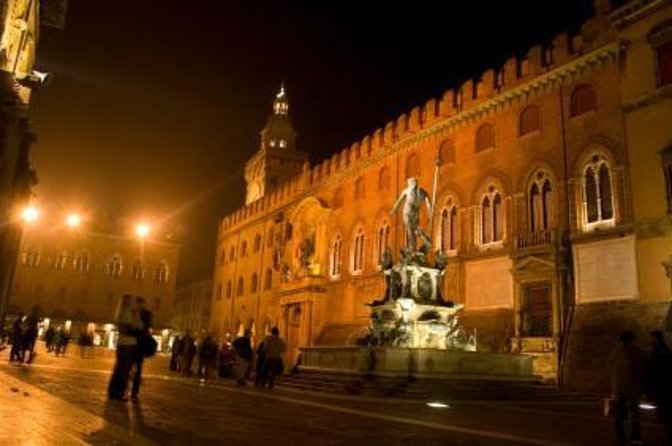
Most cities have a “main square.” Bologna’s is different. You begin at Piazza Maggiore, also known as Piazza Grande in the way Lucio Dalla liked to frame it, and you’ll get the sense that this square isn’t just pretty—it’s political and theatrical. The tour guides you through the area while explaining the “pulcinella secrets” that make Bologna feel like a place with jokes, history, and power all mixed together.
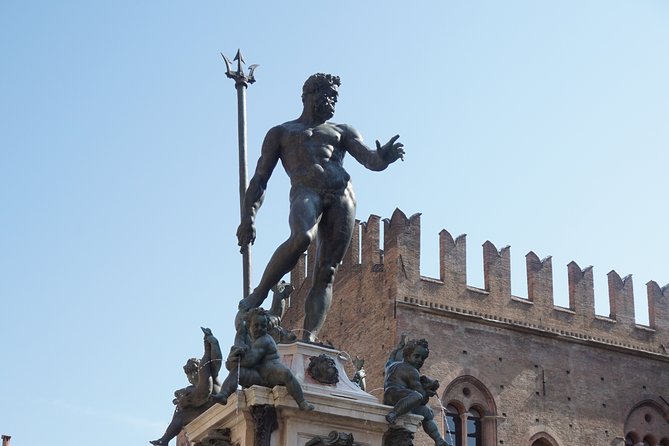
From there, you spend time with the city’s signature fountain: the Fountain of Neptune, called Il Gigante by locals. This isn’t one of those fountains where you just admire and move on. You’ll hear how it was designed by the Flemish artist Giambologna, based on a project by Tommaso Laureti, built between 1563 and 1566, and commissioned by Pope Pius IV. The symbolism matters: Neptune dominates the waters, and the Pope dominates the world.
Then the details keep coming—the four putti at Neptune’s feet representing rivers of the continents known at the time: the Ganges, Nile, Amazon, and Danube. It’s a neat example of how Bologna’s art is also its storytelling. If you like your monuments with a reason behind them, this stop delivers.
Practical note: this part of the walk is in and around the busiest central streets. Wear shoes you’ll feel good in after 30–60 minutes of steady walking.
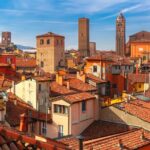
More of the old town on foot, towers and squares and back streets.


Palazzo Re Enzo and the “almost castle” feel of Bologna’s power
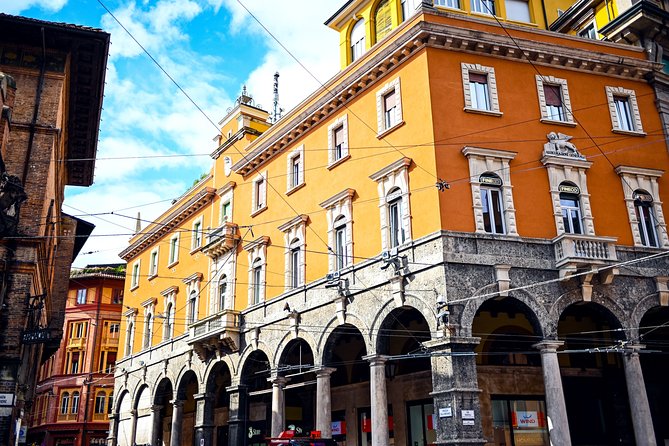
Right near Piazza Maggiore, you’ll also see Palazzo Re Enzo. It’s a historic building built around 1244–1246 as an extension of the municipal complex. The name comes from a specific chapter: in the 13th century it became the residence of King Enzo of Sardinia, held as a prisoner after the Battle of Fossalta.
Here’s the helpful context I love in this tour: it doesn’t just point at stones. It connects spaces to what happened inside them. The war machines were kept on the ground floor, while the popular councils met on the loggia above. That’s the kind of detail that makes you look twice at architecture back home.
Next comes the heart of the municipal story: Palazzo d’Accursio—often described as an almost castle. The tour highlights that it’s today the city’s most important cultural center, inaugurated in December 2001. What makes it especially worth a stop is the layering of time inside. You’ll hear how excavations and the sedimentation of civilizations can be seen in one scene with strong sense of light and harmony—moving from early Villanovan huts (7th century BC), to Etruscan Felsina, to Roman Bononia founded in 189 BC.
If you’re thinking, okay, but what do I actually see? The tour includes time at Palazzo d’Accursio / Palazzo Comunale, with mention of the sixteenth-century cordoned staircase attributed to Bramante. It’s the kind of stairway that tells you Bologna wanted its government to feel ceremonial and serious—almost like an entrance for power.
San Petronio: why Bologna’s main church isn’t the cathedral
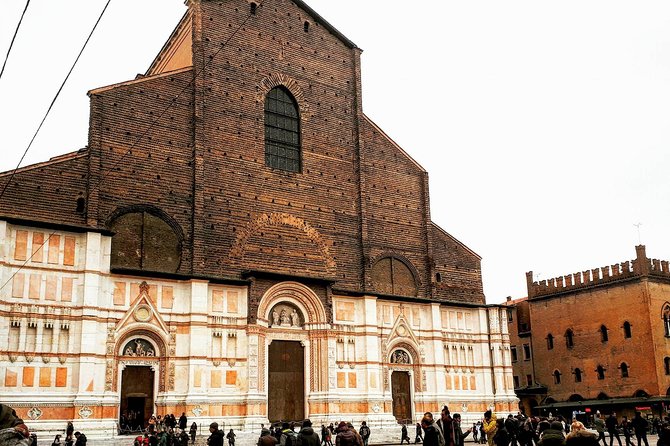
After Piazza Maggiore’s civic drama, the tour shifts to belief and architecture with Basilica di San Petronio. This is a key reason this experience feels different from a generic “big sites” walk: you visit the city’s main place of worship and you’ll get the explanation for why it doesn’t behave like a typical canonical cathedral.
Inside, the highlight is the Bolognini Chapel. You’ll also see the longest sundial in the world, plus the four crosses. Even if you’re not a church-architecture superfan, this is one of those interiors where the details are the point. The tour’s focus helps you notice things you’d otherwise miss—like the way art, timekeeping, and symbolism get folded together.
Budget heads-up: the basilica stop notes that admission tickets aren’t included. Also, for groups of more than 2 people, the tour says you may have to rent an audio guide at the entrance of the basilica (not included in the tour cost). So if you hate surprise add-ons, plan a little extra for this segment.
Wear a layer if you run cool in churches. And bring patience: religious interiors often mean slower movement through narrow spaces.
Archiginnasio: the University of Bologna without the textbook vibe
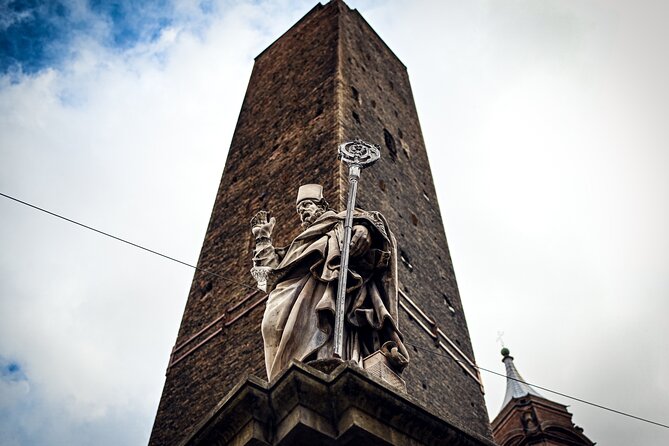
Next is Archiginnasio, tied to the University of Bologna—lauded as the oldest university in the world. The building served as the university’s seat for three centuries, and the feeling is very different from a modern campus. Instead of feeling like a lecture hall, it feels like a preserved stage set for how students and professors used to live.
This stop shines because it’s not only about famous dates. You’ll see and learn about customs and symbols, including heraldic coats of arms and illuminated manuscripts and ancient books. Then there’s the anatomical theater angle: wooden statues connected to anatomy theater imagery help you picture how learning worked in that era.
If you’re the type who enjoys institutions because of the people who passed through them, this is a strong match. You don’t need to be a scholar to feel the change across centuries. The tour frames Archiginnasio as a time machine made of objects.
One consideration: like many historic sites, it can mean more standing and looking while you absorb explanations. If you prefer lots of seating breaks, you might want to pair this with a longer lunch afterward.
Via Pescherie Vecchie: medieval market lanes with modern appetite

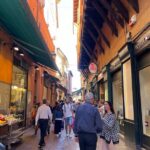
To end, you head into Via Pescherie Vecchie, Bologna’s old central market area. From the Middle Ages, it was the main trading center. Today it’s a maze of historic shops and lanes that make it easy to wander without feeling lost.
What I like about adding this at the end is that it changes your mode from “sightseeing” to “being in the city.” The tour gives you enough time—about 15 minutes here—to notice the vibe, where wine fits naturally, and where street food shows up as part of the day rather than a planned detour.
This is also the best moment to ask your guide for food direction. The walking context makes restaurant suggestions feel more grounded: you understand what’s close, what’s likely to be lively, and what style of stop matches what you just saw.
Practical tip: keep your eyes up for storefront details, but also watch where you step. Old market lanes are fun—and not always flat or wide.
More private days out, just your own group.

Why a small group with Isadora feels more like Bologna
This tour is built as private or semi-private, capped at 10 travelers. That matters more than people expect. With a smaller group, the guide can slow down when you want to look closer at a doorway detail, and it stays manageable when streets get busy.
Licensed guide Isadora is repeatedly mentioned for blending history with storytelling—plus adding extra context and what the tour calls secrets that make Bologna feel less like a list and more like a place. One thing I’d call out from the guide style implied here: the pacing aims to stay relaxed, not lecture-heavy. You’re meant to leave with both facts and a sense of how the city fits together.
Language note: the tour is offered in English. That’s a big win for many visitors. Still, one review specifically raised that English clarity wasn’t perfect at all moments. If you’re very strict about comprehension, plan to ask for clarification and don’t be shy about telling the guide you want something repeated.
Time and price: what $132.15 really buys you
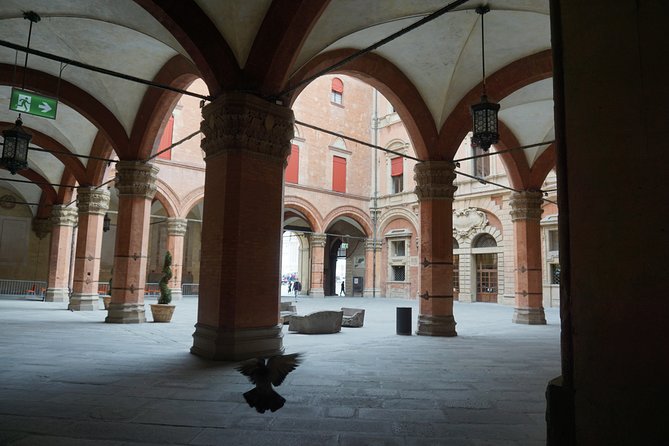
At $132.15 per person for about 2 hours, you’re paying for routing, pacing, and access to interpretation—not for a long museum day. In Bologna’s historic center, that trade can be very fair. You’re hitting major civic architecture around Piazza Maggiore, then moving into a major church interior, then onto University-linked heritage at Archiginnasio, and finally a market lane zone.
What’s included helps the value side:
- guided tour with a licensed guide
- RC insurance
- mobile ticket
What’s not included is where you should do a bit of mental budgeting:
- San Petronio stop lists admission as not included
- optional audio guide rental at the basilica entrance may apply for groups over 2
- snacks are not included
So is it worth it? For first-timers with limited time, yes—because you get a guided path through the exact areas that most people struggle to connect on their own. If you already know you want to linger deeply in museums or spend extra time inside big interiors, you may feel shorted by the 2-hour structure. But as an intro that sets up the rest of your trip, it can be a smart use of time.
Also, this is commonly booked about 130 days in advance on average. If your dates are firm, I’d secure it earlier rather than later.
Who should book this Bologna center walk
This tour fits best if you:
- want a fast, structured overview of Bologna’s most important landmarks
- like architecture and symbolism, not just scenic photos
- enjoy food wandering alongside sights (especially around the market area)
- prefer a small-group pace rather than a big bus crowd
It may not fit if you:
- need long, slow time inside multiple interiors
- don’t want any added museum/church costs mid-tour (San Petronio has admission not included)
- can’t manage light walking in historic lanes
Should you book it?
I’d book this when you want Bologna to make sense quickly: Piazza Maggiore’s power, Neptune’s symbolism, municipal buildings with layers of history, and then the University of Bologna legacy at Archiginnasio. The small-group size and Isadora’s story-driven approach are the real payoff—so you don’t just see things, you understand why they’re there.
Skip or rethink it only if you’re planning to spend most of your day inside churches and museums without time limits, or if added costs at San Petronio would frustrate you. For everyone else, this is a strong, practical way to start a Bologna trip and get your bearings fast.
FAQ
How long is the Bologna historic center tour?
It lasts about 2 hours.
Is this tour private?
It’s described as private or semi-private, with a maximum of 10 travelers.
Where does the tour start?
The meeting point is at Libreria Giannino Stoppani, Via Rizzoli, 1/f, 40125 Bologna BO, Italy.
Is the tour in English?
Yes, it is offered in English.
What’s included in the price?
You get a guided tour with a licensed guide, plus RC insurance, and a mobile ticket.
Do I need to pay for tickets during the tour?
Some stops are free, but the San Petronio stop lists admission ticket not included. Audio guide rental may also be required at the basilica entrance for groups larger than 2 (not included).
Does the tour involve walking?
Yes, it includes light walking.
Is there an audio guide option?
An audio guide can be rented at the San Petronio entrance for groups over 2, and the tour notes audio guides as optional elsewhere (not included).
Is the meeting point easy to reach on public transit?
Yes, it’s near public transportation.
More Private Bologna Days
More Bologna Walking Tours

More Tour Reviews in Bologna



After something different? More ways to fill a day in Bologna and across Emilia-Romagna







Bologna Walking Tours & City Highlights, compared.
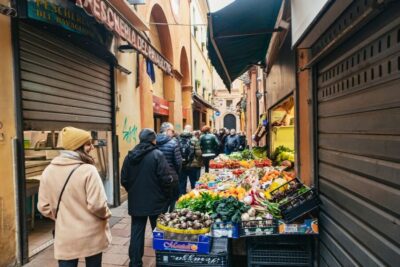 ★ 4.5City Center Walking TourFrom $263,478 reviews
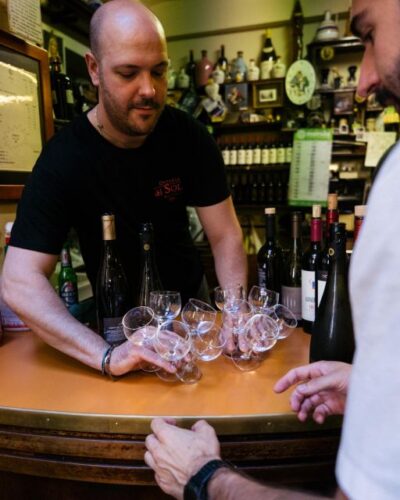 ★ 4.8Walking Food Tour with a Local GuideFrom $90882 reviews
 ★ 5.0Private Half Day Parma Food Walking TourFrom $134561 reviews
 ★ 3.7Open Bus City Tour and Local Food TastingFrom $46550 reviews
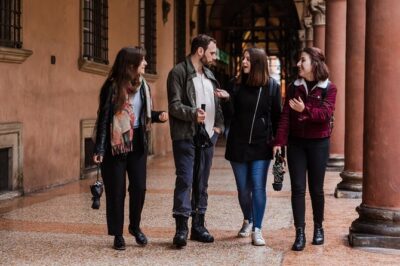 ★ 5.0Bologna Private Highlights & Hidden Gems Tour with a LocalFrom $77359 reviews
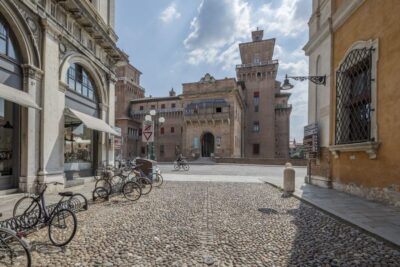 ★ 4.6City Highlights Walking Tour with Local GuideFrom $17219 reviews
 ★ 4.9City Center Guided Wine Walking TourFrom $70210 reviews
 ★ 4.2City Walking TourFrom $27203 reviews
Browse the lists this tour appears in