
Reviewed · BOLOGNA PASTA-MAKING & COOKING CLASSES
3 hour Lasagna Bolognese cooking class
Bologna is famous for lasagna, but the real win here is hands-on cooking. In Paola’s home kitchen you’ll help make the pasta dough, roll it thin, create béchamel, and build the finished Bolognese lasagna step by step.
Two things I really like: you get the personal attention of a small group (max 10), and the meal is more than just food tasting because you actively make the components, including tiramisu. One thing to consider: this is a practical cooking session, so you’ll get flour on your hands and clothes—come ready to cook, not just watch.
You’ll start at Via Montello 28 in Bologna, enjoy an appetizer Paola gives as a welcome, then spend about three hours building your own lasagna and making individual tiramisu portions before ending back at the same meeting point.
In This Review
- Key highlights worth planning for
- Why this Bologna lasagna class feels more real than a restaurant meal
- Via Montello meet-up: where the class starts and ends
- The appetizer that sets the tone before you start cooking
- Kneading and rolling spinach pasta dough the right kind of hands-on way
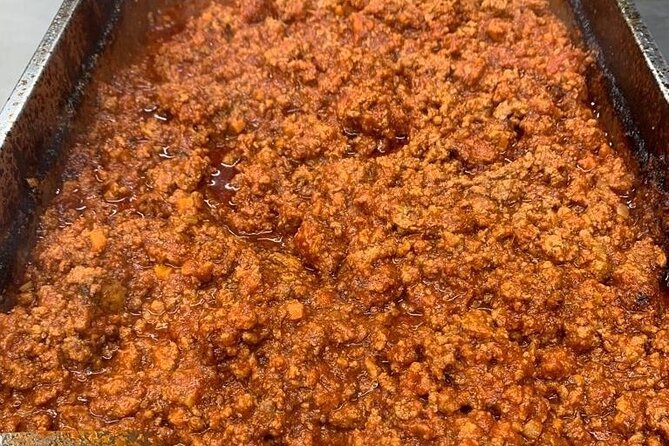
- Béchamel and ragù: understanding the sauces behind Bolognese layers
- Assembling the lasagna: green puff pastry layers, béchamel, ragù, and Parmigiano
- Tiramisu you build yourself, with optional crunchy top
- Small-group teaching with lots of one-on-one touch
- Price and value: what $119.14 buys you in a 3-hour home session
- Who should book this lasagna and tiramisu class
- Should you book Paola’s 3-hour Lasagna Bolognese class?
- FAQ
- How long is the cooking class?
- Where do I meet, and where does it end?
- Is the class offered in English?
- What can I expect to cook during the class?
- Does the class include more than just lasagna?
- How big is the group?
- Is alcohol served?
- Is a mobile ticket used?
- What is the cancellation policy?
Key highlights worth planning for
- Hands-on pasta dough: eggs, flour, and spinach, kneaded by you
- Thin rolling practice: you roll the dough with a rolling pin
- Sauce building: you’ll make béchamel and prepare the Bolognese ragù
- Layer-by-layer assembly: green pasta sheets, béchamel, ragù, and Parmigiano Reggiano
- Tiramisu with your own portion: finish with cocoa and optional biscuit crunch
- Small-group format: up to 10 people, taught in English
Why this Bologna lasagna class feels more real than a restaurant meal
This kind of class works because it focuses on the basics that make Bolognese lasagna taste like Bolognese. You’re not just being shown dishes. You’re making the dough, learning the sauce work, and then assembling the layers the way the recipe expects.
The home setting matters too. You get a calmer pace than a busy dining room, and questions come easily. Plus, the instruction is in English, so you don’t need to puzzle out cooking directions while you’re holding dough.
With a 3-hour session and a small maximum of 10, you’re likely to get enough time and attention to actually do the work, not just stand around.
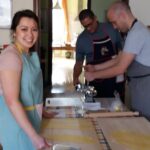
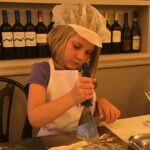
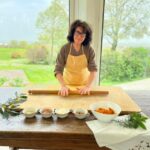
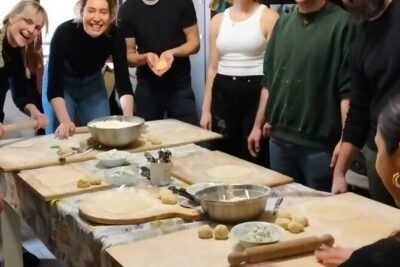
Back into the kitchen to roll tortellini and tagliatelle by hand.
Via Montello meet-up: where the class starts and ends
You’ll meet at Via Montello, 28, 40131 Bologna, and the experience ends back at the same meeting point. That’s helpful on a practical level: you’re not hunting for a second location after you eat, and you can plan your evening without extra transit.
The meeting spot is near public transportation, which makes it easier if you’re staying around the center and don’t want to squeeze in a long walk. You’ll also get a mobile ticket, so you can keep everything simple on your phone.
One more detail that affects planning: service animals are allowed, so if that’s relevant for your situation, you’ll want to feel comfortable bringing what you need.
The appetizer that sets the tone before you start cooking
Before the main cooking begins, you’ll get an appetizer Paola prepares as a gift for the group. That small first course does two useful things for you.
First, it gives you a moment to settle in with food before your hands are busy. Second, it gives you something warm and Bologna-ish to focus on while you get oriented to the kitchen setup and what’s coming next.
If you like experiences where you’re fed in stages—rather than just at the end—this appetizer choice is a good start.
Kneading and rolling spinach pasta dough the right kind of hands-on way
Now for the part that makes this class stand out: you make the green pasta dough. Based on the class format, each person touches the ingredients and helps knead eggs, flour, and spinach. Then you roll the dough out very thin using a rolling pin.
Why this matters: lasagna dough isn’t just a wrapper. The thickness, the flexibility, and how thin it rolls all affect the final texture when baked. When you physically roll it yourself, you start to understand what thin really means in real kitchen time—not in theory.
Also, you’ll learn a practical rhythm. You’re not asked to do everything perfectly on your first try. You get coached through the dough-making and rolling process, so you leave with a better sense of what to aim for next time.
And yes, you’ll get your hands messy. That’s part of the bargain.
Béchamel and ragù: understanding the sauces behind Bolognese layers
Once the pasta work is underway, the focus shifts to building the sauces—starting with béchamel. This is a key moment because béchamel is what makes lasagna feel creamy and cohesive instead of dry or separate.
Then you’ll create the real Bolognese lasagna by preparing the ragù and assembling everything correctly. The class emphasizes both technique and outcome, and the way the meal is described points to a traditional approach: layers depend on the right balance between béchamel, ragù, and cheese.
Here’s what you should pay attention to while you cook: texture. If béchamel is too thin, it won’t cling between layers. If it’s too thick, it can feel heavy. You’ll be taught how to move through the steps, and you’ll end up tasting the difference once the lasagna comes out of the oven.
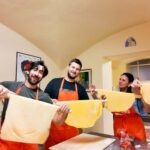
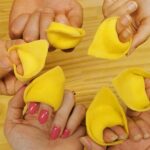
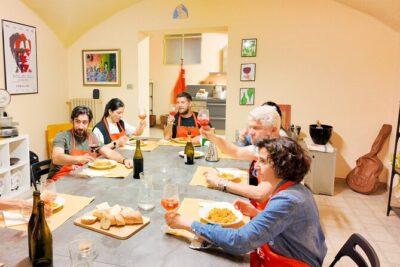
More hands-on afternoons in Emilia kitchens.
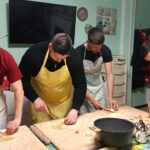
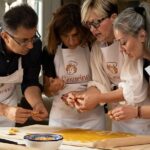
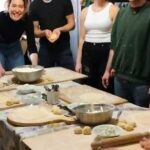
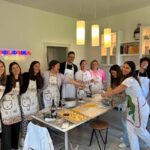
Assembling the lasagna: green puff pastry layers, béchamel, ragù, and Parmigiano
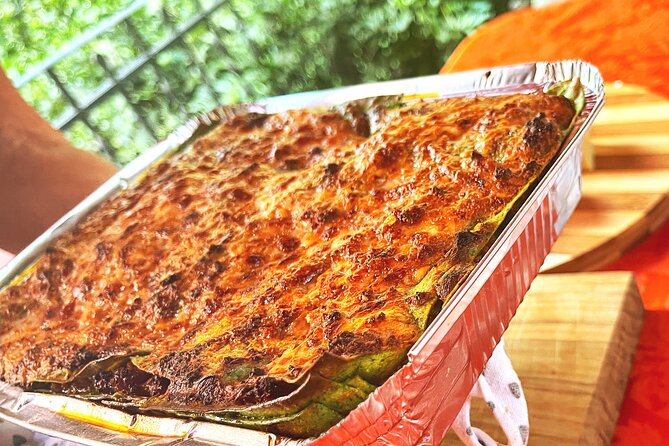
Your main dish is Bolognese lasagna, baked and enjoyed hot. The class menu describes it as layers that include green puff pastry-style sheets made with flour, eggs, and spinach, plus béchamel, ragù, and Parmigiano Reggiano.
That layer list is more than trivia—it’s the structure of the final taste:
- Green pasta sheets give flavor and texture beyond plain noodles.
- Béchamel provides the creamy glue.
- Ragù brings the deep, slow-cooked meat sauce identity.
- Parmigiano Reggiano adds salt, richness, and that classic baked finish.
When you assemble it yourself, you’ll notice how the layers need to be consistent. Even if your first assembly isn’t perfect, you’ll learn what “enough” looks like for each layer. That’s the kind of lesson you can use later when you’re cooking at home.
Then it goes into the oven. The reward comes fast: baked lasagna that’s hot when you sit down to eat.
Tiramisu you build yourself, with optional crunchy top
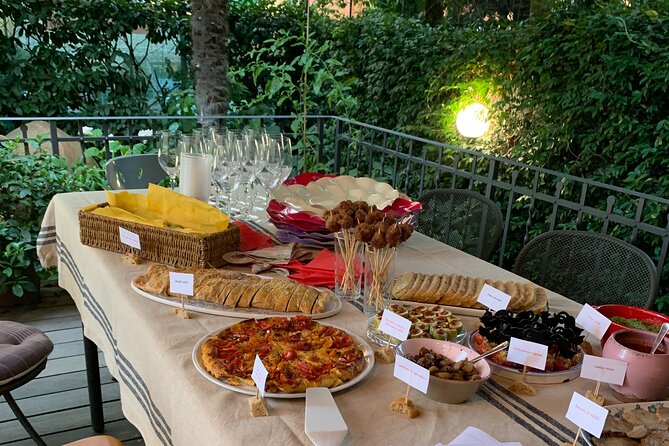
No Bologna lasagna class here stops at one dish. You’ll also add tiramisu, and it’s structured so each guest creates their own portion.
The class format includes cocoa and an option for added crunchiness using a biscuit on top, if you want that texture. That choice matters because tiramisu can go two ways: softer and creamy, or more contrast with a slightly crisp top. Getting to choose how yours finishes makes the dessert feel personal, not standardized.
This is also a good way to use the time productively. While the lasagna bakes, tiramisu gives you something to do that’s easier to manage than pasta rolling—so you get a full cooking arc without feeling overwhelmed.
Small-group teaching with lots of one-on-one touch
From what you can expect in the teaching style, Paola works in a way that keeps you from feeling lost. The reviews highlight friendly, patient explanations and a setup where each person gets real hands-on help.
One of the most praised elements is that you get the kind of correction and guidance that comes from proximity. In a group of up to 10, she can slow down when needed and step in with direction while you’re actually kneading, rolling, or assembling.
Another detail that sounds special in a practical way: the class connects technique to family recipes and how they were learned across generations. That’s not just sentiment—it’s why the instructions feel grounded rather than like a generic cooking demo.
Even the tone seems intentionally warm. If you enjoy cooking classes where people talk through the why as well as the how, you’ll probably enjoy this one.
Price and value: what $119.14 buys you in a 3-hour home session
At $119.14 per person, this isn’t the cheapest food activity in Bologna. The value is in what’s included and how you use the time.
You’re paying for:
- a 3-hour hands-on session (not a quick tasting)
- instruction in English
- making fresh spinach pasta dough
- preparing the sauces (including béchamel and ragù work)
- assembling and baking Bolognese lasagna
- creating your own tiramisu portion
- an appetizer Paola gives as a welcome
Also, the cap of 10 travelers matters for value. In a smaller class, you don’t just observe. You cook, and you get coached while you’re doing it.
If you’re deciding between a dinner you eat and a class where you take skills home, this leans toward the second option. You’ll leave knowing how the layers come together and how the cooking process fits into the final result.
Who should book this lasagna and tiramisu class
This is a great fit if you:
- want real pasta skills, not just restaurant-style tasting
- prefer small-group teaching over big group tours
- like learning techniques you can repeat at home
- are traveling in a pair, family, or small group and want shared food memories
It’s also a good option for people who like structured cooking. You’ll follow a clear sequence: appetizer, pasta dough work, sauce work, lasagna assembly and baking, then tiramisu.
One note for mixed-age groups: the class follows an Italian guideline where customers under the legal drinking age in Italy (18) won’t be served alcoholic beverages. That’s useful to know for planning, even if you mainly care about cooking and dessert.
Should you book Paola’s 3-hour Lasagna Bolognese class?
I’d book it if you want an authentic Bologna food experience where your hands are part of the recipe. The strongest reason to choose this is the full workflow: you make the dough, work the sauces, assemble the classic layers, and finish with individual tiramisu.
Skip it only if you’re looking for a purely observational experience, or if you don’t want any cooking mess at all. Also, if you want a super-short activity, three hours is a commitment, even though it’s paced well in a small group.
If you’re in Bologna and you love the idea of taking home both skills and a meal you actually cooked yourself, this class is a solid choice.
FAQ
How long is the cooking class?
It runs for about 3 hours.
Where do I meet, and where does it end?
You meet at Via Montello, 28, 40131 Bologna, and the experience ends back at the same meeting point.
Is the class offered in English?
Yes, it is offered in English.
What can I expect to cook during the class?
You’ll help make fresh green pasta dough, prepare béchamel, create Bolognese ragù, assemble and bake Bolognese lasagna, and make your own tiramisu portion.
Does the class include more than just lasagna?
Yes. You’ll also make tiramisu, plus there’s an appetizer Paola gives as a gift before the main cooking.
How big is the group?
The class has a maximum of 10 travelers.
Is alcohol served?
The experience follows the Italian legal drinking age rule: customers under 18 will not be served alcoholic beverages.
Is a mobile ticket used?
Yes, you’ll receive a mobile ticket.
What is the cancellation policy?
Free cancellation is available. You can cancel up to 24 hours in advance for a full refund.
More Bologna Workshops
More Bologna Pasta and Cooking Classes
More Tour Reviews in Bologna


After something different? More ways to fill a day in Bologna and across Emilia-Romagna




Bologna Pasta-Making & Cooking Classes, compared.
 ★ 5.0Bologna Local Pasta Cooking Class, Ragu, Spritz, Wine & GelatoFrom $59527 reviews
 ★ 5.0Pastamama, Home Cooking Classes at Grace’s HomeFrom $114521 reviews
 ★ 5.0Pasta and Tiramisu Small Group Cooking Class with WineFrom $71409 reviews
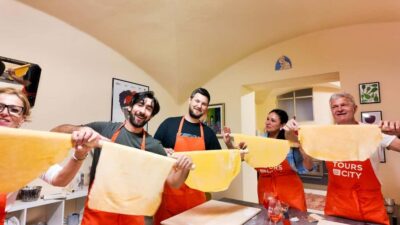 ★ 4.9Pasta Tagliatelle Ragu Cooking Class with SpritzFrom $79407 reviews
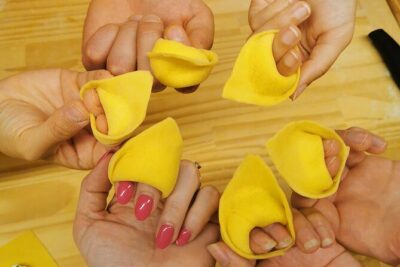 ★ 5.0Bologna on the plate, Cooking Class with AlessiaFrom $89260 reviews
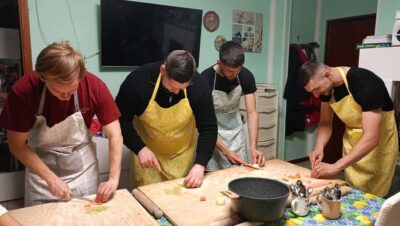 ★ 4.7Pasta Tagliatelle al Ragu Cooking Class with WineFrom $70225 reviews
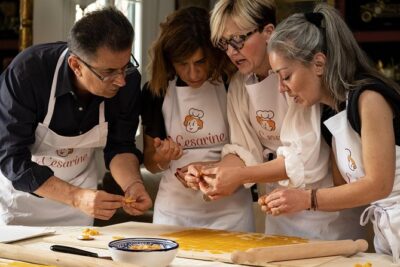 ★ 5.0Cesarine: Small group Pasta and Tiramisu class in BolognaFrom $163172 reviews
 ★ 4.5Authentic Bologna Home Cooking Class: Tagliatelle & TortelliniFrom $78136 reviews
Browse the lists this tour appears in