
Reviewed · BOLOGNA PASTA-MAKING & COOKING CLASSES
Cesarine: Small group Pasta and Tiramisu class in Bologna
Food tastes better when you make it yourself. This small-group Cesarine class turns Bologna cooking into a real home experience, with fresh pasta and tiramisù taught in an English-led lesson. You start with Prosecco and nibbles, then roll up your sleeves for hands-on work in a local house.
I like two things a lot. First, you learn by doing, not just watching. Second, you get that welcome-home feeling from your host, and you leave with practical know-how you can actually repeat.
The only real catch to plan for: you’re doing this inside someone’s home, so details like shoe coverings or specific pacing can vary by host.
In This Review
- Key things to know before you go
- Why a Bologna home pasta class beats the usual tour dinner
- Meeting your Cesarine: Prosecco, nibbles, and a real welcome
- Fresh pasta work: making two dishes from scratch
- The tiramisù lesson that actually helps you cook later
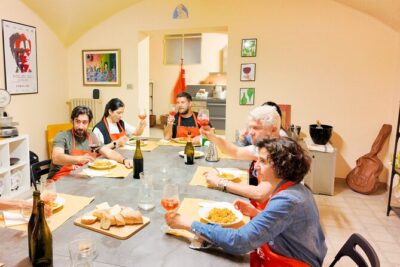
- What the meal feels like: appetizers, wine, and the best part—eating it
- How English instruction and small-group size shape the class
- Price and value: why $163-ish can feel worth it
- Sanitation and home comfort rules to take seriously
- Dietary needs: what you should ask before you arrive
- Should you book this Bologna pasta and tiramisù class?
- FAQ
- How long is the Cesarine pasta and tiramisù class in Bologna?
- What is the group size for this cooking class?
- Is the class taught in English?
- What do I make during the class?
- Where does the class take place?
- How do I get tickets and confirmation?
- Is there free cancellation?
Key things to know before you go
- Max 12 people makes it feel calm and personal, not rushed.
- Two pasta dishes plus tiramisù means you take home a full Italian menu.
- Prosecco and nibbles at the start help everyone relax right away.
- English is supported, and instructions are aimed at getting you cooking quickly.
- Home sanitation rules are taken seriously, with guidance on distance and masks/gloves if needed.
Why a Bologna home pasta class beats the usual tour dinner
Bologna is famous for pasta, sauces, and the whole ritual of eating well. This class gives you the fastest route to understanding why: you learn the feel of dough, how fresh pasta behaves, and how desserts come together when you treat ingredients with respect.
Because it’s hosted in a real home, you also get a quieter kind of cultural exchange. You’re not competing with crowds or noise. Instead, the room is built around conversation, questions, and getting your hands on the dough. That’s the difference between eating Italian food and learning Italian technique.
And the class structure fits a typical Bologna itinerary. It’s about 3 hours, it runs as a shared small group, and it returns you back to the meeting point. That makes it easy to pair with a morning or late afternoon of sightseeing.
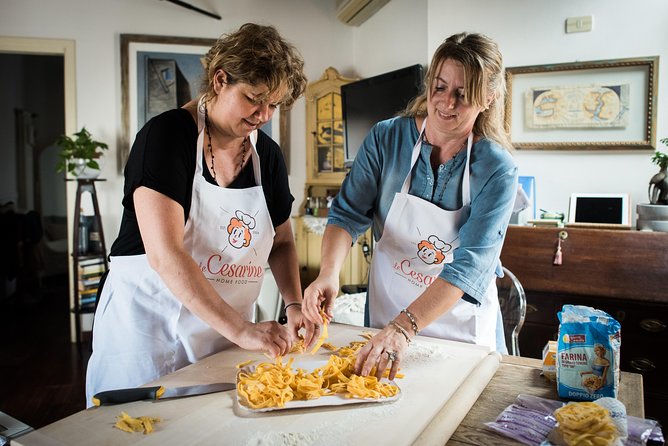
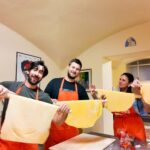
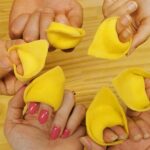
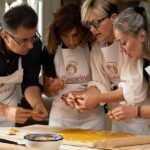
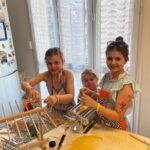
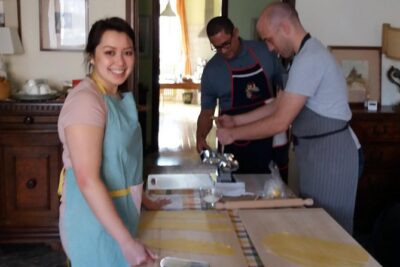
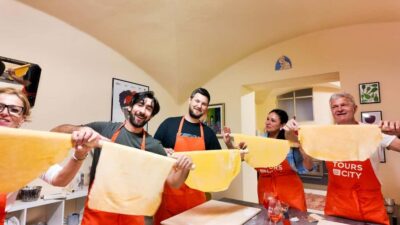
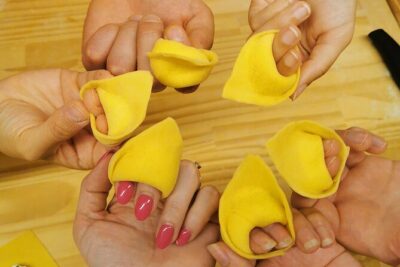
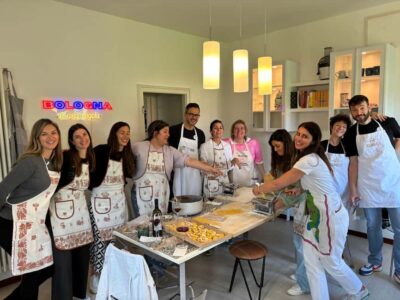
Back into the kitchen to roll tortellini and tagliatelle by hand.
Meeting your Cesarine: Prosecco, nibbles, and a real welcome
Your experience starts in Bologna with a local host who opens their home to your group. Before you touch ingredients, you’ll kick off the evening with Prosecco and nibbles. It’s a small detail, but it matters. You arrive hungry, then you settle into the rhythm of the house before the flour starts flying.
One reason people love these classes is the host energy. In past groups, you may cook with hosts like Maurizio, Federica, Roberta, Paola, or Giovanna—and each one brings their own style, pacing, and personality. The common thread is warmth and patience. If you’re the type who learns best by asking questions while you work, this setup is ideal.
You’ll also get a sense of how Bologna households approach food: simple ingredient choices, practical shortcuts, and a focus on technique over fancy gadgets. If you’re traveling solo, couples, or a small group of friends, that early aperitivo moment helps everyone connect fast.
Fresh pasta work: making two dishes from scratch
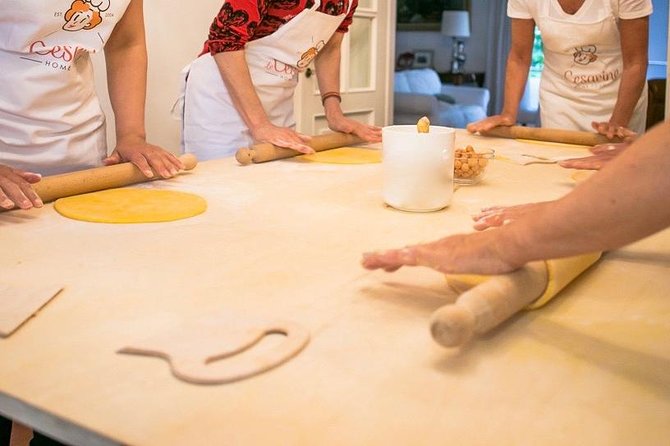
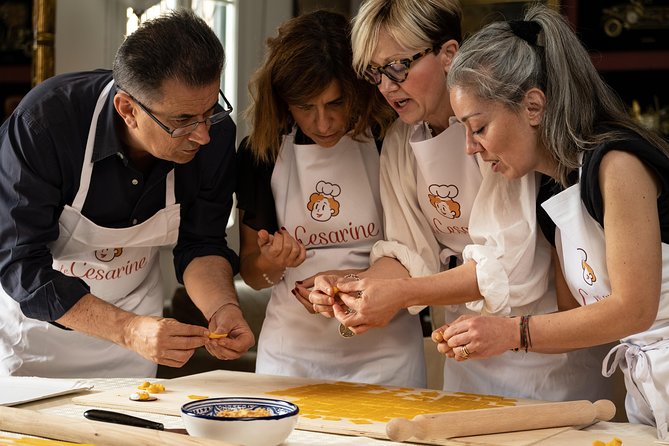
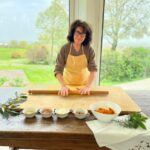
After the welcome, you move into the main activity: preparing two pasta dishes with your host guiding you step by step. The official menu is pasta and tiramisù, but the real value is how you learn the pasta process—mixing, shaping, and handling fresh dough so it cooks properly.
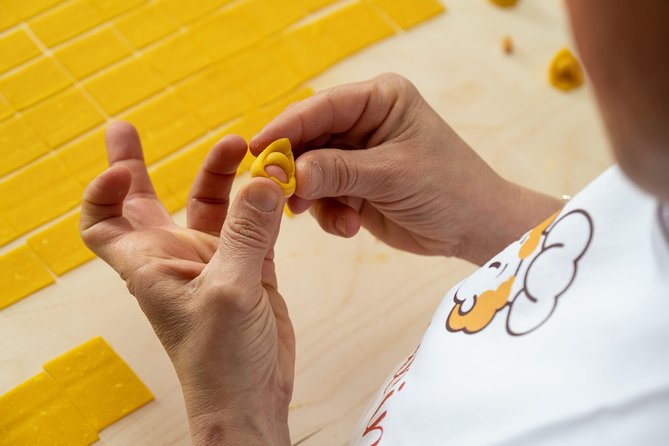
What you can usually look forward to is learning the method behind common shapes. Depending on your host, you might practice techniques tied to pastas like tagliatelle or tortellini, and you may also hear tips that apply to other shapes. Even when the exact pasta forms differ, the core takeaway stays the same: fresh pasta isn’t just about taste. It’s about texture, thickness, and timing.
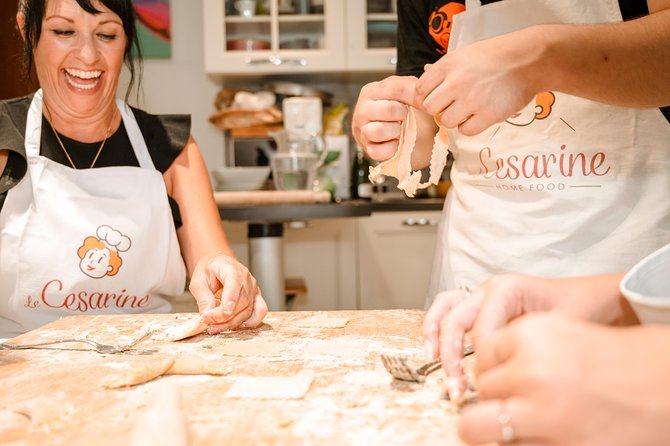
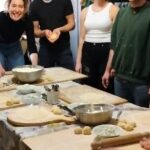
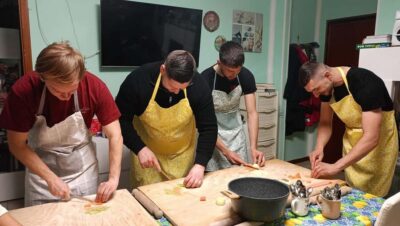
Also, this isn’t a hands-off demo. You’re expected to participate. Your hands will get involved. That’s a plus, even if you’re nervous at first. Flour is forgiving, and the host usually corrects in real time—how to portion dough, how to roll evenly, and how to keep things from drying out.
The tiramisù lesson that actually helps you cook later
Then comes dessert: tiramisù. Tiramisu can feel intimidating until someone shows you the logic of it. In these classes, the goal is not only to make one dessert, but to learn how to reproduce it at home with confidence.
You’ll work through the steps under your host’s guidance, and you’ll see how the ingredients behave together—especially how you handle soaking, layering, and texture. The best part is that you leave with a clearer mental checklist than you’d get from a generic recipe card.
From the way people describe the class experience, you can expect that dessert-making is treated like real kitchen work, not a closing act. The timing is important, and the host will usually remind you of small details that control the final result.
If you’re thinking about your souvenir, this is it. Bologna is great for shopping, but tiramisù skills are the kind you can use long after the trip ends.
What the meal feels like: appetizers, wine, and the best part—eating it
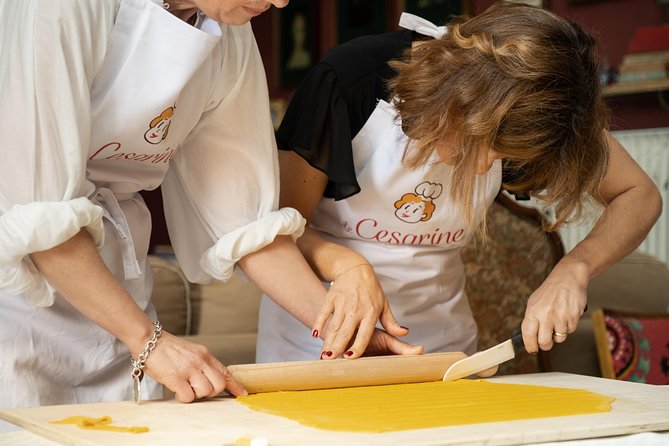
In a Bologna home class, the meal isn’t just food at the end. It’s the proof that the lessons worked. You’ll typically have more than just the main pasta and dessert, too.
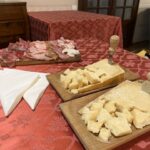
Hosts often prepare starters and additional bites before or alongside your cooking. Many classes include drinks such as wine, plus water and coffee. People mention that the wine and conversation can stretch the evening, which is exactly the point of learning in a home setting.
There’s also a practical benefit: you get to taste while the day’s technique is still fresh in your head. Pasta dough thickness and sauce balance stop being abstract. You taste, you connect it to what you did, and it sticks.
And yes, the hunger factor is real. A good tip: don’t schedule a huge lunch right before. You’ll likely want a clear stomach so you can enjoy everything you make.
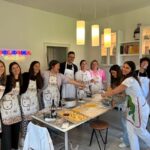
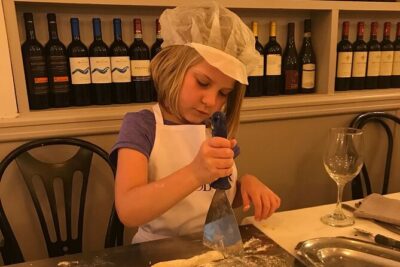
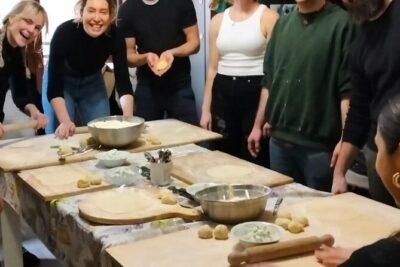
More hands-on afternoons in Emilia kitchens.
How English instruction and small-group size shape the class
This class is offered in English, and it’s designed for a group of up to 12. In practice, groups can feel even smaller, which helps a lot. You get more attention, quicker feedback, and less waiting around while someone else gets help.
The language part matters if you’re cooking for the first time. Pasta-making is physical and visual. Clear explanations make it easier to get the hand movements right, and it helps you understand why you’re doing each step. When you can follow the logic, you can redo it later without guessing.
Also, small groups mean the host can respond to individual questions. People have noted that hosts are patient and give technique and shortcuts, which is what you really want. You don’t just want a recipe. You want the parts that keep you from failing at home.
Price and value: why $163-ish can feel worth it
At $163.33 per person for roughly 3 hours, the price might look high if you’re comparing it to a basic cooking demo. But you’re paying for a few specific things:
- You’re cooking in a private home kitchen, not a public classroom.
- The class is small-group, up to 12, which often means more direct coaching.
- You get an aperitivo start with Prosecco and nibbles.
- You make a full meal: two pasta dishes and tiramisù.
- You leave with practical technique you can apply again.
The value gets even stronger if you’re the type who wants one memorable Bologna experience that’s not just photo stops. A cooking class gives you a story you can keep using, not just a picture on your phone.
If you’re budgeting, aim to book on a day when you won’t waste time hopping around. The class timing makes it an efficient choice: fewer logistics, more learning.
Sanitation and home comfort rules to take seriously
This experience includes sanitation guidance for a shared home setting. Hosts provide essential items like hand sanitizing gel and paper towels. There’s also instruction to keep about 1 meter distance when needed, and to wear masks and gloves if you can’t maintain the distance.
Since it’s a home environment, you may also notice extra rules based on the host. One common example mentioned is shoe coverings. If you’re sensitive to footwear rules or prefer predictable environments, it’s smart to come prepared with flexible expectations.
The upside is that the class is run with care. You’re not just walking into a random apartment and hoping for the best. The host’s home is part of the experience—and they manage it with guest safety in mind.
Dietary needs: what you should ask before you arrive
The official details don’t list a specific dietary policy, but your best move is to communicate your needs during booking. Some hosts have shown flexibility for real constraints.
For example, one host handled a vegetarian situation plus intolerances involving onion, lactose, and garlic by selecting appropriate recipes and getting lactose-free products. That’s the kind of practical care you’d want if your diet is complicated.
So if you need something specific—vegetarian, lactose-free, or other restrictions—ask early. The more detail you give, the more likely your host can adjust ingredients and keep your meal enjoyable.
Should you book this Bologna pasta and tiramisù class?
If you want one activity that feels genuinely local, I’d strongly consider booking. This is for you if you like hands-on learning, enjoy conversation with a real Italian home cook, and want to go beyond tasting and actually understand pasta technique.
I’d hesitate if you prefer large professional kitchens, fully standardized instructions with zero variation, or you’re looking for a history lecture. This isn’t about touring museums. It’s about working in dough, shaping pasta, and mastering tiramisù in a home setting.
A final practical note: booking tends to fill reasonably fast (it’s commonly booked about 40 days in advance). And if plans change, there’s free cancellation up to 24 hours before the class starts.
If you choose this, go hungry, bring questions, and be ready to leave with pasta skills you can use again. That’s the real souvenir.
FAQ
How long is the Cesarine pasta and tiramisù class in Bologna?
It runs for about 3 hours (approx.).
What is the group size for this cooking class?
The experience has a maximum of 12 travelers.
Is the class taught in English?
Yes, it is offered in English.
What do I make during the class?
You prepare two pasta dishes and tiramisù with the guidance of your host.
Where does the class take place?
It starts in Bologna, Metropolitan City of Bologna, Italy, and it ends back at the meeting point. It takes place in a carefully selected local home.
How do I get tickets and confirmation?
You receive a mobile ticket, and you’ll get confirmation at the time of booking.
Is there free cancellation?
Yes. You can cancel for a full refund up to 24 hours in advance of the experience start time.
More Bologna Workshops
More Bologna Pasta and Cooking Classes
More Tour Reviews in Bologna


After something different? More ways to fill a day in Bologna and across Emilia-Romagna






Bologna Pasta-Making & Cooking Classes, compared.
 ★ 5.0Bologna Local Pasta Cooking Class, Ragu, Spritz, Wine & GelatoFrom $59527 reviews
 ★ 5.0Pastamama, Home Cooking Classes at Grace’s HomeFrom $114521 reviews
 ★ 5.0Pasta and Tiramisu Small Group Cooking Class with WineFrom $71409 reviews
 ★ 4.9Pasta Tagliatelle Ragu Cooking Class with SpritzFrom $79407 reviews
 ★ 5.0Bologna on the plate, Cooking Class with AlessiaFrom $89260 reviews
 ★ 4.7Pasta Tagliatelle al Ragu Cooking Class with WineFrom $70225 reviews
 ★ 4.5Authentic Bologna Home Cooking Class: Tagliatelle & TortelliniFrom $78136 reviews
 ★ 4.7In-Home Italian Pasta Making Workshop with WineFrom $88131 reviews
Browse the lists this tour appears in