
Reviewed · BOLOGNA WALKING TOURS & CITY HIGHLIGHTS
Bologna: Historical Highlights Walking Tour with Local Guide
Neptune’s Fountain sets the tone fast. This small-group Bologna historical highlights walking tour threads together the big landmarks and the quieter details that make the city feel like one long open-air museum, from arcades to medieval towers.
I love that it stays compact (max 8 people) and still covers serious interiors. You’ll get inside San Petronio and Santo Stefano, plus learn what you’re looking at while you walk through the core sights.
One thing to plan for: timed entry means you need to arrive early, and there are occasional closures for holy observances that can shift what you see from inside to outside.
In This Review
- Key things I’d circle before you book
- Getting Oriented: Neptune’s Fountain and Piazza Maggiore
- San Petronio Basilica: a giant church with a science twist
- Archiginnasio of Bologna: the University that shaped the city
- Porticoes on foot: why Bologna feels sheltered
- The Two Towers from outside: Asinelli and Garisenda explained
- Santo Stefano: Seven Churches and a quiet maze
- Price and value: $55.80 for a tight 2.5-hour plan
- Timing, meeting point, and how not to lose time
- Guides to look out for: Maurizio and Vittoria’s style
- Who this walking tour suits best
- Should you book this Bologna highlights walk?
- FAQ
- What is the duration of the Bologna Historical Highlights Walking Tour?
- What time should I arrive and where do I meet?
- What stops are included in the tour?
- Is the Two Towers climb included?
- Is the inner courtyard of Archiginnasio available on Sundays?
- In what language is the tour offered?
Key things I’d circle before you book
- Small group size (max 8) keeps the pace manageable and questions welcome
- Inside stops at San Petronio and Santo Stefano give you more than just photos from the street
- Archiginnasio coverage includes a guided look at the courtyard area (with a Sunday note)
- Two Towers viewing from the outside focuses on context rather than the climb
- Neptune’s Fountain start + Piazza Maggiore helps you understand Bologna’s layout right away
Getting Oriented: Neptune’s Fountain and Piazza Maggiore
Bologna starts strong at Piazza del Nettuno, with Neptune’s Fountain right in front of you near Bar Vittorio Emanuele. It’s a sharp way to begin because the fountain sits in the middle of the action, and it pulls your attention toward the historic center instead of making you hunt for it.
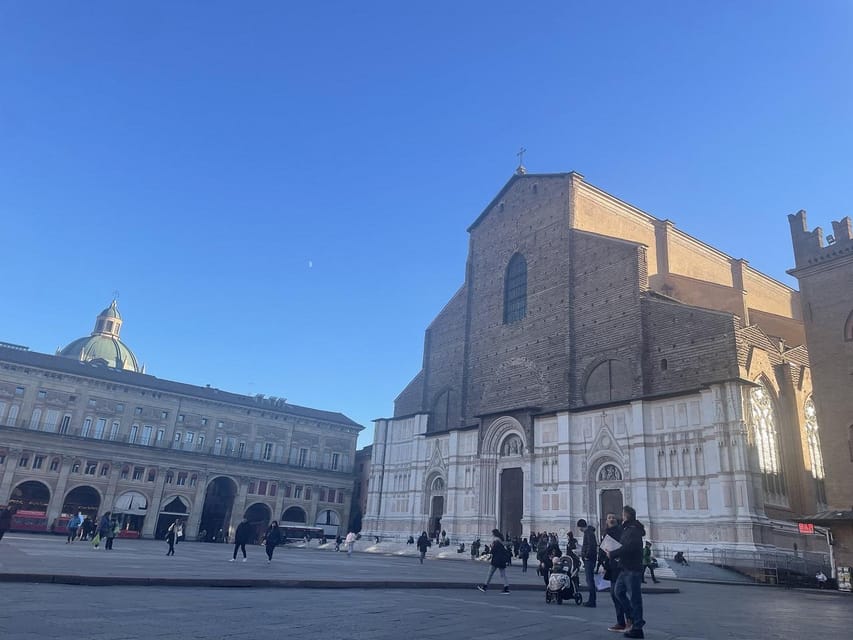
From there, you head toward Piazza Maggiore, the social and cultural hub of the city. Palaces and historic buildings frame the square, and the guide uses it as a living map—so you understand where you are and why Bologna grew the way it did.
If you like walking tours that don’t feel like a checklist, this one works. The guide doesn’t just point; they connect the dots between architecture, religion, and education, so the streets make sense as you go.
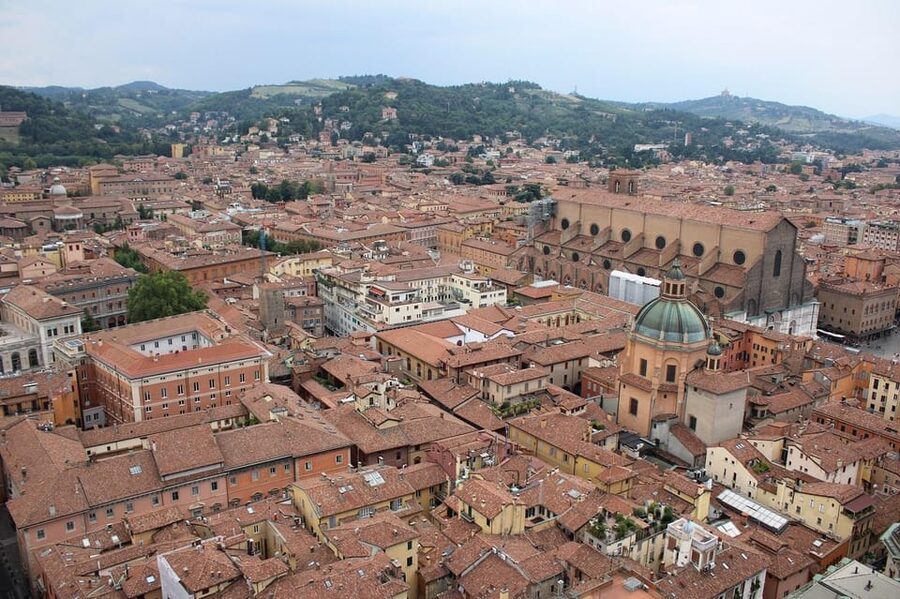
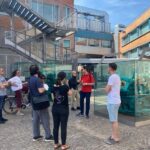
More of the old town on foot, towers and squares and back streets.


San Petronio Basilica: a giant church with a science twist
Your biggest interior stop is Basilica San Petronio, one of the largest churches in the world. The mix of Gothic grandeur and Renaissance splendor can hit you all at once—high views, major artwork, and a sense of scale that’s hard to grasp from outside.
Inside, you’ll focus on what makes San Petronio special: chapels, sculptures, and frescoes. This is the kind of church where you can’t really rush, because the details are part of the story, not decorative extras.
And then there’s the Meridian Line, tied to Bologna’s scientific heritage. It’s one of those features that makes you pause and think: this city didn’t just build impressive buildings; it built knowledge into them.
Practical note: San Petronio is a sacred site, so dress respectfully. Also, timed entry can be tight, so arriving on time keeps everything smooth.
Archiginnasio of Bologna: the University that shaped the city
Next up is Archiginnasio of Bologna, once the main building of the University of Bologna, often described as the oldest university in the Western world. Even if you’re not a history nerd, the setting gives you something visual to hold onto—education literally built into the city’s fabric.
You’ll get a guided visit that includes the inner courtyard decorated with coats of arms. That courtyard matters because it shows the university’s social and political reach—Bologna didn’t treat learning as separate from everyday life.
This stop also pays off later. When you see other parts of Bologna—like towers, churches, and arcades—you’ll have more context for how power and culture moved through the city.
Porticoes on foot: why Bologna feels sheltered
Between major stops, you’ll stroll through Bologna’s streets and its porticoes, the defining feature of the skyline. These arcades stretch for kilometers, forming covered walkways that protect you from weather and keep foot traffic moving.
The guide frames the porticoes in a practical way: they weren’t just charming architecture. They supported daily life, including commerce, because merchants could work under shelter.
What I like about this portion is the pace. It’s not frantic. You get to look, then listen. And by the time you reach the next landmark, you’re already seeing patterns—arches repeating, streets narrowing, corners turning into small spaces.
The Two Towers from outside: Asinelli and Garisenda explained
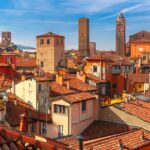
You’ll encounter the Two Towers, Le due Torri, especially Asinelli and Garisenda, mainly from the outside. The key word here is context. These towers are symbols of Bologna’s medieval heritage, and the guide explains how the landscape of towers used to be much broader.
They were once among many towers in Bologna, built by noble families to signal wealth and status. That means the towers aren’t just skyline candy. They’re a visible record of competition, power, and pride.
If you’re expecting to climb, plan differently. Two Towers climb is not included, so you’ll get views and explanations without the ascent. Still, you’ll walk away understanding why these two became the icons.
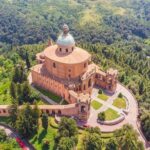
More days out with a local guide.



Santo Stefano: Seven Churches and a quiet maze
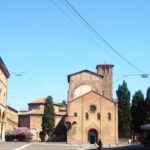
The tour ends with Basilica di Santo Stefano, often called the Seven Churches complex. This is where Bologna turns calm. Inside, the spaces connect like a spiritual labyrinth, with corridors and courtyards that feel removed from the noise outside.
You’ll get an interior visit here, and it’s an especially good contrast to the larger grandeur of San Petronio. Santo Stefano feels more intimate—more about movement through connected spaces than about one big dramatic hall.
The guide helps you read what you’re seeing, so it doesn’t turn into random wandering. It’s the kind of stop that makes you slow down, even when you’re on a walking tour.
Price and value: $55.80 for a tight 2.5-hour plan
At $55.80 per person for about 2.5 hours, this isn’t a bargain-tour price, but it also isn’t inflated for what you get. The value comes from three things working together:
- Small-group format (max 8), which keeps the experience personal
- Multiple guided interiors (San Petronio and Santo Stefano)
- Skip the ticket line plus timed entry management, so you’re not stuck waiting
Also, you’re not just seeing the big names. You’re learning how Bologna’s architecture ties into the city’s religious life and its educational identity, especially through the University connection at Archiginnasio.
If your Bologna time is short and you want a guided arc through the core sights, this is a practical way to use your hours.
Timing, meeting point, and how not to lose time
You meet in front of the Statue of Neptune near Bar Vittorio Emanuele. The guide has a signboard that says Walks In Europe.
Here’s the part that matters: you should arrive 15 minutes early because of the timed entry tickets. Those tickets expire within 5 to 10 minutes, and it’s not possible to join once the tour has started. In old-city Bologna, that kind of discipline makes a real difference.
The tour is in English and runs with an expert local guide. If you like asking questions, the small group size makes it realistic.
Guides to look out for: Maurizio and Vittoria’s style
Some tours live or die by the guide, and this one gets strong praise for people who can explain Bologna clearly. Guides like Maurizio are noted for commanding a wealth of history and keeping English sharp, with lots of details and anecdotes. Others, like Vittoria, bring an engaging approach and share clear answers when you ask.
That matters because Bologna can feel overwhelming on your own. With the right guide, the city becomes readable: you start noticing what each building is doing for the story.
Who this walking tour suits best
This tour is a good fit if you:
- Want to see major Bologna landmarks in one 2.5-hour block
- Prefer small groups over big bus crowds
- Like guided context at churches and historic civic buildings
- Appreciate Bologna’s porticoes as part of everyday life, not just decoration
It’s less ideal if:
- You want to climb the Two Towers (not included)
- You can’t handle uneven sidewalks or standing time, since it’s not listed as suitable for people with mobility impairments
- You’re dealing with pre-existing medical conditions that could be affected by walking and crowds
- You’re pregnant, since it’s listed as not suitable for pregnant women
- You need the Archiginnasio inner courtyard on a Sunday (it’s not available on Sundays)
Should you book this Bologna highlights walk?
Book it if you want a smart, guided route through Bologna’s core—Neptune’s Fountain, Piazza Maggiore, San Petronio, Archiginnasio, the Two Towers area, and Santo Stefano—all in a small-group format. The value is strongest when you care about meaning, not just seeing famous spots.
Skip it if you’re already going deep with other tours and you specifically want Two Towers climbing or a schedule that doesn’t rely on timed entry.
If you’re visiting Bologna for the first time and you want your time to feel organized, this is a solid way to get your bearings and leave with a clearer picture of how the city thinks, builds, and worships.
FAQ
What is the duration of the Bologna Historical Highlights Walking Tour?
The tour lasts about 2.5 hours.
What time should I arrive and where do I meet?
Meet in front of the Statue of Neptune near Bar Vittorio Emanuele. Arrive 15 minutes early since tickets are timed.
What stops are included in the tour?
You’ll visit or view key sites such as Piazza Maggiore, Archiginnasio of Bologna, Basilica San Petronio, the Two Towers from the outside, and Basilica di Santo Stefano, including an interior visit of Santo Stefano and San Petronio.
Is the Two Towers climb included?
No. The Two Towers climb is not included.
Is the inner courtyard of Archiginnasio available on Sundays?
No. The inner courtyard of Archiginnasio is not available for visits on Sundays.
In what language is the tour offered?
The tour is offered in English.
More Guided Bologna Tours
More Bologna Walking Tours
More Tour Reviews in Bologna




After something different? More ways to fill a day in Bologna and across Emilia-Romagna








Bologna Walking Tours & City Highlights, compared.
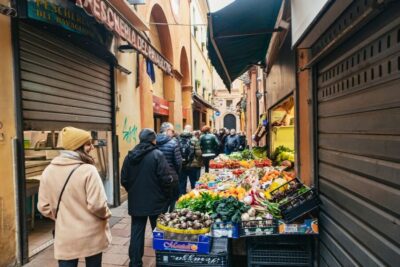 ★ 4.5City Center Walking TourFrom $263,478 reviews
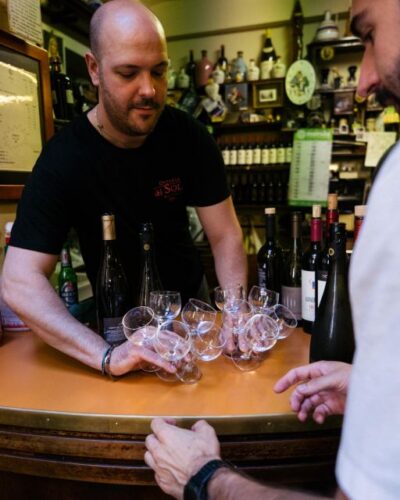 ★ 4.8Walking Food Tour with a Local GuideFrom $90882 reviews
 ★ 5.0Private Half Day Parma Food Walking TourFrom $134561 reviews
 ★ 3.7Open Bus City Tour and Local Food TastingFrom $46550 reviews
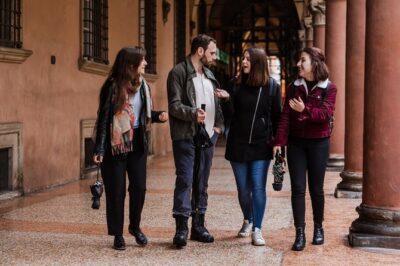 ★ 5.0Bologna Private Highlights & Hidden Gems Tour with a LocalFrom $77359 reviews
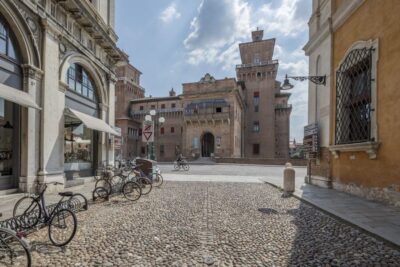 ★ 4.6City Highlights Walking Tour with Local GuideFrom $17219 reviews
 ★ 4.9City Center Guided Wine Walking TourFrom $70210 reviews
 ★ 4.2City Walking TourFrom $27203 reviews
Browse the lists this tour appears in