
Reviewed · BOLOGNA WALKING TOURS & CITY HIGHLIGHTS
Ferrara: 2-Hour City Center Walking Tour
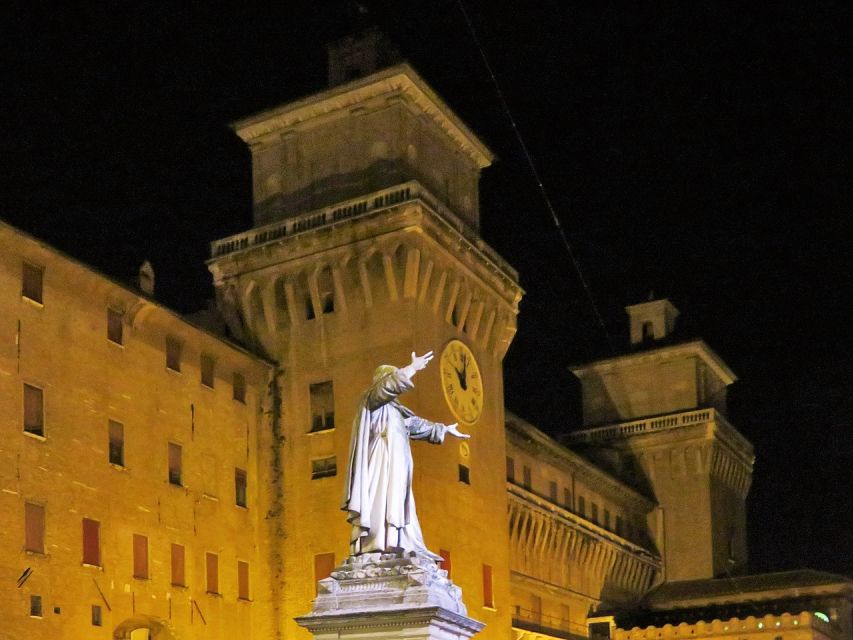
Ferrara looks planned, not accidental. On this 2-hour city center walk, I love how you get the big-picture logic of Ferrara’s urban design while still stopping for real, recognizable places like Palazzo dei Diamanti and Estense Castle. It’s a UNESCO-worthy city feel, but explained in a way you can actually see with your own eyes—block by block, courtyard by courtyard—without feeling rushed.
Two things I especially like: the tour is customizable to your interests, so you can ask for more time on the parts you care about. And the guide, Manuela Roversi, comes across as very prepared and friendly—one reason many people leave saying the visit felt worth it even when they were short on time.
One possible drawback: it’s still a walking tour, so if the weather is cold (or you just hate sore feet), you’ll want to plan for comfort. You’ll be on your feet for the full 2 hours, and even one colder day can make you wish you’d worn better shoes.
In This Review
- Key highlights to know before you go
- Why Ferrara’s urban plan is the real story
- Palazzo dei Diamanti start: Herculean addition and a courtyard you can picture
- Corso Ercole I D’Este to Estense Castle: court views without extra wandering
- Piazza Castello, Piazza Savonarola, and Corso Martiri della Libertà: named squares with context
- Piazza Cattedrale and Saint George Cathedral: Romanesque-Gothic in your line of sight
- Piazza del Municipio and the ducal palace courtyard: political Ferrara, explained in place
- San Romano medieval streets and the Jewish Ghetto story
- Guide experience: Manuela’s professionalism and language flexibility
- Price and value for a small private group
- Itinerary pacing and what you should wear (yes, shoes matter)
- Who this tour is best for
- Should you book this Ferrara city center walking tour?
- FAQ
- How long is the Ferrara tour?
- Where does the tour start?
- What languages are available for the live guide?
- Is the tour private, and what group size is covered by the price?
- Are entrance tickets or food included?
- What should I bring?
Key highlights to know before you go
- A city built with a modern logic: You’ll learn why Ferrara’s planning is historically important and still makes sense to follow today.
- Palazzo dei Diamanti and its courtyard first: Start strong with sculptural Renaissance detail right at the meeting area.
- Estense Castle inner courtyard: You see the power center up close without needing long detours.
- Cathedral + ducal palace viewpoints: Piazza Cattedrale and Piazza del Municipio help you connect spiritual and political Ferrara.
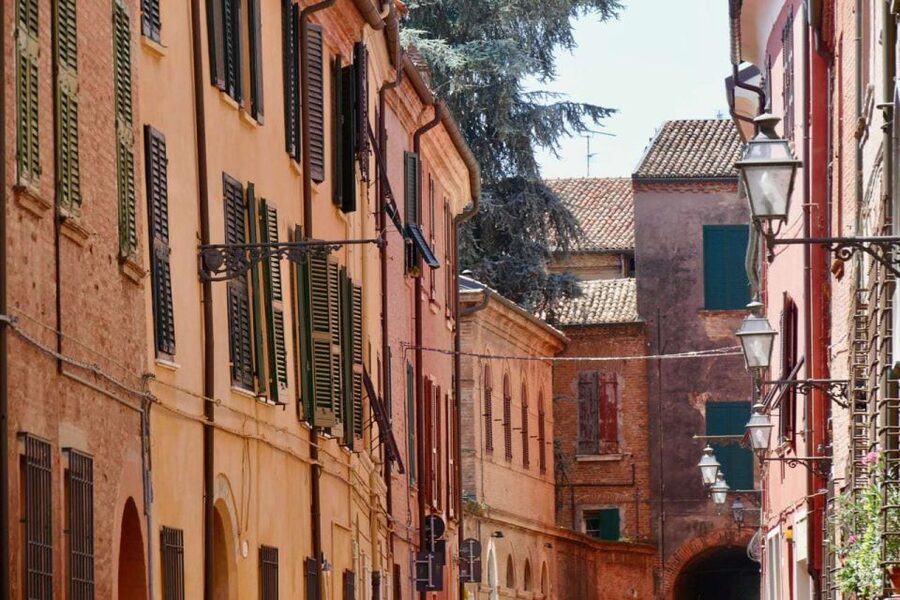
- San Romano medieval lanes: You finish with older streets, including the area that became the Jewish Ghetto in the early 17th century.
- Small private group, question-friendly guide: You can steer the conversation and get answers as you walk.
Why Ferrara’s urban plan is the real story
Ferrara isn’t only a collection of pretty buildings. The city is famous because its urban planning was unusually modern for its time—so modern, in fact, that the basic layout ideas influenced how other cities were designed later.
What I like about having a guide for this is simple: you don’t have to guess. As you walk, you start noticing how streets, squares, and connections between landmarks were meant to work together. That makes your visit feel smarter, not just more scenic.
Also, Ferrara is a UNESCO World Heritage Site, so it helps to understand why the “whole system” matters, not just a single monument photo. This tour is short, but it’s built around that big-picture lesson.
More of the old town on foot, towers and squares and back streets.
Palazzo dei Diamanti start: Herculean addition and a courtyard you can picture
Your walk begins at the entrance door of Palazzo dei Diamanti, which is a smart starting point because it immediately gives you Renaissance texture right away. From the start, you’ll view the Renaissance Herculean addition and then step into the mood of the building through the inner courtyard.
Why this stop works: palaces in Ferrara aren’t only about grand façades. Courtyards are where you can get a sense of how spaces were used and experienced. If you like architectural details, this is where you’ll feel the city’s planning and aesthetics meeting.
Practical tip: plan to take your time at the doorway and the courtyard edges. Even in two hours, the guide will likely point out small visual cues you’d otherwise miss.
Corso Ercole I D’Este to Estense Castle: court views without extra wandering
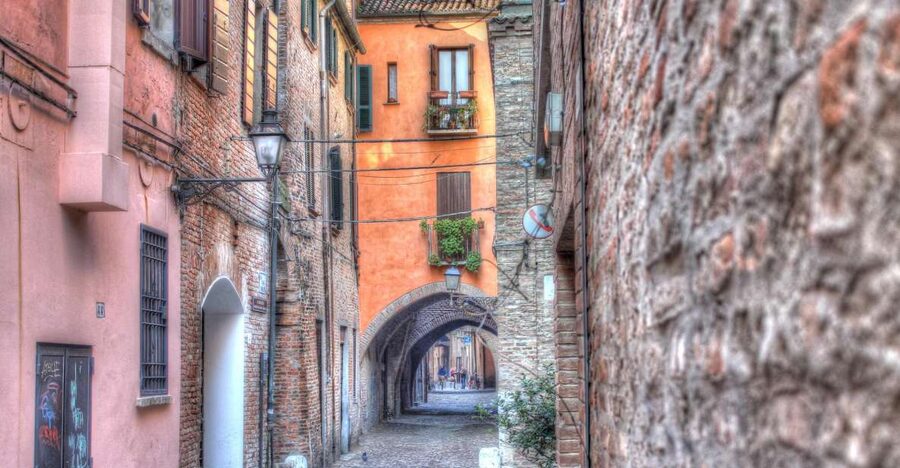
As you walk down Corso Ercole I D’Este, the route itself becomes part of the lesson. This is exactly the kind of street where a guided narrative makes sense, because you’re moving through the city’s structured center rather than hopping between random stops.
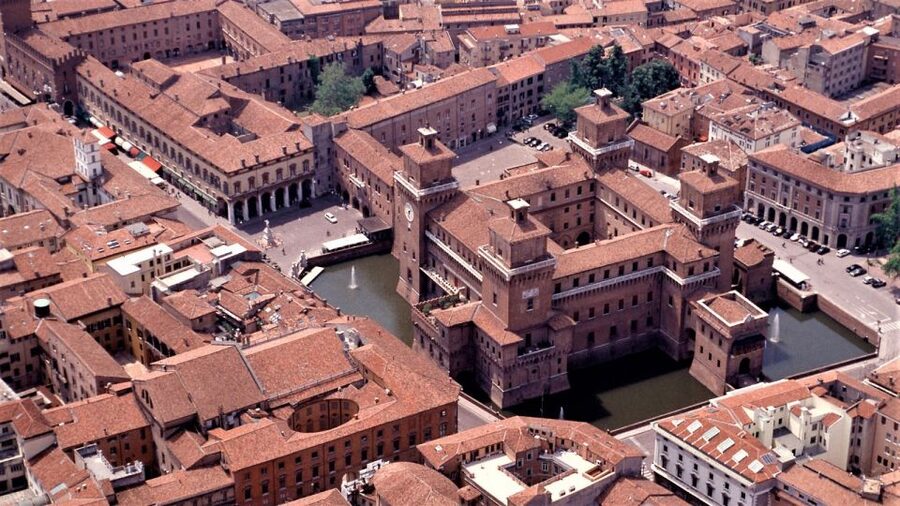
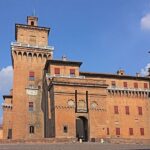
Then comes the inner courtyard of Estense Castle. Courtyards in historic castles are often where the story becomes tangible. You see the space that would have shaped daily movement, authority, and social life—at a scale that’s easier to understand than reading about it later.
If you’re into history with visual anchors, you’ll appreciate that this tour uses courtyards often. They’re the places that help you mentally reconstruct what life might have felt like in earlier centuries.
Piazza Castello, Piazza Savonarola, and Corso Martiri della Libertà: named squares with context
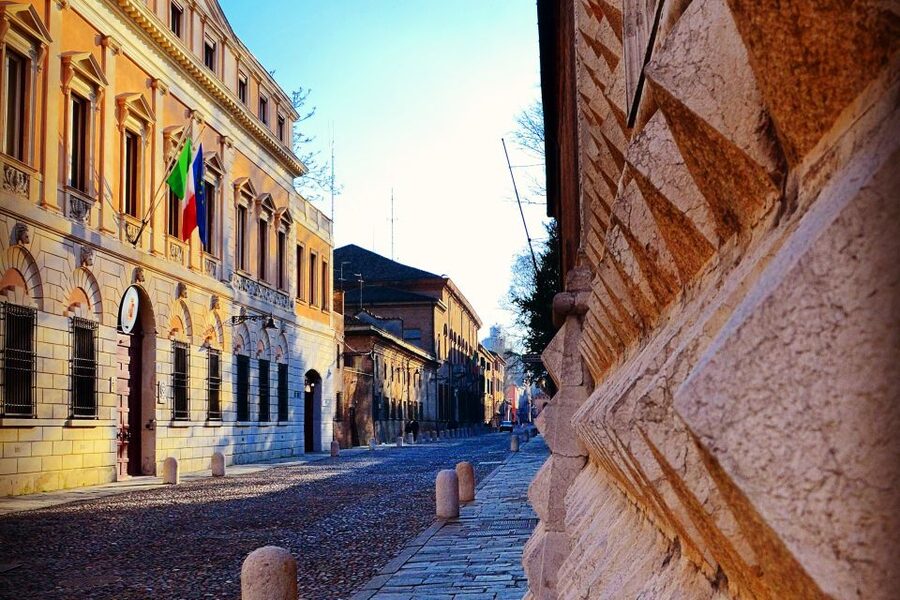
After the castle courtyard, the walk flows through Piazza Castello, then Piazza Savonarola, and along Corso Martiri della Libertà. Even if you’re not a “name collector,” these stops matter because squares are where cities show their priorities.
Here’s how I think about it: squares are built to gather people and concentrate meaning. A guide helps you connect the names and layout with the eras that shaped Ferrara—so you’re not just walking past labels on street signs.
One practical upside: these sections keep the pace lively. You get time on the route itself, not just in front of single-ticket monuments. For a two-hour tour, that balance is a big deal.
Piazza Cattedrale and Saint George Cathedral: Romanesque-Gothic in your line of sight
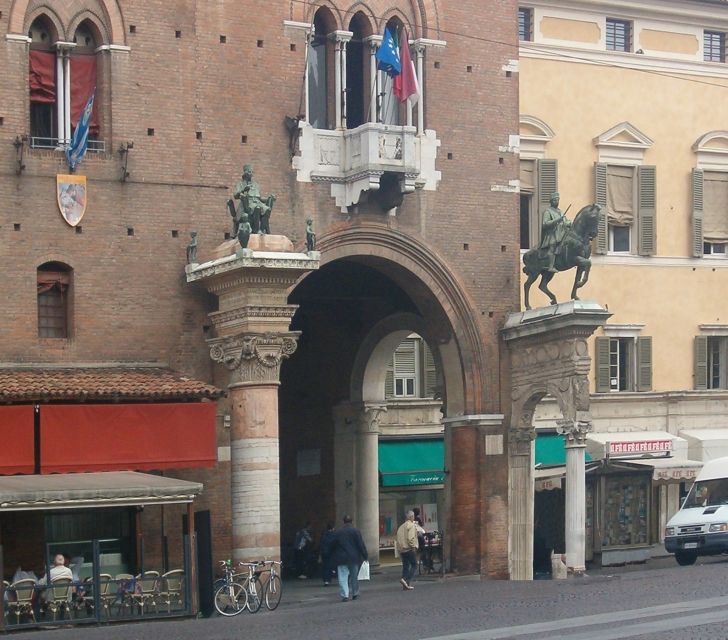
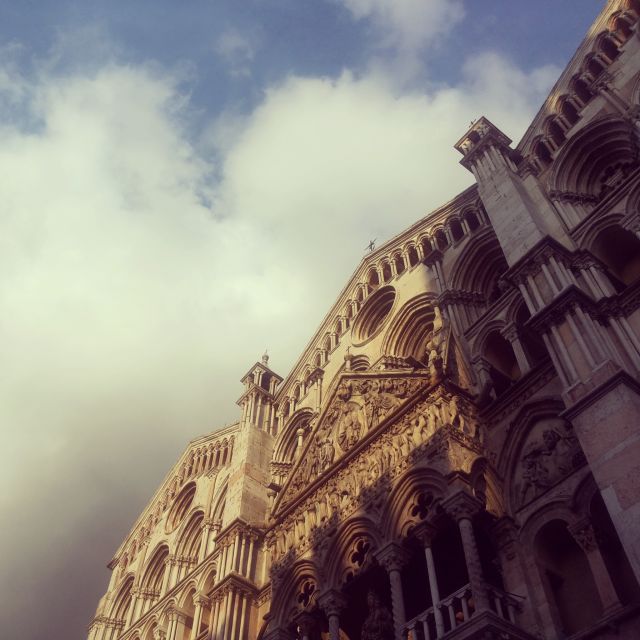
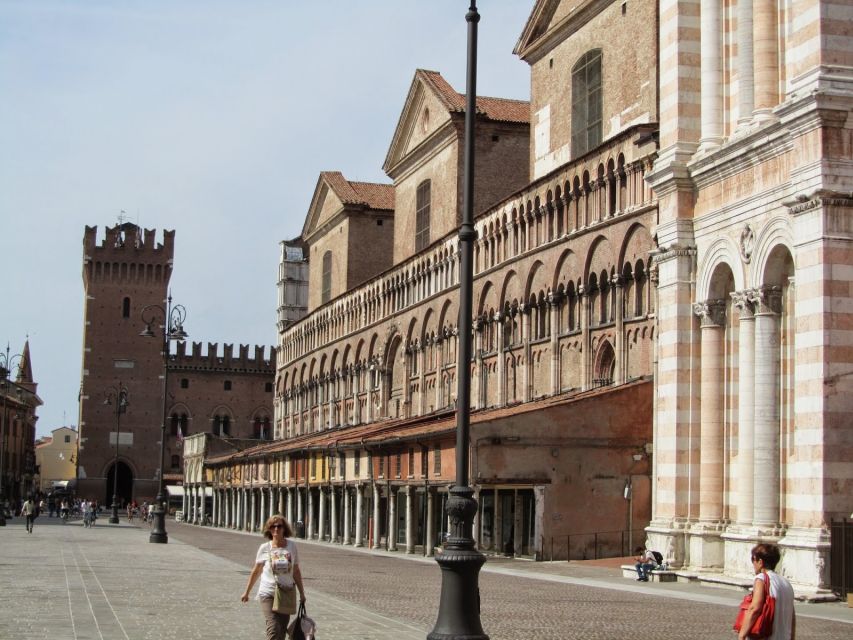
Next you arrive at Piazza Cattedrale, home to the Romanesque-Gothic Saint George Cathedral. This is one of those stops where the architecture is part of the argument. Romanesque and Gothic mix can feel like “two styles in one city,” and it’s usually best understood when someone points out what to look for.
Why this matters on a short walk: it gives you a clear visual milestone. You can take in the cathedral setting, then keep moving with a better sense of how Ferrara’s identity shifted over time.
If you enjoy storytelling more than technical detail, you’re still in good shape. The guide’s job here is to help you connect what you see at the cathedral with what those changes meant for the city.
Across to Ferrara and its quiet Renaissance streets.
Piazza del Municipio and the ducal palace courtyard: political Ferrara, explained in place
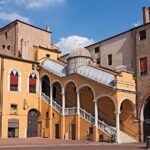
In front of the cathedral, you’ll discover Piazza del Municipio and the inner courtyard of the former ducal palace. This is a key contrast to the cathedral setting: spiritual power on one side, governance and rule on the other.
I like this pairing because it makes the city feel logical. Instead of treating landmarks as isolated attractions, the route sets up a compare-and-contrast walk: who held influence, where it showed, and how public space supported both.
Also, courtyards again show up as the visual “stage.” Even from the outside, the idea becomes clearer when you’re led to the inner space where authority was exercised.
San Romano medieval streets and the Jewish Ghetto story
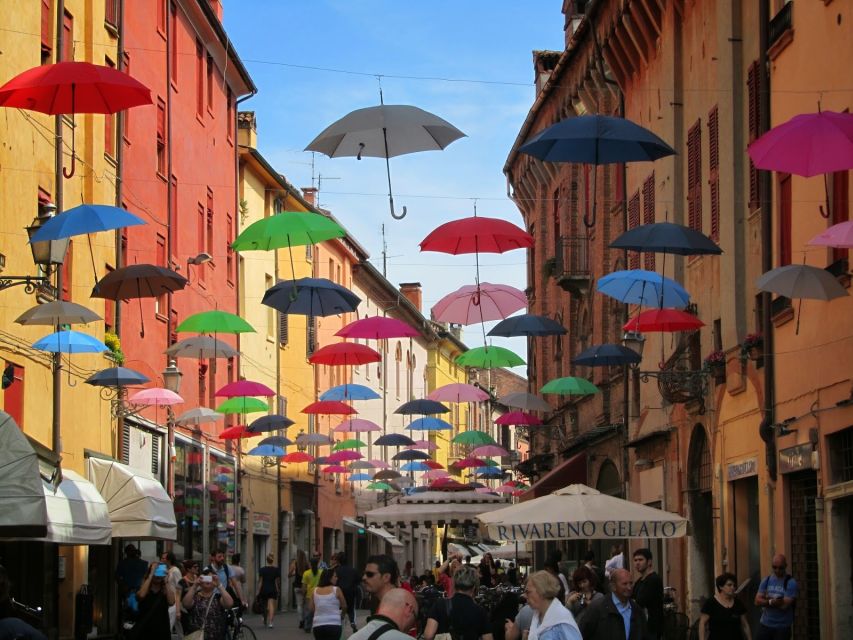
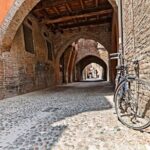
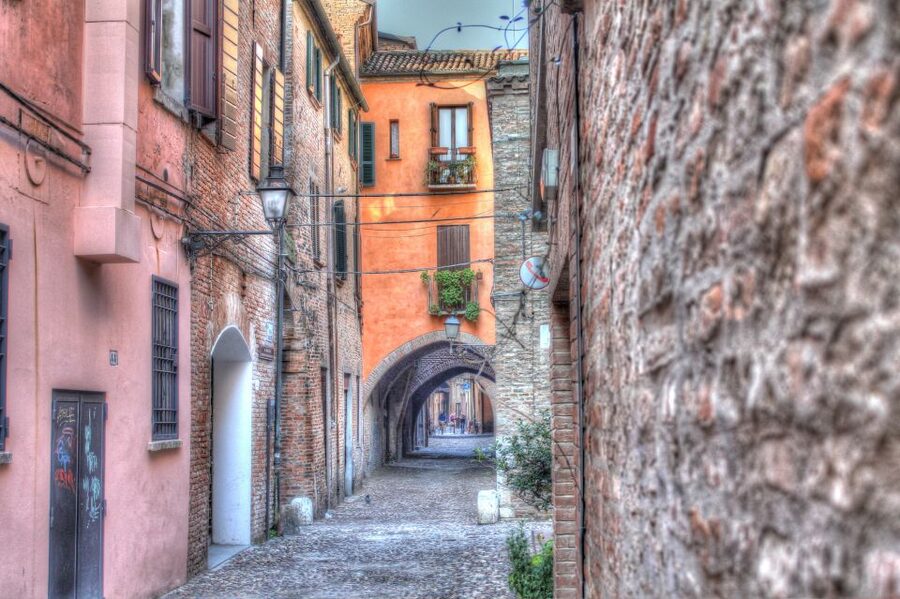
The walk through San Romano takes you into older medieval streets—some of which became part of the old Jewish Ghetto in the early 17th century. This is the part of the tour where the city’s long timeline becomes unavoidable.
What I appreciate here is how the tour uses the street itself as the historical evidence. It’s one thing to hear about a ghetto in a lecture setting. It’s another to walk through the kind of narrow, older streets where you can imagine how daily life would have worked.
If you’re sensitive to this kind of history, that’s okay. You’re not being asked to treat it as a sightseeing game. Let the guide set the tone and focus on understanding what the area meant in that period.
Guide experience: Manuela’s professionalism and language flexibility
Many people rate this tour highly, and a big reason is the guide’s delivery. Manuela Roversi shows up as professional and friendly, and she handles questions well—so you don’t have to hold your curiosity in.
Language options are part of the value here. The tour supports Spanish, English, German, and Italian, and you’ll likely appreciate the ability to get the story in your own comfort zone. Reviews specifically mention that Manuela could do the tour in Spanish and, when requested, in Italian.
That matters because Ferrara’s story involves names, eras, and shifts in power. If you’re trying to follow that in a second language, a great guide makes everything easier—and less exhausting.
Price and value for a small private group
The price is $106 per group up to 5 people for a 2-hour guided walking tour. For many families or small groups, that can be good value because you’re paying as a unit, not per person.
Here’s how I’d think about the math: if you have 2–4 people, the cost per person usually becomes reasonable compared with larger group tours. And because it’s private, you can ask questions, adjust the focus, and get your route tailored slightly to what you want to hear more about.
Two more value points:
- No entrance-ticket burden: entrance tickets aren’t included, so you can budget separately if you choose to add them on your own.
- Short time, high payoff: two hours is enough to connect the city’s plan, its major landmarks, and one deeper historical thread (San Romano) without turning the day into a marathon.
Itinerary pacing and what you should wear (yes, shoes matter)
This is a 2-hour walking experience, and comfort controls the whole mood. Bring comfortable shoes and wear layers if the weather is unpredictable. One review flagged a very cold day with cold feet, which is a reminder that even “short” tours can feel long if you’re underdressed.
The route is inside the city center, so you can likely connect it easily with other plans before or after. But I’d still schedule it when you’re not already exhausted—because the best parts of the tour are the explanatory ones that require you to pay attention.
Also, food and drinks aren’t included, so plan to eat before or after. And since entrance tickets aren’t included either, you can enjoy the exterior viewpoints and courtyards you’re led to without surprise add-ons.
Who this tour is best for
I’d book this if you want:
- a short, well-led introduction to Ferrara’s Renaissance identity
- the city’s planning story explained in a way you can visualize
- an easy walk with a guide who handles questions and can work in your language
It also fits well if you like mixing architecture with social history. The itinerary uses courtyards, major squares, and older streets to tell multiple sides of the city’s evolution—not just one highlight stop.
If you’re traveling with older kids or a small group of adults who can keep a steady pace, it’s a strong match. If you’re aiming for a fully sightseeing-heavy day with lots of museum time, you might want to pair this with other activities that include entrances on a different day.
Should you book this Ferrara city center walking tour?
If your goal is to understand Ferrara quickly and correctly, I think this one earns its spot. You get the urban planning lesson, a tight loop through major landmarks, and a thoughtful historical finish in San Romano—handled by a guide (Manuela Roversi) who clearly delivers in multiple languages and responds well to questions.
Skip it only if you know you struggle with continuous walking or if you specifically want ticketed museum time inside multiple sites. This is about guided sightlines and context, not a long, entrance-heavy day.
If you’re in Ferrara for a day or two and you want to leave feeling like you actually understand the city, book it.
FAQ
How long is the Ferrara tour?
It lasts 2 hours.
Where does the tour start?
Meet at the entrance door of Palazzo dei Diamanti.
What languages are available for the live guide?
The tour is offered in Spanish, English, German, and Italian.
Is the tour private, and what group size is covered by the price?
It’s a private group, and the price is listed per group up to 5 people.
Are entrance tickets or food included?
No. Food and drinks are not included, and any entrance tickets are also not included.
What should I bring?
Wear comfortable shoes, since the tour involves walking.
If you tell me your travel month and how far you’re comfortable walking, I can suggest a smart time of day to start.
More Ferrara Tours and Day Trips
More Bologna Walking Tours

More Tour Reviews in Ferrara
After something different? More ways to fill a day in Bologna and across Emilia-Romagna



Bologna Walking Tours & City Highlights, compared.
 ★ 4.5City Center Walking TourFrom $263,478 reviews
 ★ 4.8Walking Food Tour with a Local GuideFrom $90882 reviews
 ★ 5.0Private Half Day Parma Food Walking TourFrom $134561 reviews
 ★ 3.7Open Bus City Tour and Local Food TastingFrom $46550 reviews
 ★ 5.0Bologna Private Highlights & Hidden Gems Tour with a LocalFrom $77359 reviews
 ★ 4.6City Highlights Walking Tour with Local GuideFrom $17219 reviews
 ★ 4.9City Center Guided Wine Walking TourFrom $70210 reviews
 ★ 4.2City Walking TourFrom $27203 reviews
Browse the lists this tour appears in