
Reviewed · BOLOGNA WALKING TOURS & CITY HIGHLIGHTS
Ferrara: Medieval Ferrara and the Jewish Ghetto Walking Tour
Ferrara tells its story in stone and streets. This 2-hour walking tour connects the Este family’s power, medieval lanes, and the Jewish ghetto to one route starting in the Castello Estense courtyard. I love the way the guide uses architecture as your map, moving from medieval details to 20th-century rationalist buildings without losing the thread.
My second favorite part is the Jewish route, including the Garden of the Finzi-Continis and the final look at the 15th-century Italian Synagogue. The only real drawback is that it’s an outdoor walk with multiple stops on foot, so comfortable shoes and a steady pace matter.
In This Review
- Key highlights you’ll feel in real time
- Ferrara’s medieval core is easier to read than you expect
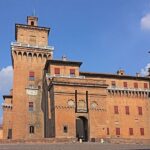
- Starting at the Castello Estense courtyard: where the story clicks
- Este rule, Borgia drama, and the “Grand Tour” imagination
- Passing the Frescobaldi Music Conservatory: a culture stop without detours
- The mid-15th-century S. Anna hospital cloister: why the quieter places matter
- Palazzo Roverella and Theatre Square: Ferrara’s odd shapes and memorable stops
- Cathedral and town hall around the brick-laid square: look down, not just up
- Medieval business lanes and the Jewish ghetto: history you can walk through
- Finishing at the Italian Synagogue: the last step lands the message
- Architecture lovers and history nerds will both be happy
- Price and value: $169.93 per group up to 6
- Practical tips so you enjoy every stop
- Should you book this Ferrara tour?
- FAQ
- How long is the Ferrara Medieval and Jewish Ghetto Walking Tour?
- Where does the tour start?
- Where does the tour end?
- What’s included in the tour price?
- Is this tour an outdoor walking experience?
- What language options are available?
- Is the tour wheelchair accessible?
- Can I get a refund if I cancel?
- Is there a pay later option?
Key highlights you’ll feel in real time
- Castello Estense launch point: start in the castle courtyard, then work outward through the city’s most meaningful sites.
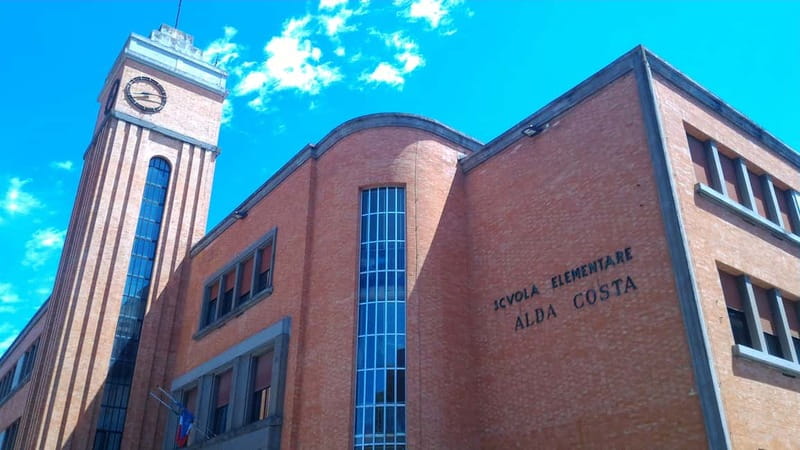
- Architecture cross-check: medieval structures meet 20th-century rationalist design, so you see Ferrara’s timeline in one walk.
- Este power stories: Lucrezia Borgia’s Ferrara connection and the way political life left physical marks.
- Savonarola’s statue stop: you’ll catch why this figure keeps showing up in conversations about Ferrara.
- Garden of the Finzi-Continis walk-on moment: Jewish heritage isn’t just a “chapter,” it’s tied to place.
- End in the ghetto area near the synagogue: you finish where the story becomes visible in the streets themselves.
Ferrara’s medieval core is easier to read than you expect
Ferrara is not “just another Renaissance stop.” It has that rare feel where you can look at buildings and understand what they were for: power, worship, learning, commerce, and community life. On this walk, you don’t just see sights. You learn how the city’s layout explains itself.
The route also helps you connect eras. You’ll notice medieval and Renaissance-era spaces, then later you’ll get a sense of what 20th-century rationalism looked like in Ferrara’s streetscape. That contrast makes the city feel like a living archive instead of a museum.
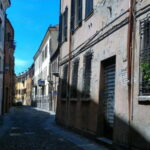
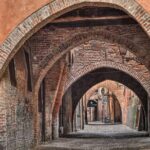
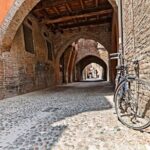
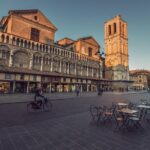
More of the old town on foot, towers and squares and back streets.
Starting at the Castello Estense courtyard: where the story clicks
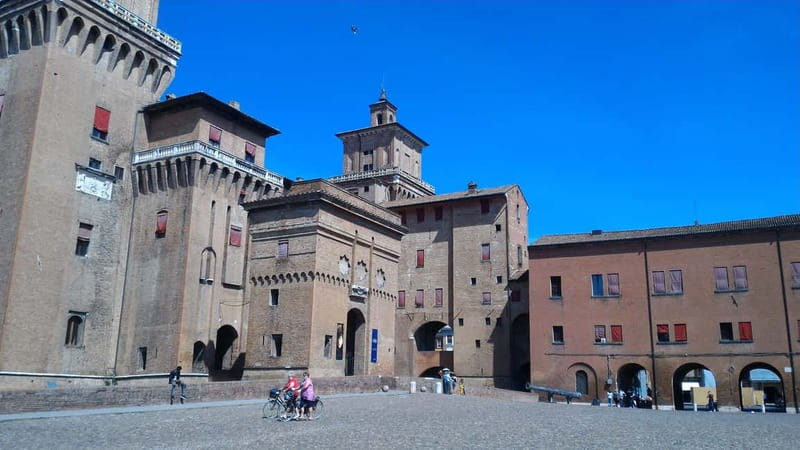
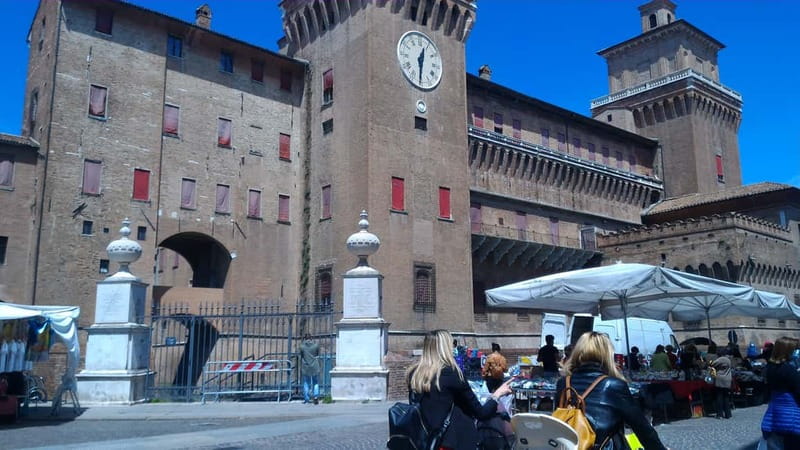
You begin in the courtyard of Castello Estense, at the water well next to the tourist information office (IAT). If you’ve ever started a walking tour and felt lost immediately, this one is the opposite. The castle setting gives you a strong reference point, and your guide builds from there.
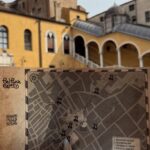
You’ll be in a private group, and you get headsets, which is a big deal in Ferrara’s quieter streets. It keeps the narration clear even when you’re walking and stopping often. You’ll also have a paper map, so you can follow along without staring at your phone.
You’ll want to bring comfortable shoes because the pacing is stop-and-go. This is a walking tour, not a drive-by of landmarks.
Este rule, Borgia drama, and the “Grand Tour” imagination
One reason this tour works is that it treats Ferrara as a stage where ideas traveled. You’ll hear stories that link local power to bigger European currents.
The walk leans into the Este family’s influence and how it shaped what you still see today. You’ll hear about Duchess Lucrecia Borgia living in the Castello d’Este area, and the guide brings the political angle down to street level. It’s not abstract. It’s tied to the places you’re standing near.
Then there’s the literary thread: you’ll imagine travelers like Byron and Goethe on the Grand Tour, searching for the poet Torquato Tasso. That kind of detail matters because it shows Ferrara as a city that attracted attention beyond its walls, not just a local stronghold.
Passing the Frescobaldi Music Conservatory: a culture stop without detours
Not every tour has room for a real-life cultural landmark. Here, you pass by the Frescobaldi Music Conservatory, which helps you remember that Ferrara’s identity doesn’t stop in the past.
Even if you’re not a music person, this stop works as a mood shift. It reminds you that a city can be historically heavy and still be active. And because the walk is organized, you don’t lose time to long detours.
The mid-15th-century S. Anna hospital cloister: why the quieter places matter
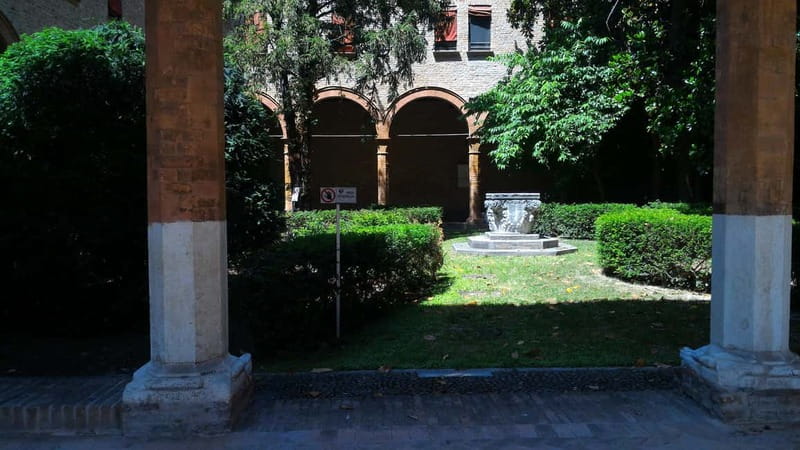
A true highlight is the stop at the S. Anna hospital cloister, dating to the mid-15th century. Cloisters can feel generic on a quick visit, but on this walk you’ll be taught to look at what these spaces meant socially and economically.
Hospitals were never just medical buildings. In many Italian cities, they were tied to charity, civic priorities, and the way communities organized care. The cloister is a compact setting where those ideas become visible through architecture and layout.
This stop also gives you a break from the louder street corners. If you like tours that balance big-ticket landmarks with thoughtful side spaces, you’ll appreciate this part.
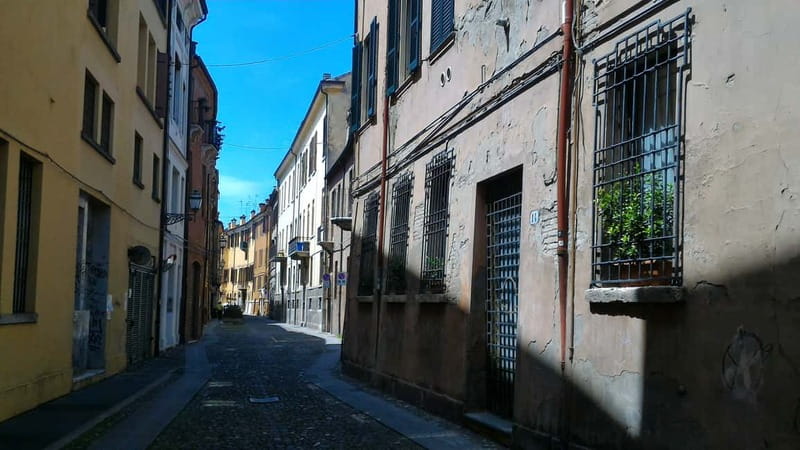
Across to Ferrara and its quiet Renaissance streets.
Palazzo Roverella and Theatre Square: Ferrara’s odd shapes and memorable stops
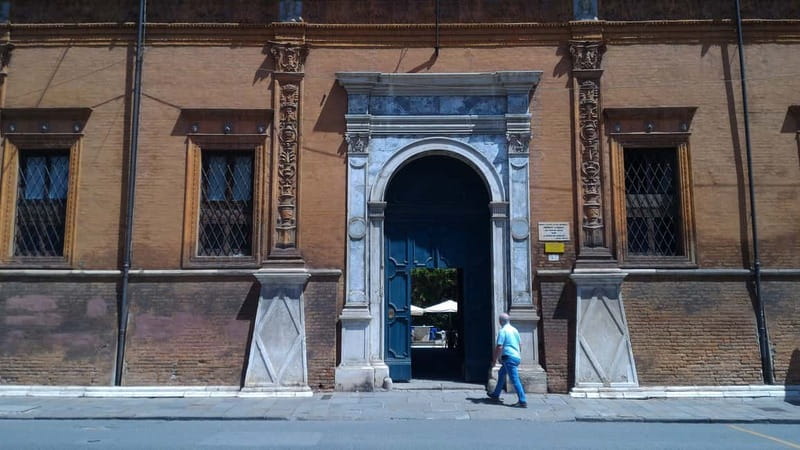
Next you’ll get a glimpse of the garden tied to the early 16th-century Palazzo Roverella. Even as a glimpse, it adds texture. Ferrara’s charm often lives in the in-between spaces: garden edges, courtyards, and “you have to be there” views.
Then you’ll move to Theatre Square, an 18th-century oval space. The geometry sounds like trivia until you see it. An oval square changes the way crowds move and how buildings frame each other. The guide points out the statue of the Ferrara friar Savonarola, and the stop becomes more than a photo opportunity. You’ll understand why his presence matters in the city’s moral and political storytelling.
Cathedral and town hall around the brick-laid square: look down, not just up
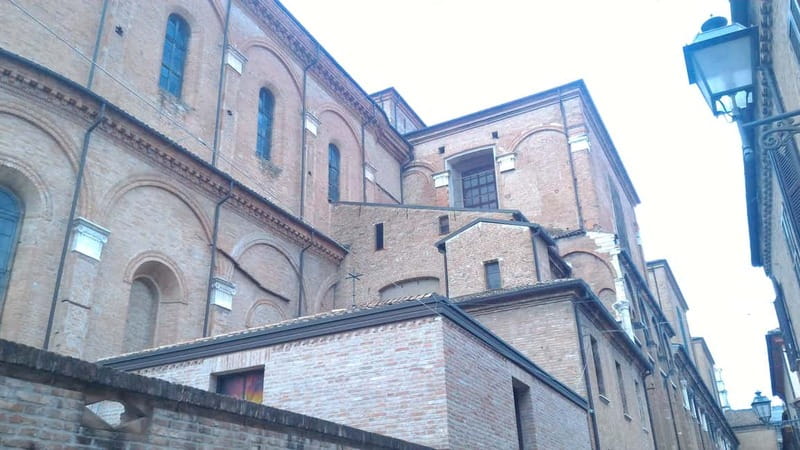
One of the easiest ways to improve your sightseeing is to train yourself to notice surfaces. This tour nudges you toward that habit.
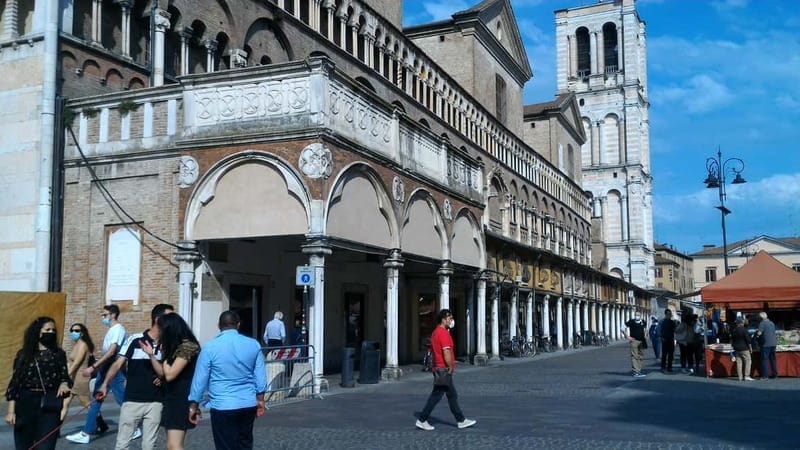
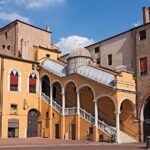
You’ll walk between the archbishop’s palace and the former Ducal Palace, then head toward the cathedral and town hall. There’s a beautiful brick-laid square associated with the town hall area, and it’s exactly the kind of detail that makes Ferrara feel distinctive. In cities where you only notice marble and grand facades, this brick work pulls your attention back to what locals actually walk on.
The cathedral and town hall segment helps you connect the civic and spiritual roles Ferrara had to balance. You’re not just seeing religious architecture or government buildings. You’re seeing how the city organized authority.
Medieval business lanes and the Jewish ghetto: history you can walk through
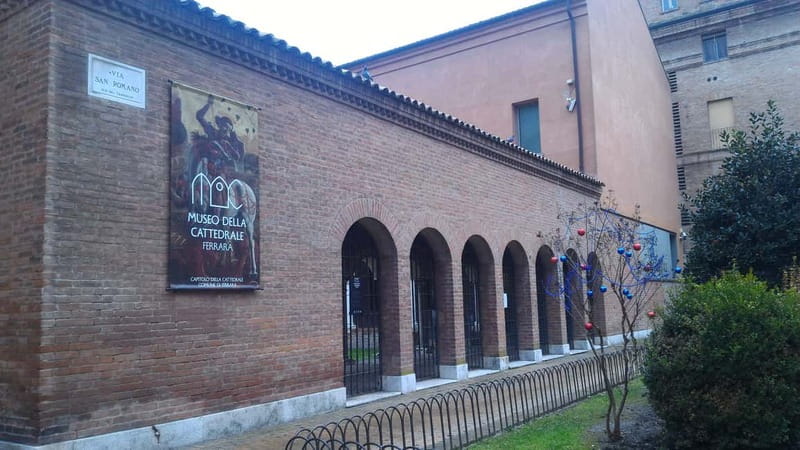
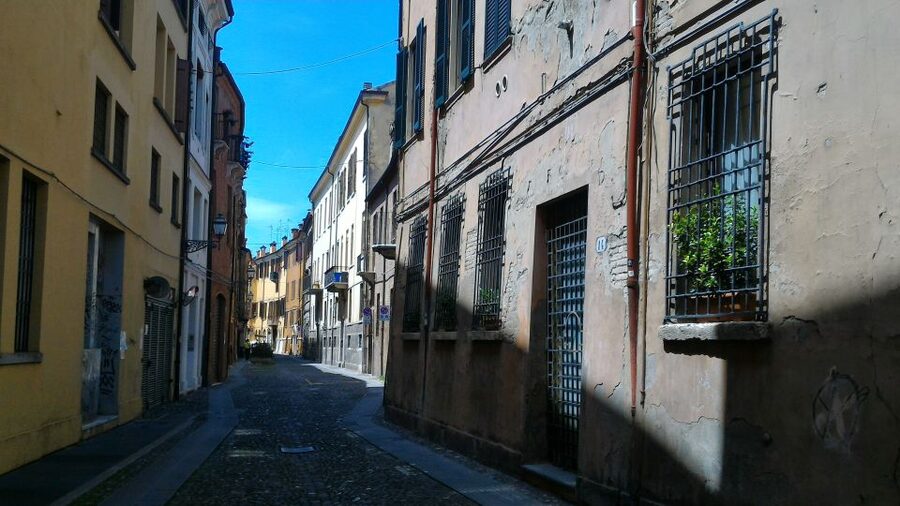
The later part of the tour shifts from monuments to street life. You’ll pass through medieval business lanes and then reach the historic Jewish ghetto area, finishing near the synagogue.
This is where Ferrara becomes emotionally specific. Jewish heritage here is not treated as a distant topic. It’s tied to place, route, and the way the city’s older streets still shape movement today.
A key highlight is the moment connected to the Garden of the Finzi-Continis. You’ll walk on the path of Jewish heritage there, and the guide connects it to the social and cultural fabric of the city. When a guide can make heritage feel like geography, not just dates, the whole tour clicks.
If you want to understand the city beyond general sightseeing, this is the portion that will stay with you.
Finishing at the Italian Synagogue: the last step lands the message
The tour ends in front of the 15th-century Italian Synagogue. This finish is smart because it gives the walking story an actual endpoint, rather than cutting off with a random landmark.
You’ll also end at Via Giuseppe Mazzini, 95, Ferrara. That’s useful if you’re planning a next stop for lunch or a self-guided walk after the tour.
The synagogue is not just a building you look at. It’s where your guide’s earlier themes—community life, cultural continuity, and historical change—come together in a single clear image.
Architecture lovers and history nerds will both be happy
This tour rewards two types of people. First, if you love architecture, you’ll get plenty to compare: medieval structures, cloister spaces, and the contrast with 20th-century rationalist elements. You’ll also learn how each style reflects the city’s social and economic shifts.
Second, if you like history that feels human, you’ll like how the guide uses personalities and cultural references. Lucrezia Borgia’s connection to the castle, Savonarola’s presence in the square, and the Grand Tour literary mentions give the city characters, not just timelines.
And because you’re in a private group with a guide who uses headsets, the experience tends to stay focused instead of turning into a chaotic “everyone shout at once” situation.
Price and value: $169.93 per group up to 6
At $169.93 per group up to 6, this is priced for families, small friend groups, or couples who want a guide without paying per person. The value comes from the format: a 2-hour guided walk with headsets, a paper map, and a route that covers both the Este-centered story and Jewish heritage.
If you were to do all of these stops on your own, you’d likely spend a lot of time trying to piece together the connections. Here, the guide links those connections for you while you’re walking. That’s where the money tends to feel justified.
So if your group is 1–2 people, it can still be worth it if you strongly prefer guided orientation. If you’re traveling with a small group, the price becomes easier to swallow because you’re splitting the guide cost.
Practical tips so you enjoy every stop
Here’s how I’d set yourself up for an easy experience:
- Wear shoes you can walk in for 2 hours with frequent stops.
- Bring light layers. It’s an outdoor tour, and weather can change your comfort level fast.
- Plan for a focused walking pace. This tour is designed around stops, not long sightseeing breaks.
- If you care about Jewish history in Italy, come ready to notice details in the ghetto area and synagogue surroundings.
Also, the tour is available in multiple languages: Spanish, English, German, and Italian. So you can choose the language that helps you catch the nuances in the narration.
Should you book this Ferrara tour?
I’d book it if you want a guided walk that connects Castello Estense, Este politics, and Jewish heritage into one readable route. The ending at the Italian Synagogue is a strong finish, and the combination of major sights with places like the S. Anna hospital cloister makes the tour feel balanced.
If you dislike walking tours that stop often, or if outdoor walking is an issue for you, you might find the pacing less comfortable. But if you can handle a couple of hours on foot, this is a high-signal way to understand Ferrara without getting lost in disconnected guidebook facts.
FAQ
How long is the Ferrara Medieval and Jewish Ghetto Walking Tour?
The tour lasts 2 hours.
Where does the tour start?
You meet your friendly guide at the water well next to the tourist information office (IAT) inside the courtyard of Castello Estense.
Where does the tour end?
It ends back at the meeting point area, and the listed finish address is Via Giuseppe Mazzini, 95, 44121 Ferrara FE, Italy.
What’s included in the tour price?
Included items are headsets to hear the guide clearly and a paper map of the city.
Is this tour an outdoor walking experience?
Yes. As described, it is an outdoor walking tour.
What language options are available?
The live tour guide is available in Spanish, English, German, and Italian.
Is the tour wheelchair accessible?
Yes, it is wheelchair accessible.
Can I get a refund if I cancel?
There is free cancellation up to 24 hours in advance for a full refund.
Is there a pay later option?
Yes. You can reserve now and pay later to keep your plans flexible.
More Ferrara Tours and Day Trips
More Bologna Walking Tours

More Tour Reviews in Ferrara
After something different? More ways to fill a day in Bologna and across Emilia-Romagna



Bologna Walking Tours & City Highlights, compared.
 ★ 4.5City Center Walking TourFrom $263,478 reviews
 ★ 4.8Walking Food Tour with a Local GuideFrom $90882 reviews
 ★ 5.0Private Half Day Parma Food Walking TourFrom $134561 reviews
 ★ 3.7Open Bus City Tour and Local Food TastingFrom $46550 reviews
 ★ 5.0Bologna Private Highlights & Hidden Gems Tour with a LocalFrom $77359 reviews
 ★ 4.6City Highlights Walking Tour with Local GuideFrom $17219 reviews
 ★ 4.9City Center Guided Wine Walking TourFrom $70210 reviews
 ★ 4.2City Walking TourFrom $27203 reviews
Browse the lists this tour appears in